Vendors: Definition, Types and How to Choose the Right One
Author
Jörg Schmidt Head of Vendormanagement
The right vendor is the foundation of every working supply chain and a key factor in business success. But what exactly is a vendor, what types are there and which criteria should you use to choose the best partner for your company?
This article gives you an overview: the key terms, the types of vendors and what matters most when working with vendors, from the first search to a long-term partnership.
What is a vendor? A definition
A vendor (also called a supplier) is a natural or legal person that regularly provides goods or services to a company in return for payment. In accounting terms, the vendor is the creditor and the buying company is the debtor.
A vendor is more than a seller. It is a business partner whose materials, components or services make the customer's business possible in the first place. Unlike a one-off transaction, the business relationship is usually long-term and based on a framework or individual contract.
Vendors often also act as lenders by granting trade credit through payment terms. For procurement, the vendor is the main point of contact for securing supply.
The different types of vendors
"Vendor" is an umbrella term for different kinds of business partners. Depending on your needs and business model, you will work with different types. Classifying them correctly helps from the very first vendor search.
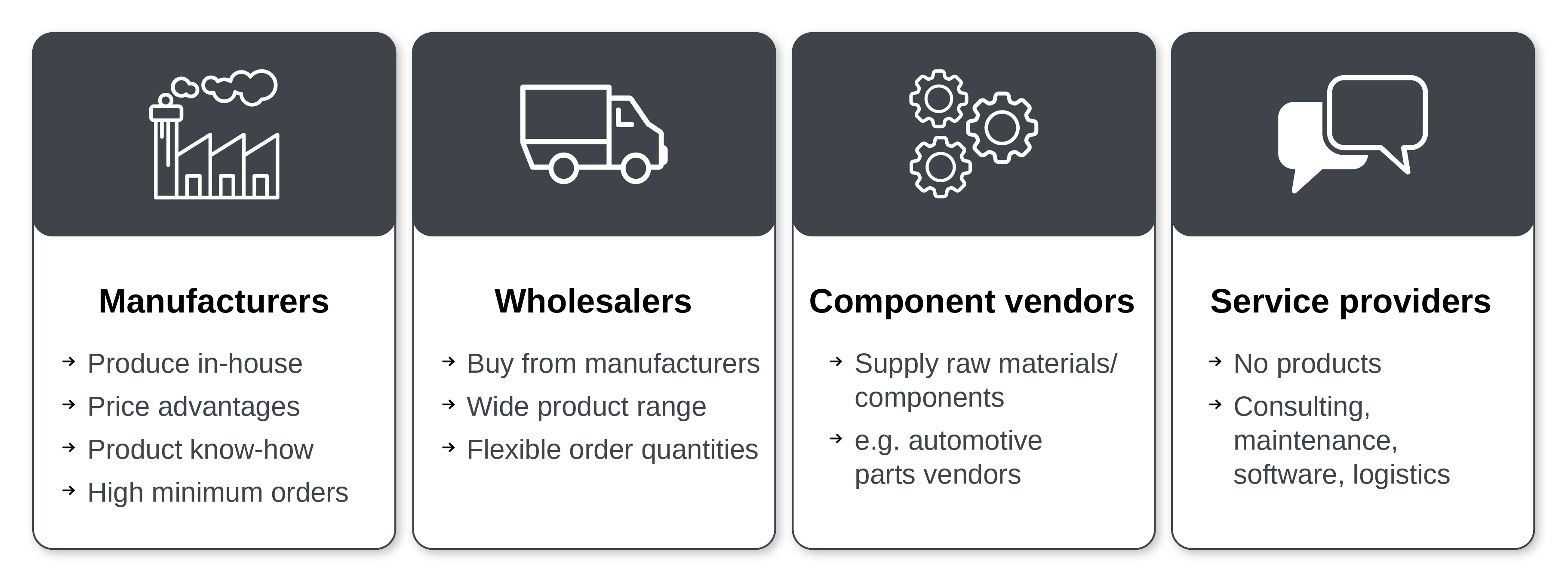
Manufacturer: A manufacturer produces the goods it sells. Buying directly from the manufacturer can offer price advantages and deep product knowledge, but often comes with high minimum order quantities.
Wholesaler: A wholesaler buys large quantities from various manufacturers and resells them in smaller quantities to other businesses. It offers a broad assortment and more flexibility on order quantities.
Component supplier: A component supplier delivers raw materials, parts or components that go into the buying company's production. Automotive suppliers are a classic example.
Service provider: A service provider delivers services rather than physical products, such as consulting, maintenance, software or logistics.
How do you choose the right vendor? Key criteria
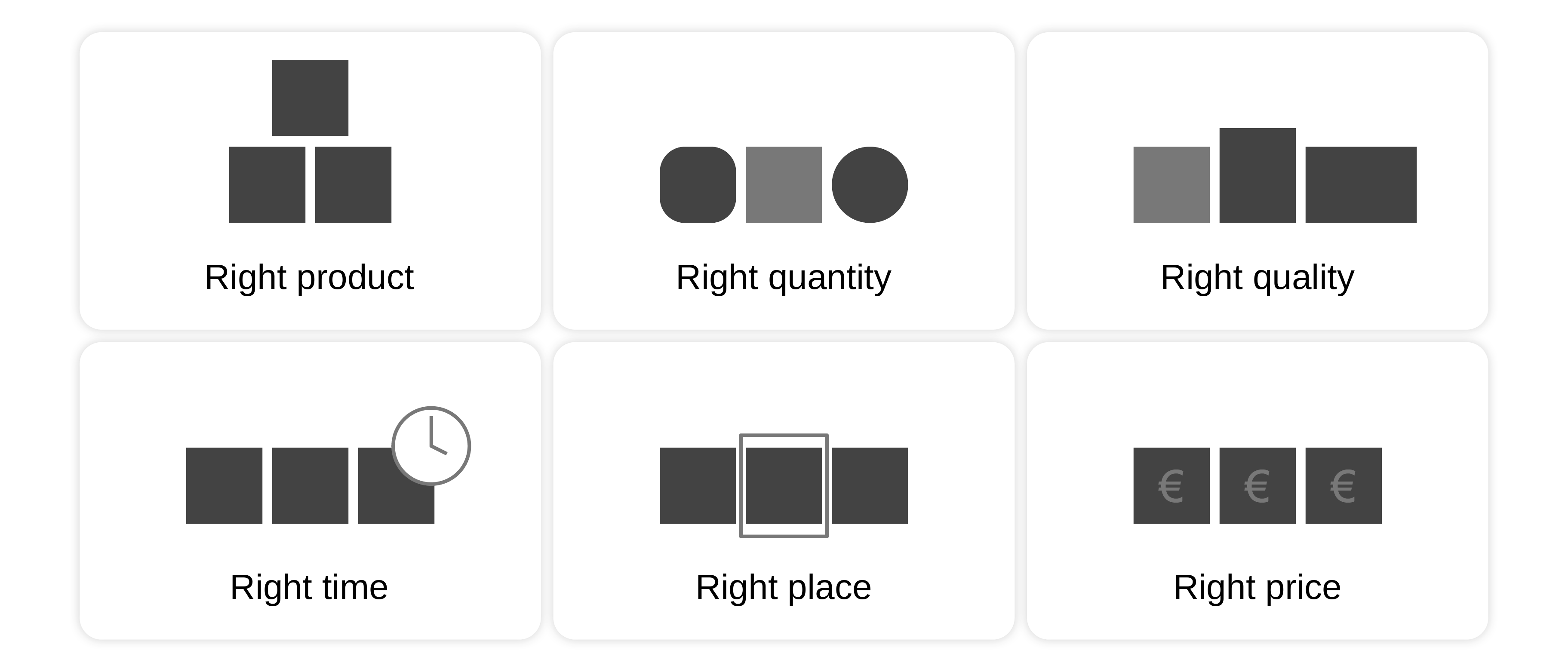
Vendor selection is a strategic process that goes far beyond comparing prices. A proven model from logistics is the six Rs rule: the right goods, in the right quantity and quality, at the right time, in the right place and at the right price. The key criteria for your decision follow from this.
Before you award an order, assess every potential partner against these criteria:
Quality: Do the products or services consistently meet your requirements? Look for certifications such as ISO 9001.
Price and terms: Look beyond the purchase price to the total cost of ownership, including transport, storage, maintenance and process costs. Also check payment terms and conditions.
Reliability: Does the vendor meet its delivery times? Is its delivery readiness high? Historical data and references give you answers.
Capacity and flexibility: Can the partner supply the quantities you need and respond to fluctuations in demand? Is it technologically up to date, for example with electronic catalogs or OCI/punchout connectivity?
Location and logistics: Short delivery routes reduce costs and risk.
Communication and service: Do you have a dedicated contact? How quickly and competently are inquiries answered?
Shop & save
Find out how in our free e-procurement report. Download it now, free and without obligation.
Choosing the right partner is only the start. A successful business relationship has to be actively maintained and managed. This is where vendor management comes in. It covers everything you do to manage, develop and evaluate your vendors.
The goal is to monitor performance continuously, reduce risk and unlock potential together with strategic partners. That includes regular vendor evaluation, vendor audits and targeted vendor development.
Many vendors, one access point: vendors in indirect procurement
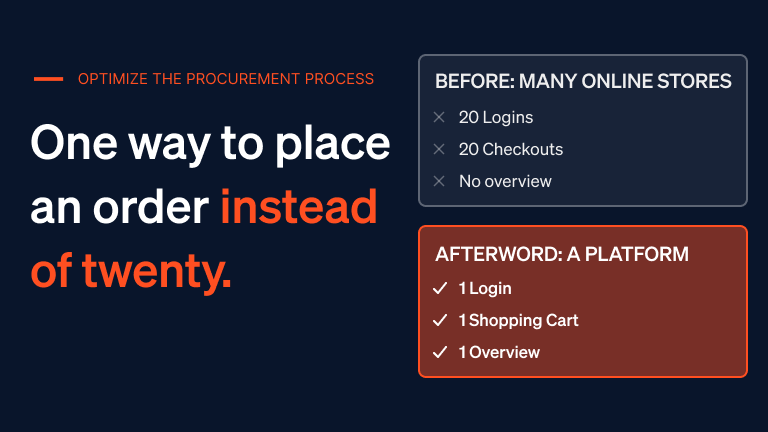
In indirect procurement in particular, companies often work with a large number of vendors for small orders, from office supplies to tools. Every additional vendor means separate ordering channels, invoices and master data. On simple system, more than 28,000 buyers order from over 1,000 vendors through one access point, at their own negotiated terms. Approvals run digitally, and order data goes straight into the ERP.
Want to bring your vendors together on one platform? Try simple system free for 30 days or book a demo.
Frequently asked questions
A vendor is a natural or legal person that regularly provides goods or services to a company in return for payment. Types include manufacturers, wholesalers, component suppliers and service providers.
A component supplier is a specific type of vendor that delivers raw materials, parts or components that go directly into production. "Vendor" is the umbrella term for all providers of goods and services.
It depends on how strategically important the product is. For critical components, many companies use several vendors (multiple sourcing) to reduce the risk of supply failure. For non-critical C-parts, consolidating vendors is often more efficient.
Key criteria are quality, price and total cost, reliability, capacity and flexibility, location, and communication and service. The six Rs of logistics are a useful guide.
First define the criteria for quality and reliability, schedule audits at regular intervals and document the results. On this basis, you evaluate performance and decide on measures.