![Andy Freund [Senior Growth Manager]](https://simplesystem.com/hs-fs/hubfs/Autoren_Blog/Andy_Freund_autor.png?width=200&name=Andy_Freund_autor.png)
09.09.2026

![Andy Freund [Senior Growth Manager]](https://simplesystem.com/hs-fs/hubfs/Autoren_Blog/Andy_Freund_autor.png?width=100&name=Andy_Freund_autor.png)

Efficiency, transparency, and cost control are the cornerstones of a successful business. In procurement, an integrated approach plays a crucial role. The procure-to-pay process, often referred to as P2P or purchase-to-pay, covers the entire procurement cycle from the purchase requisition to the final payment. An optimized P2P process is more than just an administrative procedure; it is a strategic lever for creating value. In this guide, you’ll learn everything you need to know about the individual process steps, the benefits of automation, and how to strengthen your procurement function for the long term.
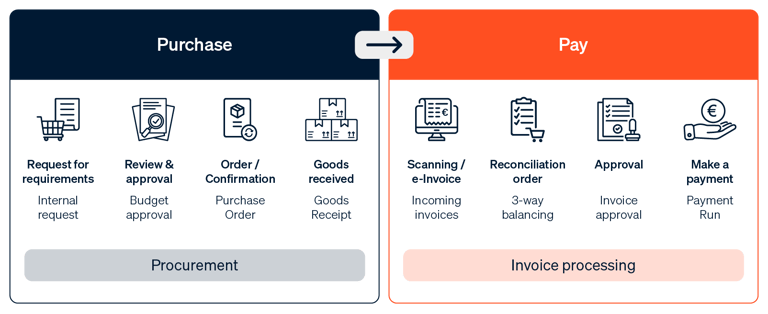
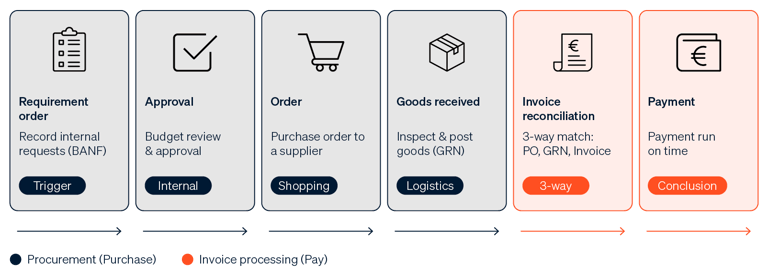
The term Procure-to-Pay (P2P for short), also known as Purchase-to-Pay, describes the complete, integrated process of procuring goods and services within a company. It encompasses all steps, from identifying a need through ordering and goods receipt to invoice verification and the final payment to the supplier.
The entire P2P process can be divided into several sequential phases. A clear understanding of these process steps is the foundation for any optimization. Manual processes are often error-prone and time-consuming. Well-planned digitization and automation of this chain are key to achieving full efficiency. The goal is to establish a seamless workflow from procurement to payment.
A manual or poorly managed P2P process leads to inefficiency, high process costs, and a lack of transparency. In contrast, optimization and automation through dedicated procure-to-pay software offer significant benefits that extend far beyond procurement itself. Leading analyst firms such as Gartner regularly evaluate the market for P2P solutions and highlight their strategic importance.
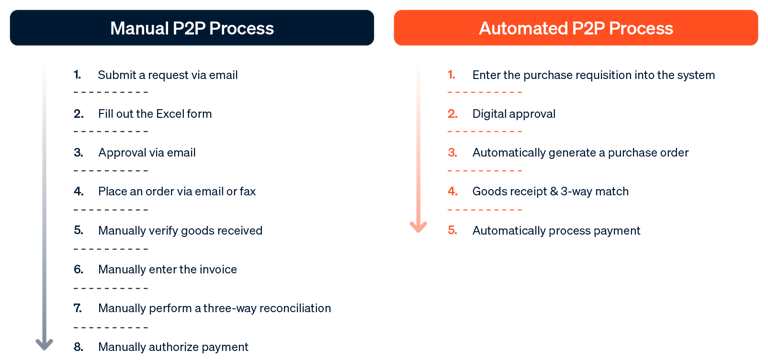
Modern software solutions are essential for holistically optimizing the P2P process. Integrated P2P systems or e-procurement solutions digitize the entire workflow from requisition to payment. They create a central platform for all stakeholders—from the employee placing the request, through procurement and accounting, to the supplier. This enables seamless data exchange, reduces administrative overhead, and lays the foundation for data-driven procurement optimization.
Optimizing the procure-to-pay process is not a one-time project, but rather a continuous journey toward excellence in procurement. By implementing a well-designed, digitized system, you transform your procurement from a mere cost center into a strategic value driver. Greater efficiency, better control, and stronger supplier relationships are the result of a process that is intelligently designed from start to finish.