![Fabian von Kleinsorgen [VP Growth & Sales Operations]](https://simplesystem.com/hs-fs/hubfs/Autoren_Blog/Fabian_vin_kleinsorgen_autor.png?width=200&name=Fabian_vin_kleinsorgen_autor.png)

09.09.2026

![Fabian von Kleinsorgen [VP Growth & Sales Operations]](https://simplesystem.com/hs-fs/hubfs/Autoren_Blog/Fabian_vin_kleinsorgen_autor.png?width=100&name=Fabian_vin_kleinsorgen_autor.png)

Effective supplier evaluation and selection in procurement are crucial to ensuring the quality, reliability and competitiveness of your own value chain in the long term. Structured processes and clearly defined criteria make it possible to identify the best partners, minimize risks in a targeted manner and continuously develop the collaboration.
Supplier evaluation is a systematic process in which suppliers are assessed on the basis of criteria. Supplier evaluation criteria include quality, service performance and reliability. The supplier's price-performance ratio is also included in the assessment. The aim is to make the overall performance of suppliers transparent and to make well-founded decisions in the selection process that meet the needs of the company.
The main objective of supplier evaluation and selection is to identify high-performing and reliable partners who contribute optimally to the achievement of specific company objectives and strengthen the value chain in the long term. The aim is not only to minimize risks such as delivery failures, quality problems or compliance violations, but also to make targeted use of potential for cost and process optimization. Orientation towards recognized standards such as DIN EN ISO 9001 supports this process by specifying clear requirements for quality management systems and thus enabling an objective, comprehensible and continuously improved supplier evaluation.
When selecting suppliers, various criteria such as reliability and quality are decisive, which can be weighted differently depending on the industry, company size and specific requirements. In principle, all relevant criteria can be divided into the following categories.
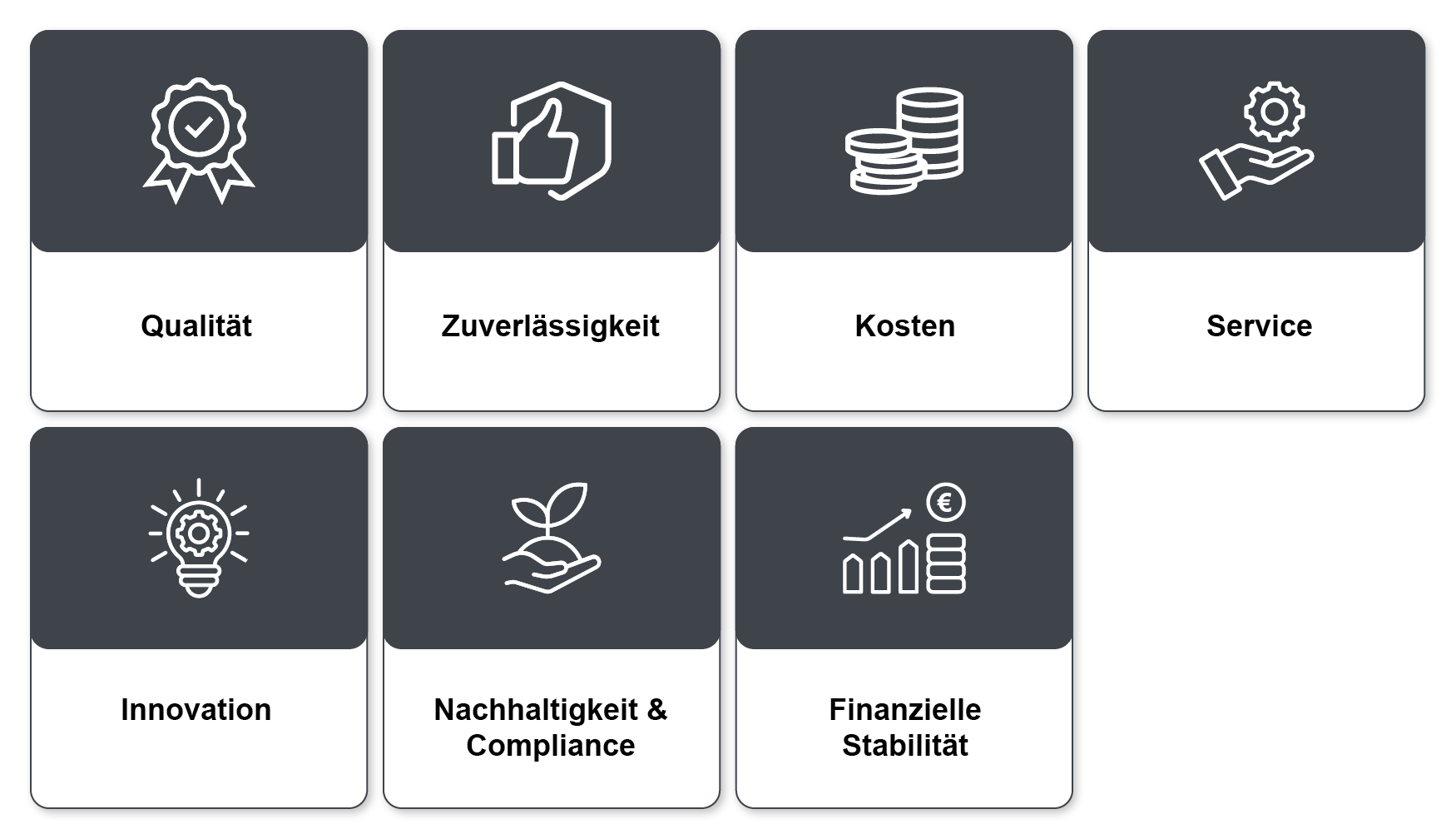
In supplier management, the distinction between qualitative and quantitative criteria in supplier evaluation is of central importance in order to obtain a comprehensive and objective picture of the performance of existing and potential suppliers.
Quantitative criteria
Quantitative criteria can be objectively measured, expressed in figures and easily compared. They are based on hard, verifiable data from purchasing, logistics or quality management in accordance with ISO 9001. They include the following criteria for supplier evaluation:
Quantitative attributes are objectively measurable, comparable and can be easily automated - for example with ERP systems. They support the decision-making process using various, clear key figures and form the basis for sound, data-based decisions.
Qualitative criteria
Qualitative criteria are more subjective and are based on personal assessments, observations or experience with the supplier. They cover so-called "soft factors" such as communication, flexibility or willingness to innovate. They include key figures such as
Qualitative criteria take into account soft success factors at the supplier, are important for long-term partnerships and cover aspects that numbers alone cannot capture.
The financial stability of suppliers plays a decisive role in the optimization of supplier selection. It has a direct influence on delivery capability and reliability. A financially sound company can honor contracts over the long term, invest in quality and innovation and remain able to deliver even in times of crisis. Unstable suppliers, on the other hand, harbor an enormous risk of supply bottlenecks, price increases or even insolvency. This can quickly jeopardize your own supply chain. Regular credit checks, analysis of annual financial statements and monitoring warning signals such as payment deferrals or frequent staff changes are therefore essential. As a result, the risk of supply bottlenecks and other problems can be identified at an early stage.

Find out how in our free e-procurement report. Download now free of charge and without obligation.
Read now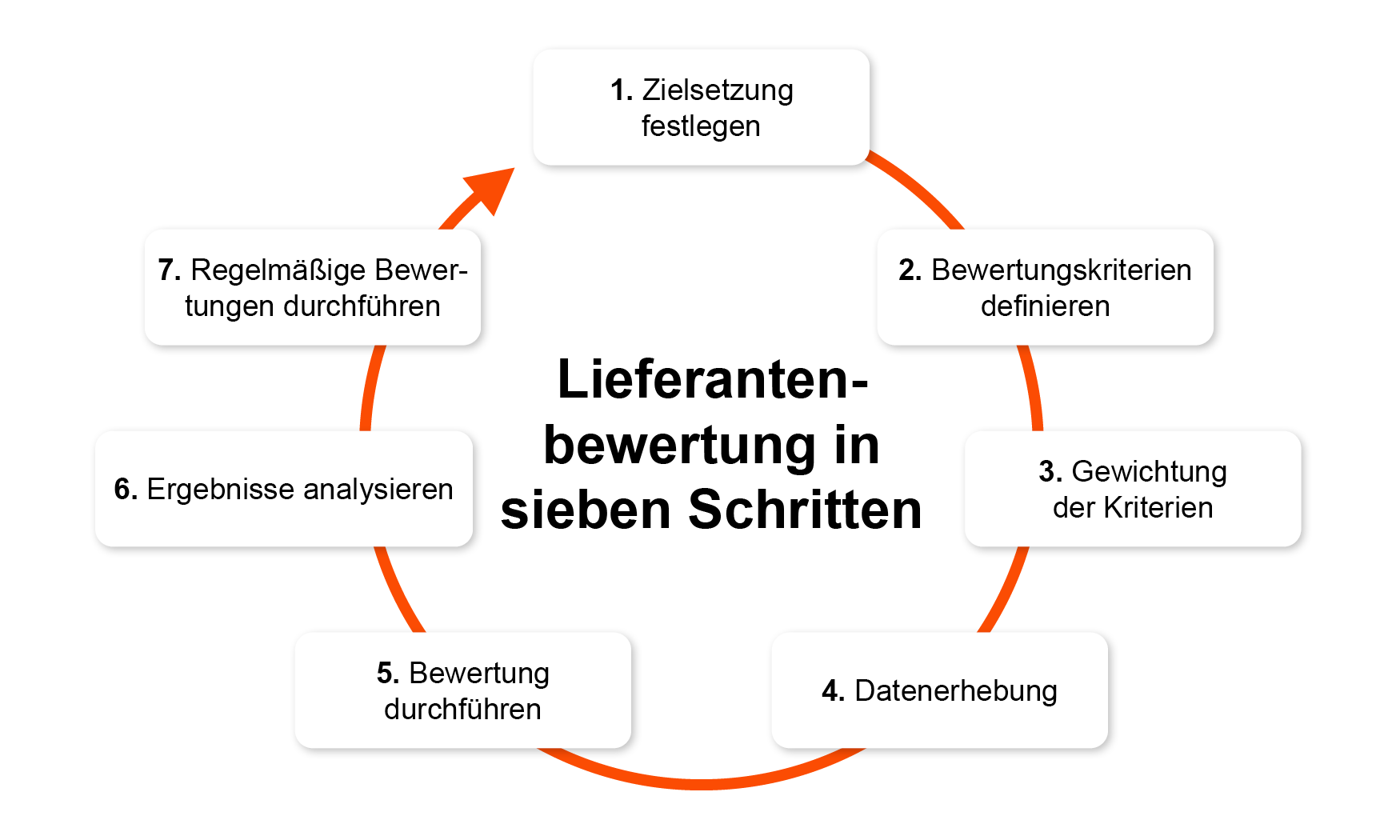
Carrying out a supplier selection and supplier evaluation is a structured, multi-stage process that should be designed systematically and comprehensibly in order to identify the best partners for the company and continuously develop the supplier base based on clear criteria.
The first step is to define the objective: Companies define what they want to achieve with the evaluation - such as ensuring quality, reducing risks or optimizing cost structures. Evaluation criteria are then defined that cover both quantitative (such as price, on-time delivery, error rate) and qualitative aspects (such as service, innovative ability, sustainability). The next step involves weighting the individual criteria, whereby each criterion is assigned an individual value depending on its strategic importance in order to carry out an objective and company-specific supplier evaluation.
Data collection forms the basis of the assessment: relevant information is systematically collected from internal sources, supplier self-assessments, audits, customer feedback, market analyses, questionnaires and surveys. The actual evaluation is usually carried out using standardized procedures such as scoring models or utility value analyses, in which each criterion is assigned a score and multiplied by the respective weighting; the results can be presented visually in ranking lists or profiles.
After the assessment, the results of the supplier evaluation are analyzed to clearly identify strengths, weaknesses and potential areas of action for each supplier. Finally, the assessment should be repeated regularly and adapted to changing market conditions or company goals to ensure continuous improvement of the supplier base.
Transparency, clear documentation and open communication of the results with the suppliers are essential in order to create trust and initiate targeted development measures. Modern SRM (Supplier Relationship Management) tools can support the entire process digitally and further increase the traceability and comparability of the assessments.

For a transparent supplier evaluation, it is crucial to define clear and comprehensible criteria from the outset. Vague or unclear evaluation criteria quickly lead to misunderstandings and subjective assessments that make comparability more difficult. The use of standardized questionnaires or checklists ensures that all suppliers are assessed according to the same standards and that the results are objective and consistent.
It is equally important to always justify and document qualitative assessments, such as the evaluation of service or innovative ability, in a comprehensible manner. Suppliers should be involved in the evaluation process at an early stage and informed about the criteria and objectives mentioned. Once the assessment has been completed, it is advisable to communicate the results openly, discuss strengths and weaknesses together and derive specific improvement measures. This openness creates trust, promotes cooperation and motivates suppliers to continuously improve.
Through regular and systematic supplier evaluations, companies gain valuable insights into the performance of their partners and can thus make targeted adjustments. Weak points, such as recurring quality defects or delivery delays, are identified at an early stage and can be rectified with appropriate measures before they cause the entire supply chain to falter. At the same time, particularly high-performing suppliers can be identified and specifically promoted - for example through preferential cooperation, joint development projects or long-term partnerships.
Continuous evaluation also creates transparency across the entire supplier base and makes it easier to minimize risks and increase security of supply. Processes become more efficient, costs are reduced and the quality of purchased products and services increases. Overall, a consistent supplier evaluation helps to make the value chain more resilient, flexible and future-proof - a clear competitive advantage in dynamic markets.
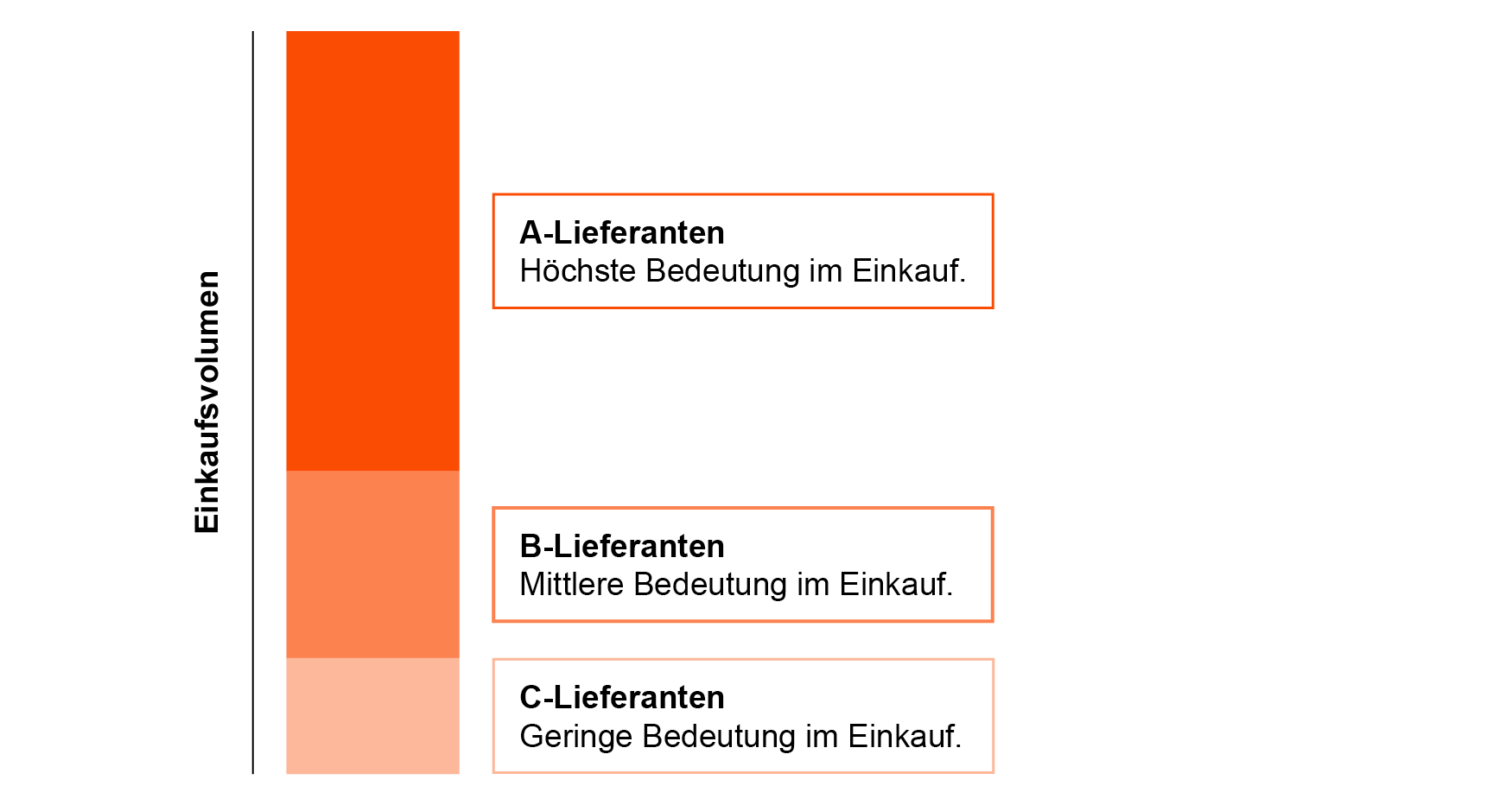
The ABC analysis for classifying suppliers is a proven and easy-to-use tool for structuring a company's supplier base in a targeted manner and making supplier management more efficient. Essentially, the ABC analysis divides all suppliers into three categories based on their contribution to the company's success: A, B and C suppliers.
A-suppliers are the most important partners in purchasing. They are characterized by a high share of sales or the supply of strategically relevant materials and services that are indispensable for the company's production or competitiveness. Due to their importance, particularly close cooperation, regular communication and intensive support are required. Companies invest specifically in partnership programs, joint projects and long-term contracts to ensure security of supply and innovative strength.
B-suppliers occupy a middle position. They usually supply standard products or components that are important but not critical to the core business. Cooperation is more routine and the support effort is moderate. Nevertheless, it is also worth maintaining a relationship with B suppliers in order to be able to react flexibly if necessary and exploit the potential for improvements or cost savings.
Finally,C suppliers are responsible for a comparatively small proportion of the purchasing volume. They mainly supply interchangeable standard products where quality and service are less critical. The administrative effort here should be kept to a minimum, so that orders are often automated and support is limited to the bare essentials.
This clear division allows companies to target their resources where they will bring the greatest benefit. The ABC analysis helps to identify the most important suppliers, minimize risks and increase efficiency in supplier management. This not only optimizes purchasing processes, but also improves the competitiveness and stability of the entire supply chain in the long term with high-quality supplier relationships.
What different methods are there for supplier evaluation?The best-known methods for selection and evaluation include scoring models, utility value analyses, ABC analyses, portfolio analyses, key performance indicator procedures, supplier audits and checklists.
How is the scope method applied in practice?The scope method systematically evaluates suppliers and their performance according to the dimensions of strategy, competence, organization, processes and development potential and derives targeted improvement measures from this.
What are efficient methods for evaluating products or services?Efficient criteria and methods are those that combine both quantitative key figures (such as error rate and adherence to delivery dates) and qualitative assessments (such as service and innovative ability) and are regularly reviewed in order to meet the company's individual requirements and criteria.