![Jörg Schmidt [Head of Vendormanagement]](https://simplesystem.com/hs-fs/hubfs/Autoren_Blog/Joerg_schmidt_autor.png?width=200&name=Joerg_schmidt_autor.png)

09.09.2026

![Jörg Schmidt [Head of Vendormanagement]](https://simplesystem.com/hs-fs/hubfs/Autoren_Blog/Joerg_schmidt_autor.png?width=100&name=Joerg_schmidt_autor.png)

A supplier audit is a systematic procedure for reviewing the performance of suppliers. It is used for risk minimization, quality assurance, process optimization and forms the basis for supplier development. Audits are planned according to clear criteria, carried out on site, evaluated and accompanied by a follow-up in order to implement improvements. The aim is not mistrust, but transparency, partnership-based cooperation and continuous optimization of the supply chain.
An audit is not an act of mistrust, but a collaborative tool that creates transparency and serves as a basis for joint further development. It helps to minimize risks, improve product quality and put supplier relationships on a solid, data-supported footing.
This guide explains step by step what a supplier audit is, what types there are and what the process looks like in practice so that you can specifically identify and exploit potential for improvement in your supply chain.
A supplier audit is a systematic and independent examination of a new or existing supplier. The aim of the audit is to check whether the supplier's processes, systems and performance meet the previously defined criteria. These criteria can be contractual agreements, quality standards (e.g. ISO 9001) or legal requirements.
A regular or ad hoc supplier audit is a cornerstone of strategic supplier management. It is used both for initial supplier selection and for continuous supplier evaluation and development. The main advantages are
Risk minimization: you identify potential quality, process or compliance risks at your supplier before they become a problem for your own company. An audit is therefore a key tool in purchasing risk management.Quality assuranceYou ensure that the supplier not only promises the required quality standards, but has also anchored them in its processes and can consistently meet them.Process optimizationAn audit often uncovers potential for improvement on both sides and promotes efficiency in joint cooperation and the entire value chain.Basis for supplier developmentThe findings set out in the audit report are the basis for agreeing targeted development measures with the supplier and improving their performance.Proof of due diligence obligationsWith regard to laws such as the Supply Chain Due Diligence Act (LkSG) in particular, an audit serves as important proof that you are carefully checking your partners.There are three main types of audit, depending on the objective and depth of the audit:
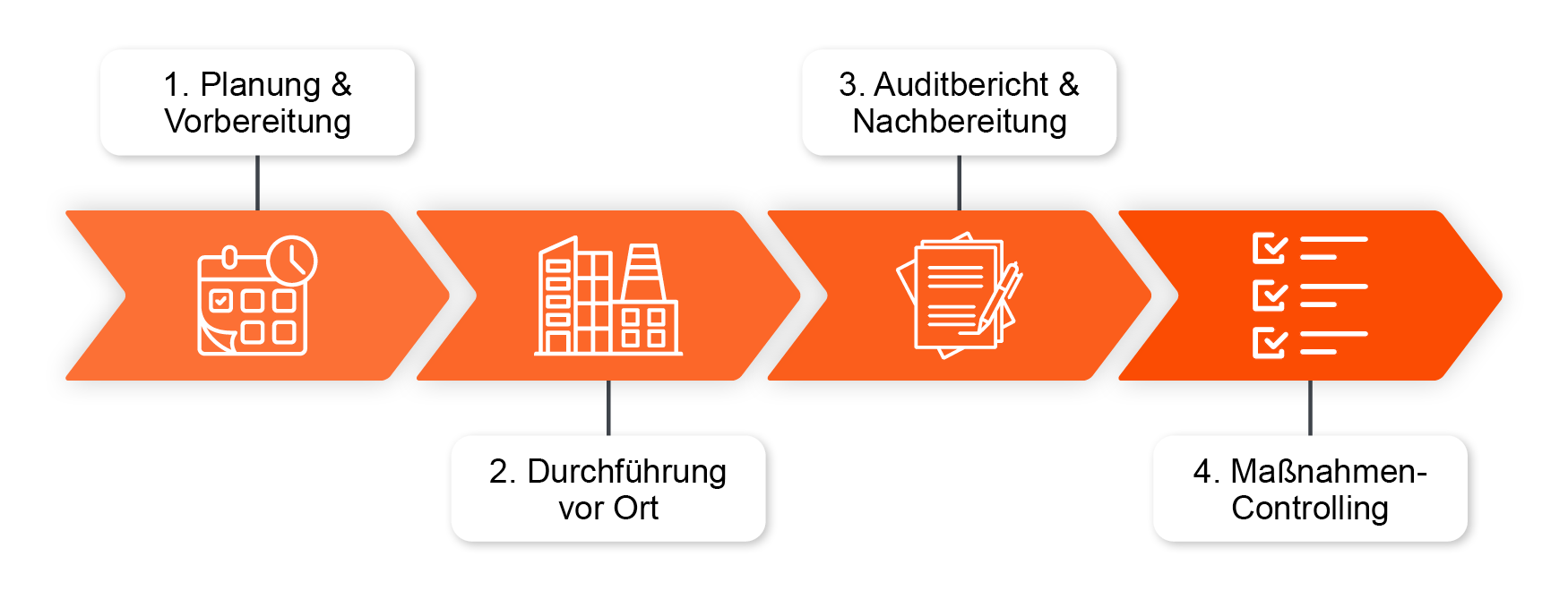
A professional supplier audit follows a structured and standardized procedure. This procedure ensures that the results are objective, comparable and comprehensible. The process can be divided into four main phases.
This phase is the most important, as it lays the foundation for a successful audit. Careful planning saves time and ensures targeted results. The steps include selecting the supplier, defining the objectives, assembling the team and preparing the audit documents.
Set objectivesClearly define what you want to achieve with the audit. Is it to qualify a new supplier, a routine review of an existing partner or to investigate the cause of an acute quality problem?Put together an audit teamAppoint a lead auditor and, if necessary, bring in technical experts from relevant departments (e.g. production, development). You can draw on trained internal employees or external specialists, e.g. from certification companies.Create an audit planThe audit plan is the detailed roadmap. It contains the exact schedule, the areas and processes to be audited and the respective contact persons at the supplier. This plan is agreed with the supplier in advance.Develop a checklistThe checklist is the auditor's central tool. It translates the defined criteria into specific questions and checkpoints. Templates and best practices for this are often provided by specialist organizations such as the German Society for Quality (DGQ).After the preparation, the actual audit takes place at the supplier's premises. A professional and cooperative approach is crucial here in order to create an open and constructive atmosphere.
Opening meetingThe audit begins with a joint meeting in which the audit team is introduced, the plan is explained and the objective of the audit is made transparent.Inspection and interviewsThe core of the audit consists of site inspections, the observation of processes and interviews with the supplier's employees. Here, the actual status quo is compared with the defined target status. The auditor carefully documents his observations.Document reviewImportant documents such as the QM manual, work instructions, test protocols and certificates are inspected. A central point is often the review of the quality management system in accordance with the ISO 9001 standard, whose requirements are defined by the "International Organization for Standardization (ISO)".Final meetingImmediately at the end of the audit, initial impressions, positive aspects and any deviations identified are discussed directly with the supplier's management in a final meeting. This ensures immediate transparency.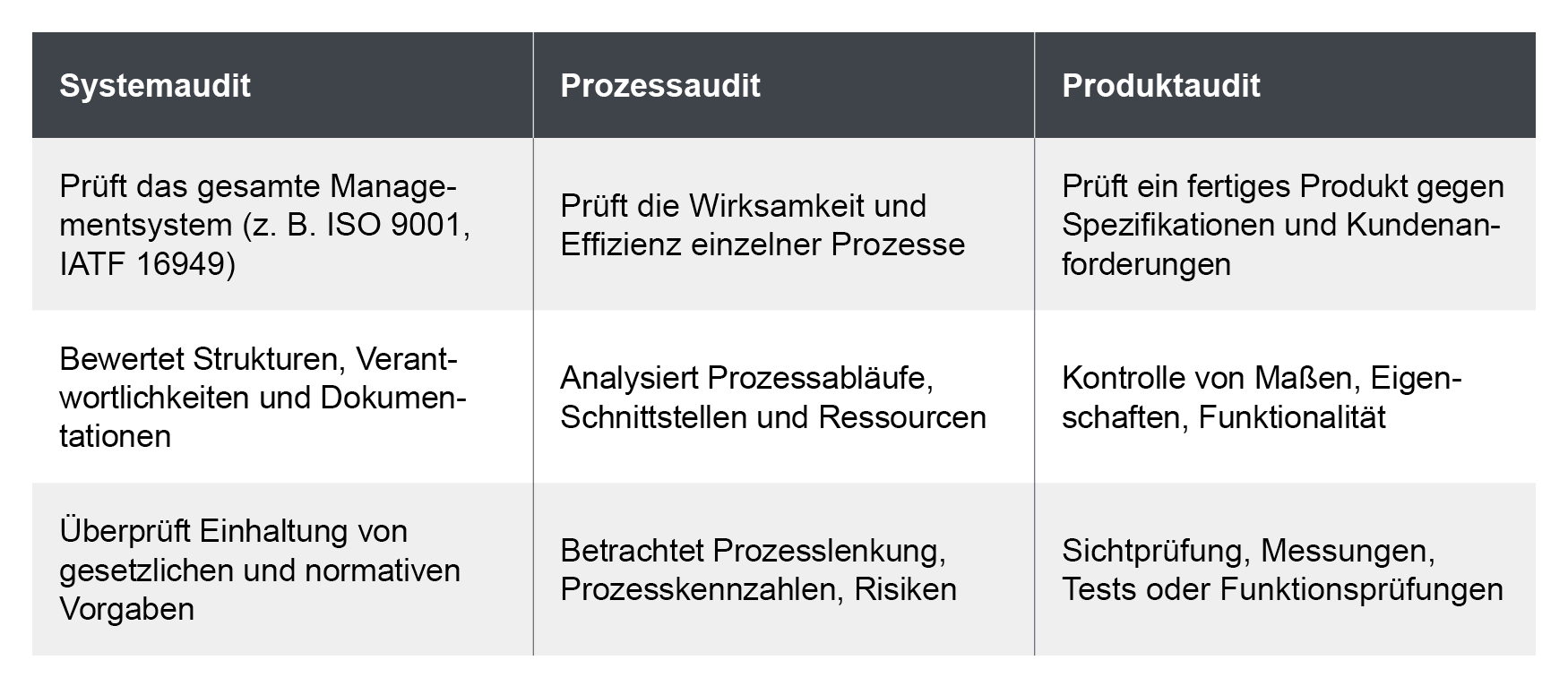
After the on-site appointment, the systematic evaluation begins. All notes, photos and documents are compiled and analyzed.
Create audit reportThe auditor draws up a detailed audit report. This contains all master data, a summary of the process, the deviations identified (often divided into major and minor deviations), the potential for improvement identified and also explicitly positive observations. The report should be objective and fact-based.Carry out an assessmentAn overall assessment of the supplier is carried out based on the results. This flows directly into the official supplier evaluation and can influence the status of the supplier (e.g. A, B or C supplier).An audit without consistent follow-up is ineffective. This phase ensures that the deficiencies identified are actually rectified. This is the direct transition to supplier development.
Request action planThe audited supplier is asked to draw up an action plan. In it, he must describe how (measures), by when (deadline) and by whom (responsibility) he will correct the identified deviations.Controlling of measuresThe purchasing company checks the implementation of the measures based on the specified deadlines.Effectiveness checkOnce the corrections have been completed, it is checked whether the measures have solved the problem sustainably. This is the most important step in ensuring continuous improvement.The checklist is at the heart of every audit. It ensures that all relevant aspects are systematically checked. The content depends heavily on the industry and the product, but some core areas are almost always included:
GeneralCompany data, organization, management responsibility.Quality management systemIs there a QM manual? Are processes controlled?PersonnelAre the employees qualified for their tasks and are they regularly trained?ProcurementHow does the supplier ensure the quality of its own suppliers?Production and service provisionAre the processes controlled and managed? Is the technical equipment modern and is it maintained?Test equipment monitoringIs measuring and test equipment regularly calibrated?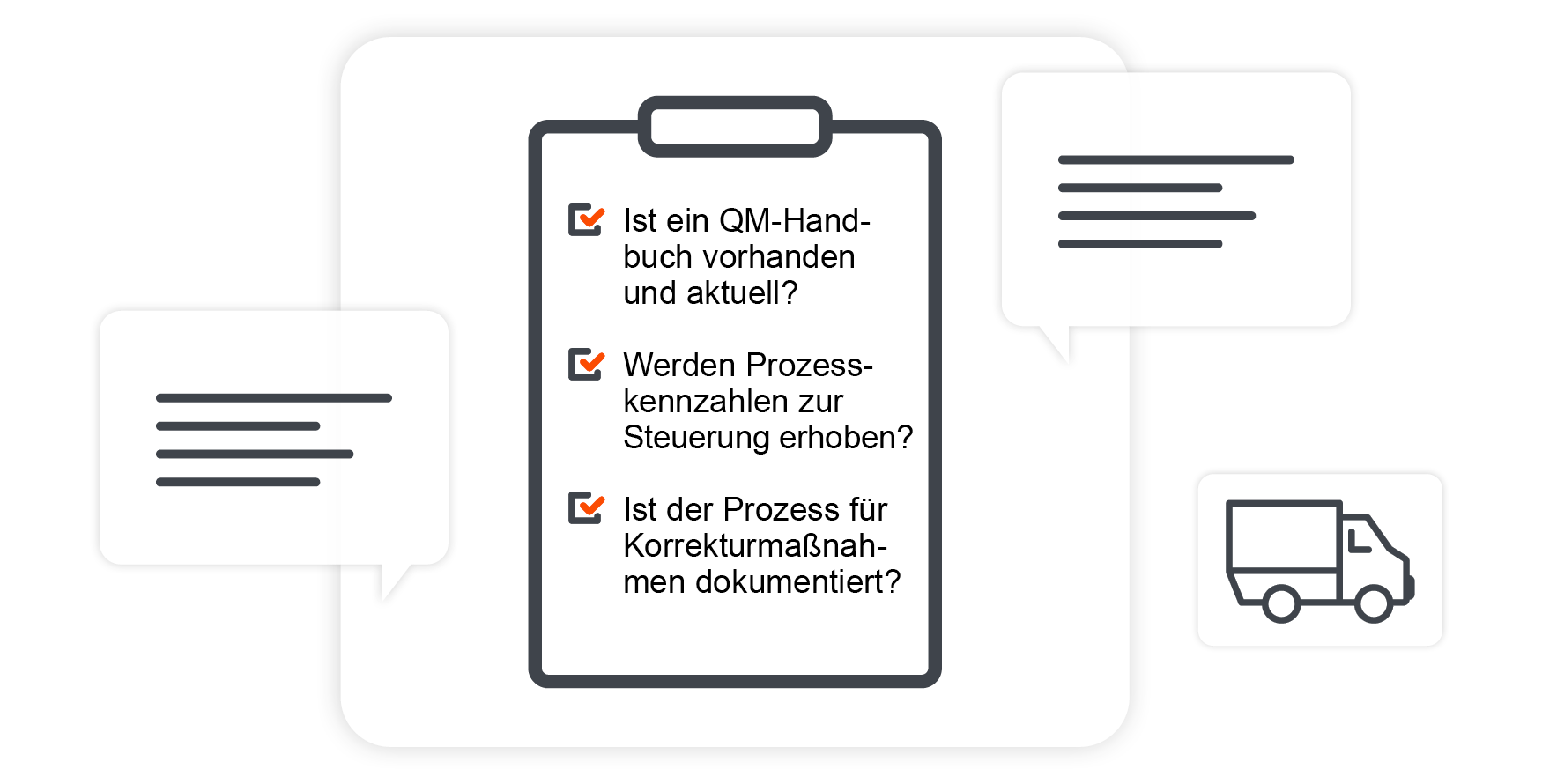
A supplier audit is a powerful tool for making your own supply chain more robust and efficient. If carried out correctly, it is not an exam that a supplier should fail, but a structured dialog at eye level. The aim of the supplier audit is to create transparency, jointly leverage potential for improvement and lay the foundations for a strong, continuously learning business relationship based on partnership.
Find out how it works in our free e-procurement report. Download now free of charge and without obligation.
Read now