![Jörg Schmidt [Head of Vendormanagement]](https://simplesystem.com/hs-fs/hubfs/Autoren_Blog/Joerg_schmidt_autor.png?width=200&name=Joerg_schmidt_autor.png)

09.09.2026

![Jörg Schmidt [Head of Vendormanagement]](https://simplesystem.com/hs-fs/hubfs/Autoren_Blog/Joerg_schmidt_autor.png?width=100&name=Joerg_schmidt_autor.png)

Effective vendor management is an essential part of corporate procurement. By managing and developing vendor relationships in a targeted manner, companies can improve their overall value creation in the long term, regardless of their industry.
Vendor management involves the systematic control and planning of relationships between companies and their vendors. The aim is to optimize the quality, availability and costs of the goods and services to be procured in procurement in order to ensure long-term security of supply and promote valuable partnerships that make the value chain more efficient and resilient.
The role of vendors in a company's success is crucial: they not only influence the quality of products and services, but also the efficiency of the entire value chain. Through reliable delivery times, innovation impulses and partnership-based cooperation, they make an important contribution to the competitiveness and long-term stability of a company along the entire supply chain.
The following core processes in vendor management ensure a low-risk, sustainable and efficient supply chain and make a significant contribution to quality management.
Digital platforms make these tasks easier. In the vendor management of simple system, administrators find new vendors, maintain vendor account numbers and propose missing vendors for connection directly. simple system then contacts the vendor, and the processing status is visible at any time.
Well-structured vendor relationship management with consistent implementation must be ensured and aligned with the corporate strategy. This is the only way to efficiently select, evaluate, develop and integrate vendors with high quality and efficiency.
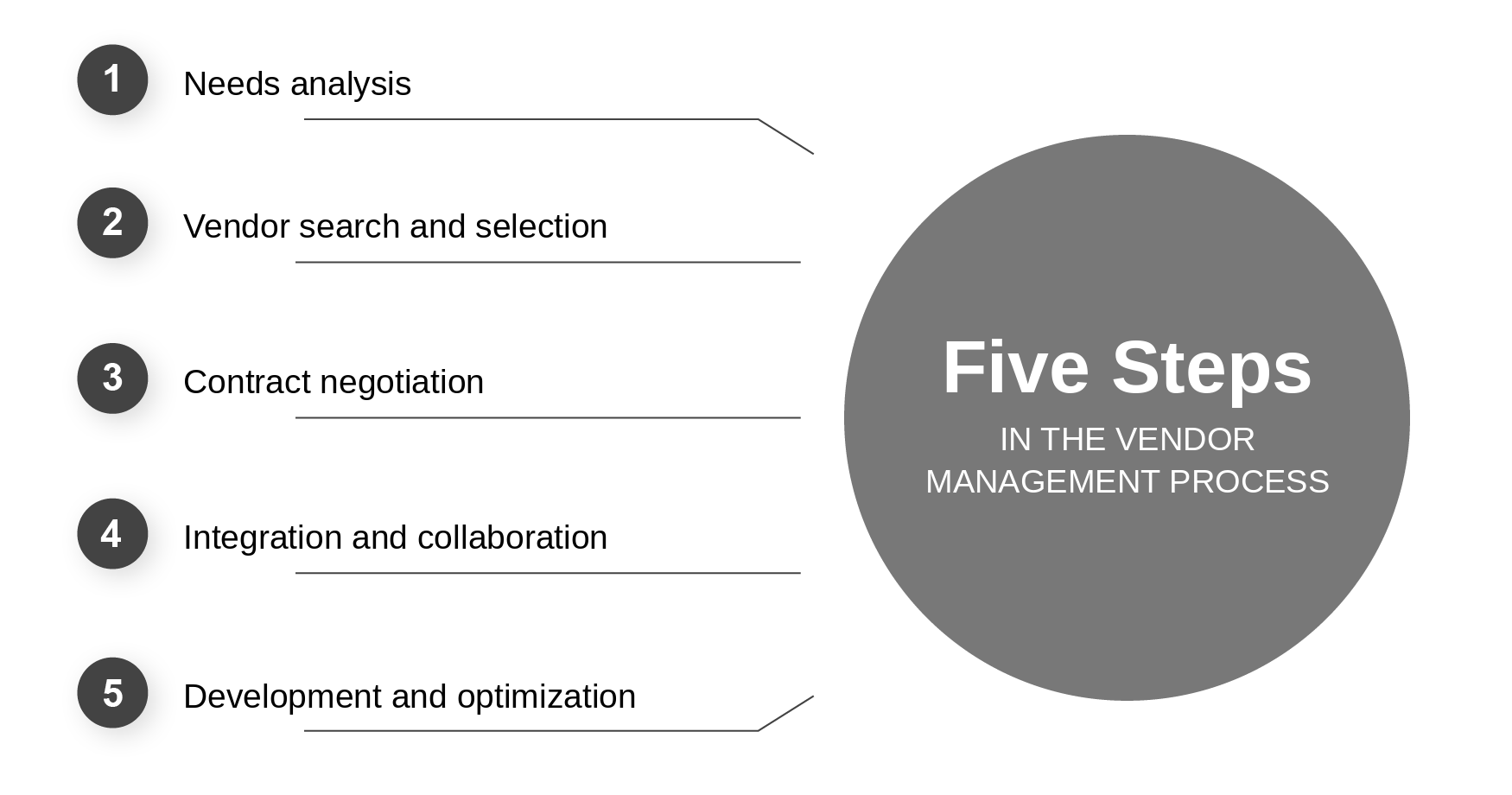
The vendor management process consists of the following five steps:
Find out how in our free e-procurement report. Download it now, free and without obligation.
Read nowModern vendor controlling pursues the goals and measures of systematically planning and managing the relationship with the vendor in order to sustainably strengthen the company's competitiveness and minimize risks in the supply chain.
The objectives of vendor management focus on the long-term establishment and development of stable partnerships, increasing vendor and product quality, exploiting synergy effects and integrating innovations and sustainability aspects.
Increasing efficiency in the value chain means optimizing and further developing procurement processes in a targeted manner, thereby reducing overall costs in the long term. At the same time, greater transparency and better comparability of vendor performance make it easier to select vendors. The bundling of procurement volumes and the continuous improvement of processes also help to conserve resources and drastically improve the procurement of goods and services.
With the help of structured vendor management, risks such as delivery failures, quality defects or dependencies are exposed at an early stage and minimized in a targeted manner, for example by diversifying the vendor base, ongoing vendor evaluation and the use of digital tools. This ensures security of supply and allows the company to react flexibly to market changes or disruptions.
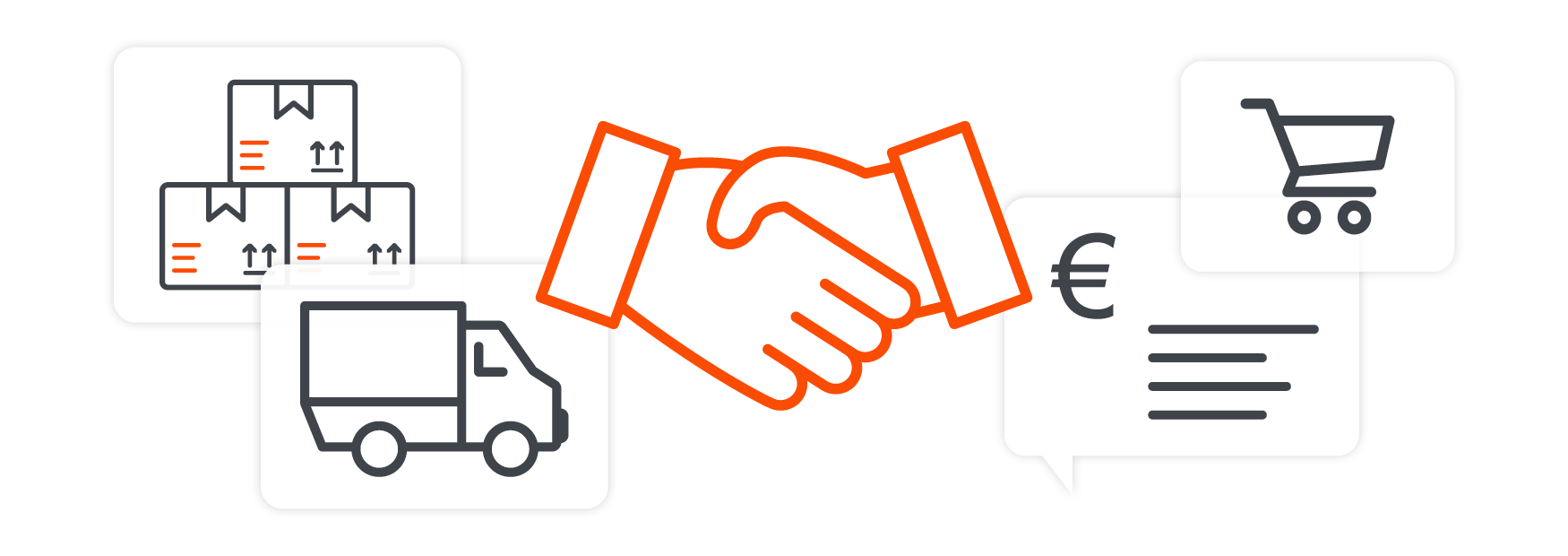
Successful collaboration with vendors is based on clear processes, transparent communication and continuous development of the partnership. With the help of targeted measures, innovative strength and quality can be sustainably increased.
Vendor qualification generally takes place before the start of the business relationship and includes a structured assessment based on defined criteria, such as quality, reliability, technical expertise, sustainability and compliance. In addition to document checks and self-assessments, audits, certificates and test deliveries are often used to objectively assess the suitability of the vendor. Vendor development focuses on continuous improvement: workshops, training or joint projects help to promote the vendor's performance in a targeted manner and prepare them for new requirements.
A structured onboarding process begins with the provision of all relevant information, from technical specifications and quality guidelines to compliance requirements and IT interfaces. It is equally important to clarify responsibilities and communication channels to ensure transparent collaboration. New collaboration partners should also be integrated into digital systems (such as ERP or SRM) in order to efficiently organize data flows and automate delivery processes. In many cases, an initial audit or vendor training is also useful to ensure that all requirements are understood and can be implemented.
Long-term successful vendor relationships are the result of collaborative partnerships, regular exchanges and shared objectives. Strategic measures such as the development of innovation partnerships, involvement in product development processes or the joint implementation of sustainability initiatives strengthen mutual trust and create added value for both sides. An open dialogue, clear key figures and a fair, solution-oriented culture of conflict are key success factors for optimizing cooperation.