![Jörg Schmidt [Head of Vendormanagement]](https://simplesystem.com/hs-fs/hubfs/Autoren_Blog/Joerg_schmidt_autor.png?width=200&name=Joerg_schmidt_autor.png)
09.09.2026

![Jörg Schmidt [Head of Vendormanagement]](https://simplesystem.com/hs-fs/hubfs/Autoren_Blog/Joerg_schmidt_autor.png?width=100&name=Joerg_schmidt_autor.png)

Vendors are more than sources of supply: they are key partners in the value chain. Vendor development is a strategic, proactive process that companies use to systematically improve the performance of their vendors. It is not about reacting to problems, but about making good partners even better and building competitive advantages together.
This article explains what vendor development means, what goals it pursues and which methods take your collaboration with vendors to the next level.
Vendor development covers all measures a buying company takes to deliberately increase the performance and capabilities of its vendors. It is a core part of strategic vendor management and aims to improve a vendor's product quality, delivery reliability, cost efficiency and capacity for innovation over the long term.
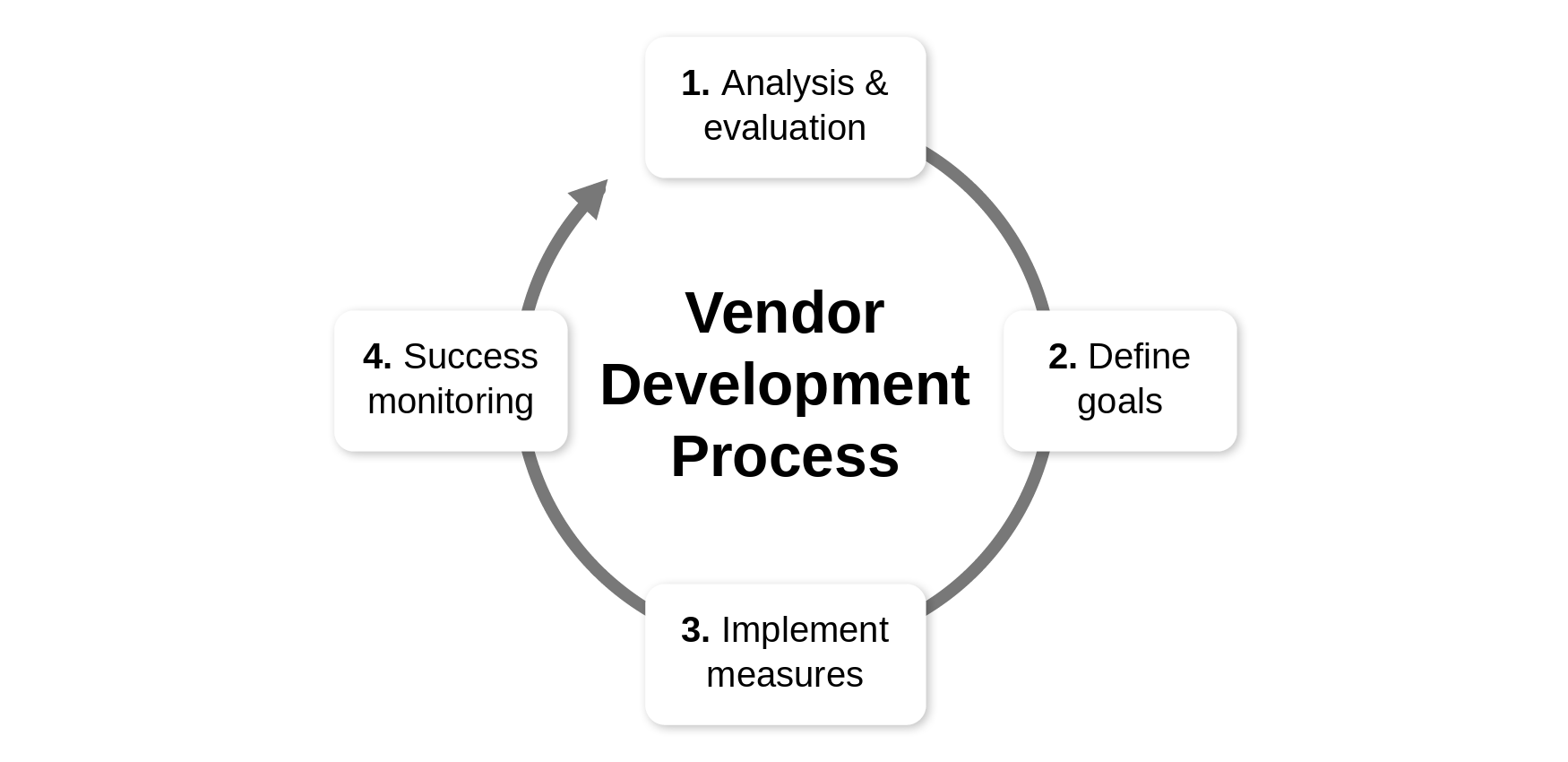
Vendor development is not an end in itself. It serves clear business goals. By working closely with selected partners, companies strengthen their own market position. The four main goals:
Find out how in our free e-procurement report. Download it now, free and without obligation.
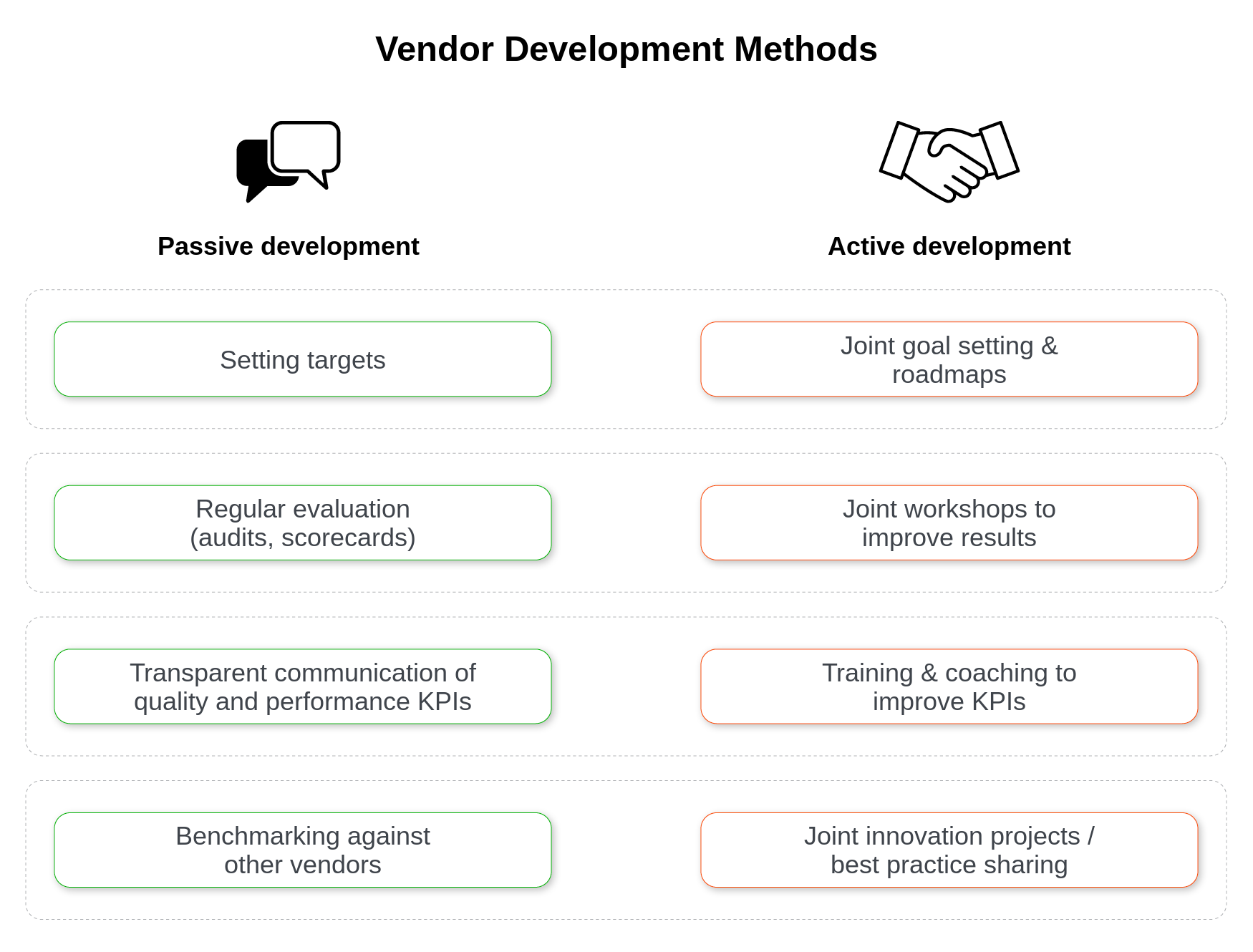
Read nowThe measures fall into two categories that differ in intensity and depth of collaboration.
This is the foundation of every professional vendor relationship. The buying company sets clear expectations and gives the vendor regular, structured feedback on its performance. The vendor is responsible for reaching the agreed goals.
Tools include:
Here the buying company gets directly and cooperatively involved in the vendor's processes. This takes time and resources on both sides.
Typical measures include:
Vendor development takes time and resources. It pays off mainly for strategic and bottleneck vendors. Vendor segmentation or the Kraljic matrix helps you identify these partners.
For non-critical C-parts and indirect materials, a lean process is usually the bigger lever. On simple system, more than 28,000 buyers order from over 1,000 vendors through one access point. The controlling module shows your purchasing analytics. That leaves procurement more time for the partners where development really pays off.
Successful vendor development is not a cost but one of the most important strategic investments procurement can make. Systematically improving the performance of your key partners cuts costs, reduces risk and builds resilient, flexible supply chains.
Want to streamline indirect procurement and free up time for strategic vendors? Try simple system free for 30 days or book a demo.