![Andy Freund [Head of Growth & Customer Management]](https://simplesystem.com/hs-fs/hubfs/Autoren_Blog/Andy_Freund_autor.png?width=200&name=Andy_Freund_autor.png)
09.09.2026

![Andy Freund [Head of Growth & Customer Management]](https://simplesystem.com/hs-fs/hubfs/Autoren_Blog/Andy_Freund_autor.png?width=100&name=Andy_Freund_autor.png)

Procurement tools are software solutions and platforms that help companies make procurement more efficient and cost-effective. From demand planning, vendor evaluation and ordering to budget control, they cover the entire purchasing cycle.
This article explains the role of procurement in purchasing, which types of procurement tools exist, how they automate processes and what to look for when choosing one.
Procurement tools are digital tools that support some or all steps of procurement: capturing demand, finding and evaluating vendors, managing contracts, ordering, approving, checking invoices and analyzing spend. They replace manual work via email, phone and Excel with automated, traceable processes.
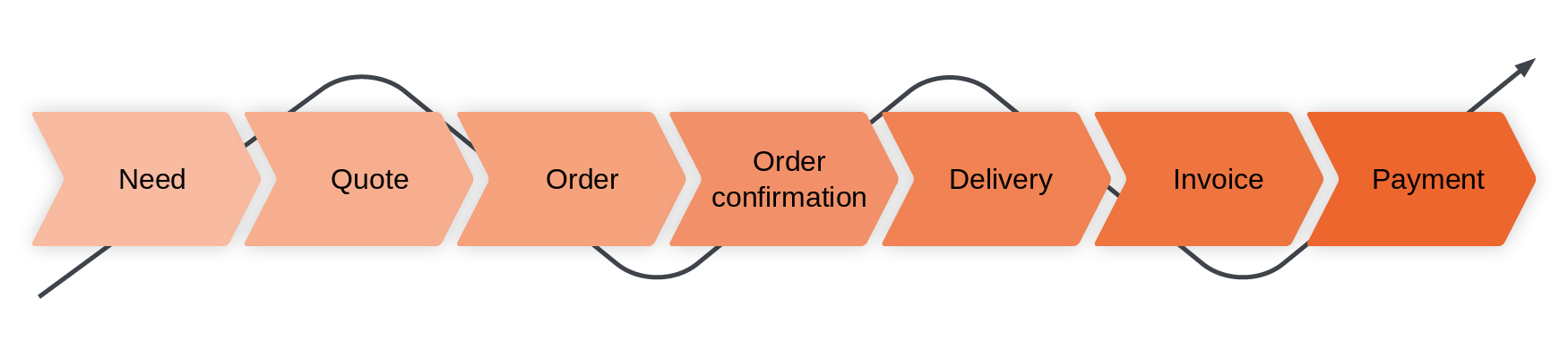
Procurement covers the entire process by which a company obtains goods and services, from identifying needs to delivery and inspection. It directly affects cost, quality and efficiency:
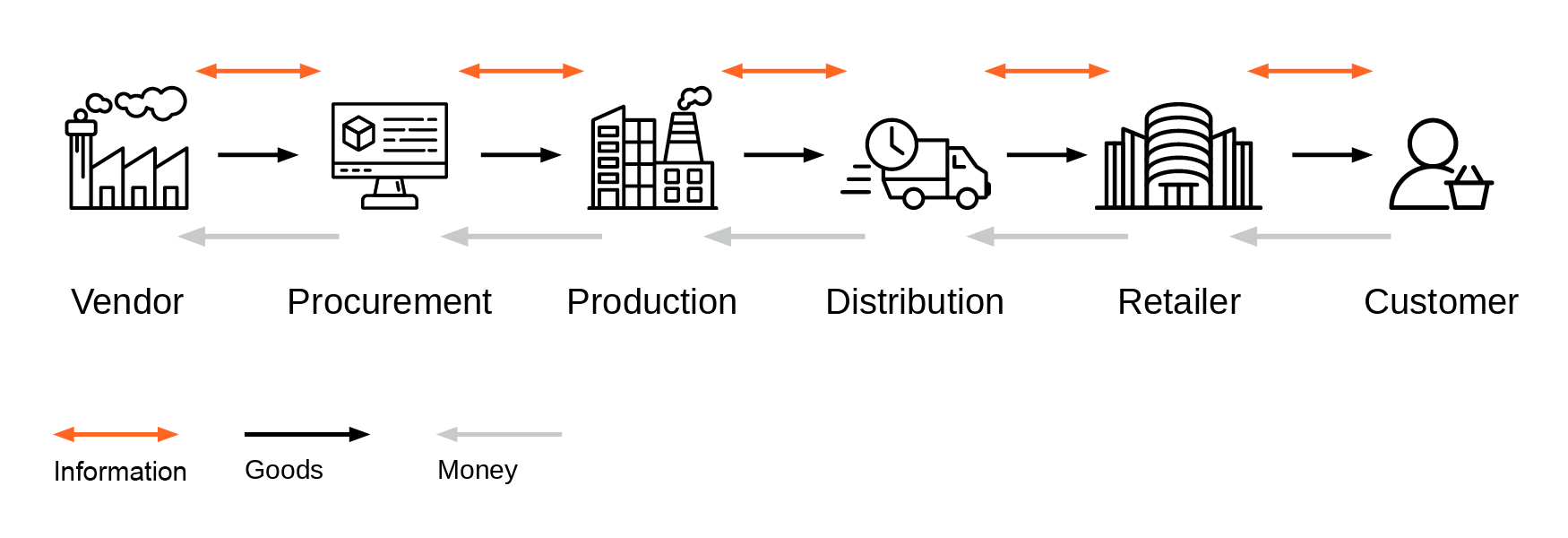
In supply chain management, procurement management makes sure goods and services flow smoothly from vendors into the company. Without digital tools, this web of vendors, ordering channels and departments quickly becomes confusing.
| Tool category | Used for | Typical functions |
|---|---|---|
| E-procurement and catalog platforms | Operational purchasing, indirect materials | Catalogs, shopping cart, approvals, budgets, ERP integration |
| Purchase-to-pay software | End-to-end process through to payment | Requisition, purchase order, goods receipt, invoice checking |
| Sourcing and tendering tools | Vendor search and quotes | RFQ/RFP, quote comparison, auctions |
| Contract management | Contracts and terms | Contract repository, deadlines, approvals, compliance |
| Spend analytics | Spend transparency | Analysis by vendor, category, cost center |
| Vendor management (SRM) | Vendor relationships | Master data, evaluation, audits, risk management |
Find out how in our free e-procurement report. Download it now, free and without obligation.
Read now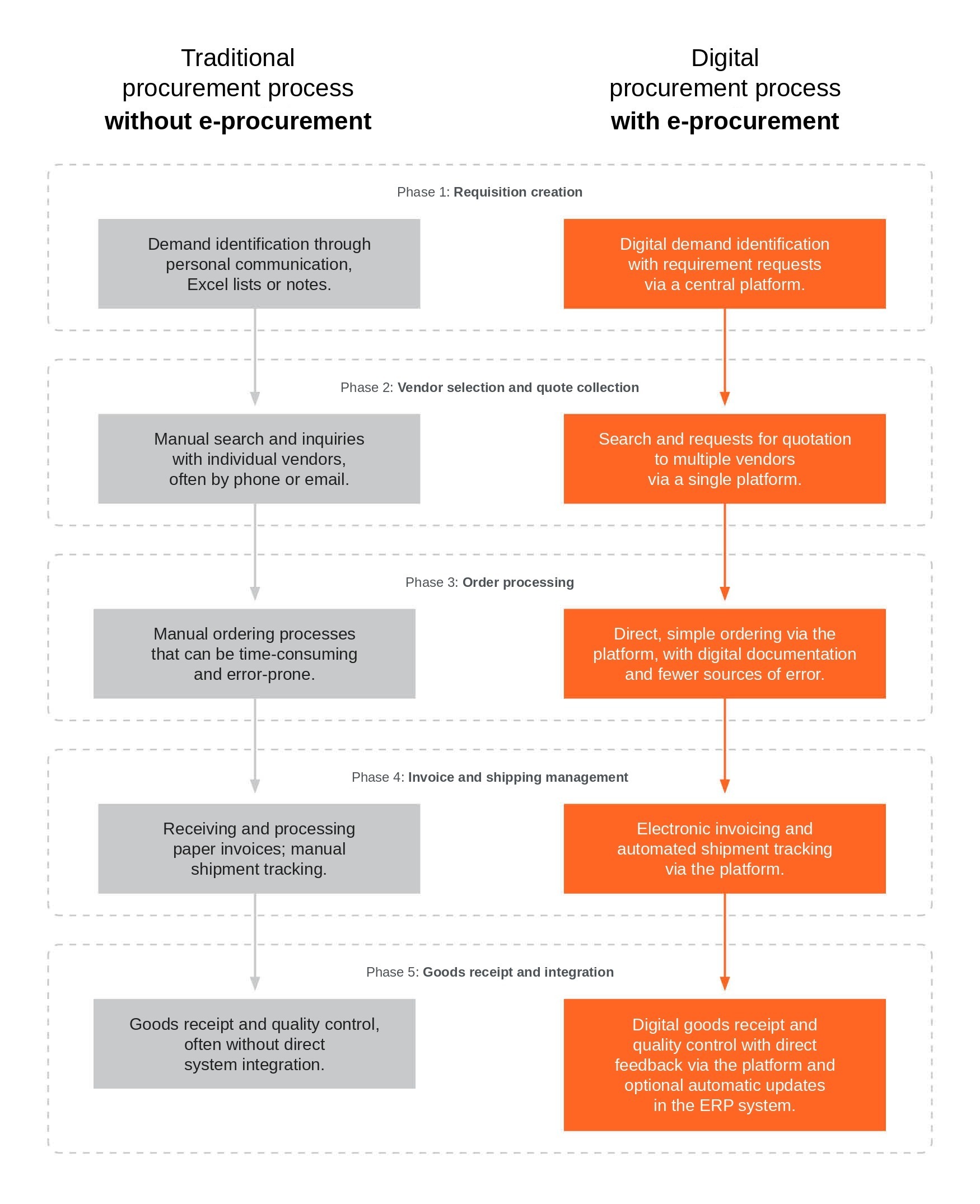
A key lever is the integration of modern technology. Procurement tools process orders faster and more accurately and provide data for better decisions. Add strategic vendor management, analysis of internal workflows, best practices, sustainability criteria and KPIs such as delivery time, cost and quality. Learn more in our article on how to optimize the procurement process.
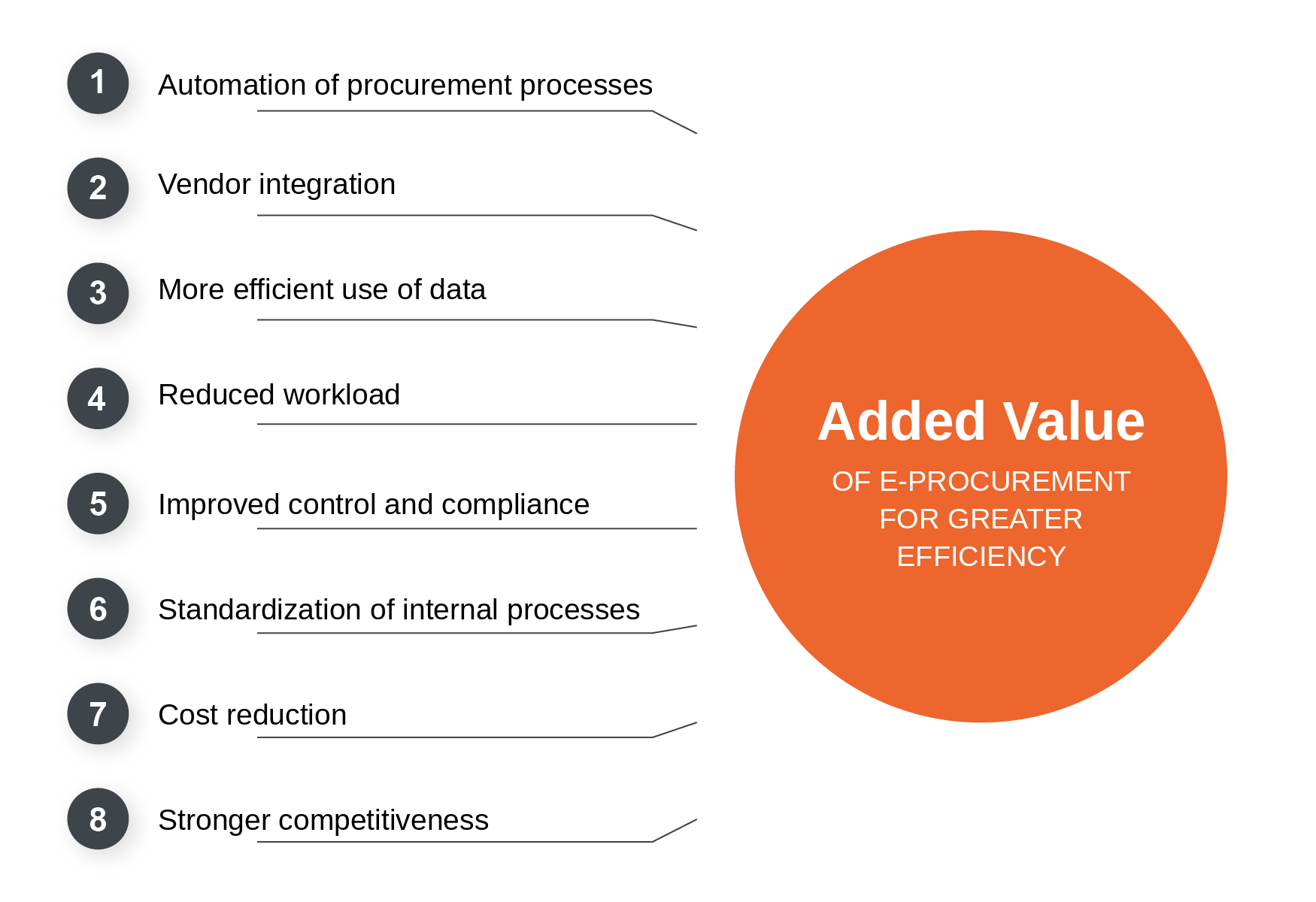
Workflow automation speeds up order processing, reduces manual intervention and lowers the error rate. Integrated systems improve data quality, deliver real-time data and make compliance easier. Automated communication makes order and delivery status visible to everyone involved.
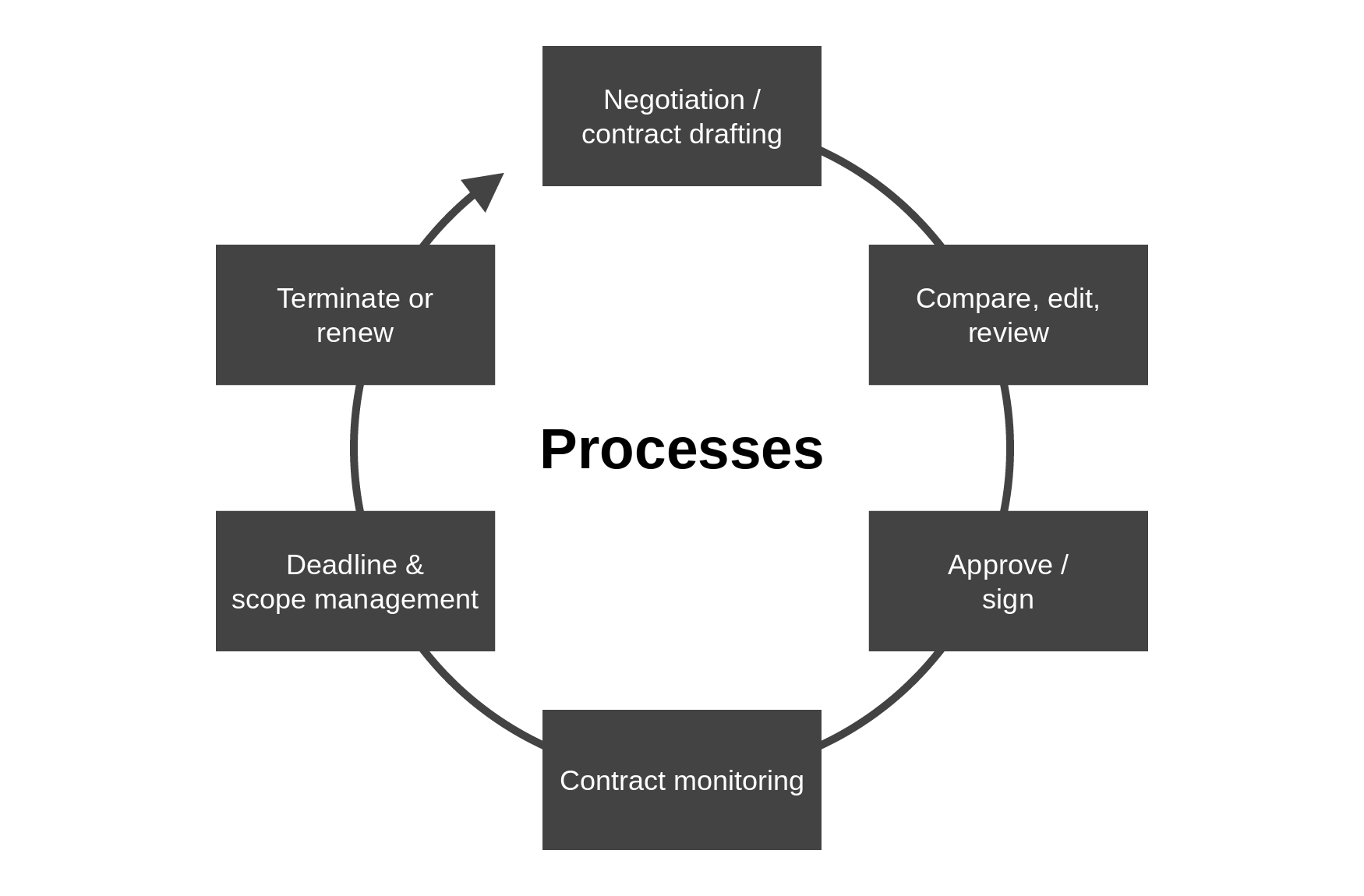
Contract management software automates the administration, monitoring and compliance of vendor contracts. That secures control over terms and deadlines, reduces risk and ensures compliance.
simple system is a neutral e-procurement platform with no trading of its own. More than 28,000 buyers order there from over 1,000 vendors through one access point, at their own negotiated terms. Approvals and budgets run digitally, and order data goes via OCI/punchout or directly into the ERP. The controlling module shows your purchasing analytics. It takes around 30 days from start to go-live.
Procurement tools make procurement faster, more transparent and cheaper. From cost optimization and quality assurance to vendor management, they cover the entire purchasing cycle. Which tools you need depends on your processes. For indirect procurement, an e-procurement platform is usually the biggest lever.
Want to test a procurement tool for indirect procurement? Try simple system free for 30 days or book a demo.