![Fabian von Kleinsorgen [VP Growth & Sales Operations]](https://simplesystem.com/hs-fs/hubfs/Autoren_Blog/Fabian_vin_kleinsorgen_autor.png?width=200&name=Fabian_vin_kleinsorgen_autor.png)

09.09.2026

![Fabian von Kleinsorgen [VP Growth & Sales Operations]](https://simplesystem.com/hs-fs/hubfs/Autoren_Blog/Fabian_vin_kleinsorgen_autor.png?width=100&name=Fabian_vin_kleinsorgen_autor.png)

Key figures (KPIs) optimize procurement by measuring costs, efficiency and vendor performance. Important KPIs include TCO, ROI, on-time delivery and level of automation. Regular reviews and digital tools improve procurement strategy and competitiveness.
Key figures (KPIs) play a vital role in monitoring efficiency and profitability in the procurement process. They provide valuable insights and form the basis for sound decisions. By choosing the right KPIs, companies identify bottlenecks early, reduce spending and improve collaboration with their vendors. But which key figures exist, and which ones carry the most weight?
A KPI (key performance indicator) is a measurable metric in procurement that is tracked regularly to show developments over short and longer periods. It serves as the basis for managing the procurement organization.
They are an essential tool for strategic procurement. With key figures, processes can be managed and optimized. They provide valuable insights and support well-founded decisions.
It is important to distinguish between key figures and KPIs. Key figures are general measurements. KPIs are specific performance indicators that are directly linked to strategic corporate goals.
To assess the performance and effectiveness of procurement comprehensively, you need a selection of relevant key figures. They deliver insights into different aspects of the procurement process and enable targeted optimization. The following key figures have proven particularly effective in procurement controlling:
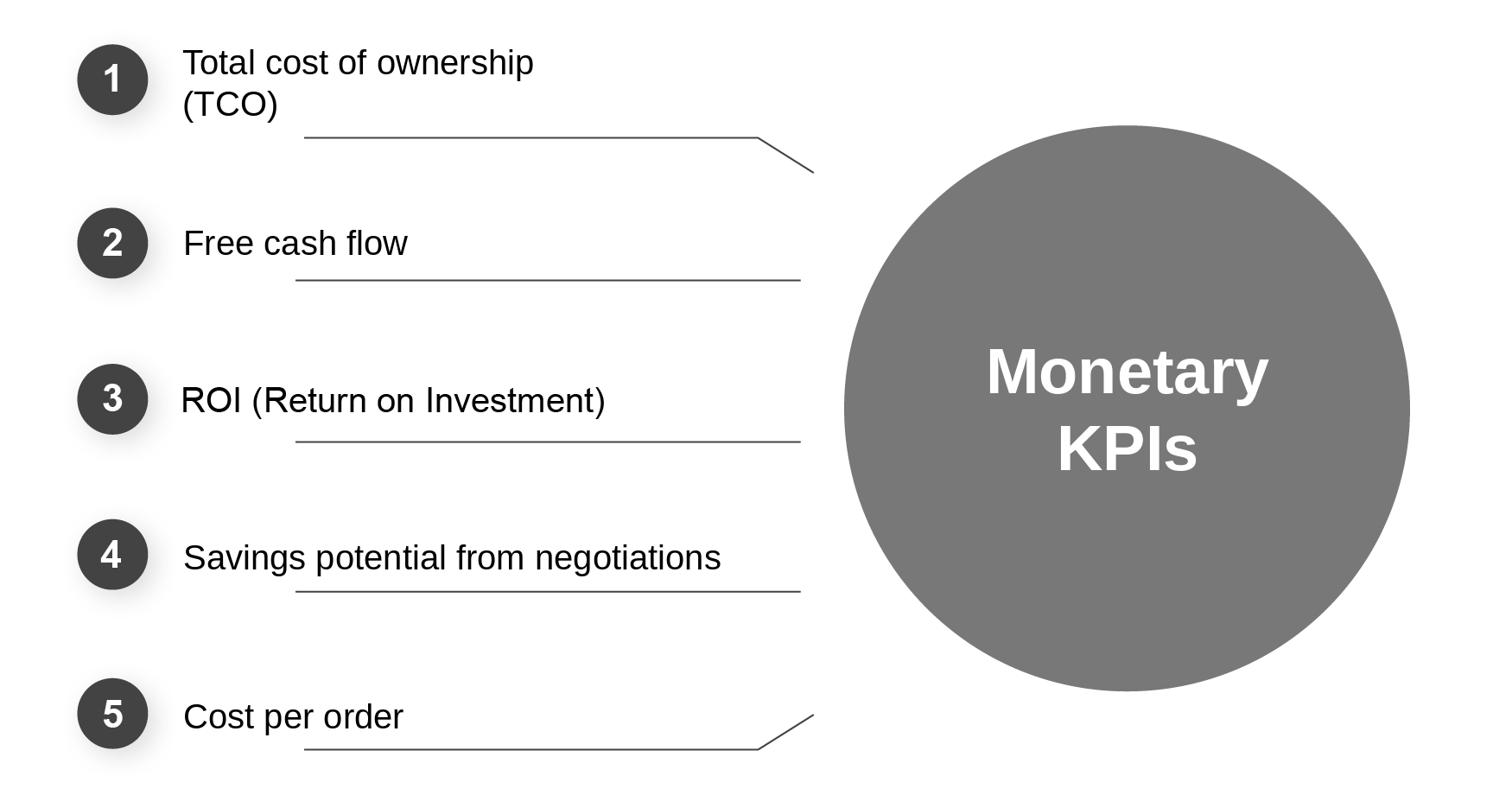
Monetary key figures are crucial for evaluating financial performance in the procurement process. The most important ones are:
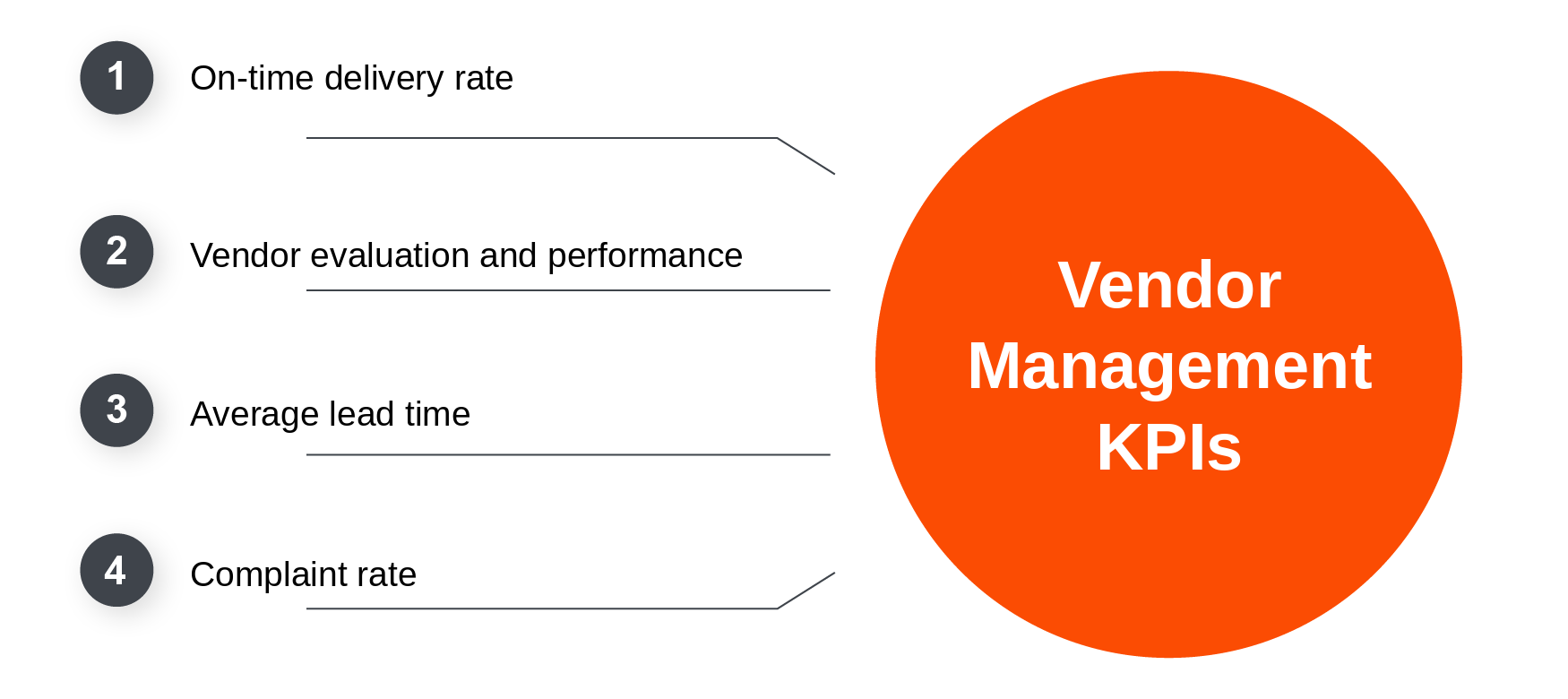
Key figures for vendor management are essential for evaluating and optimizing procurement with regard to vendors. The most important ones are:
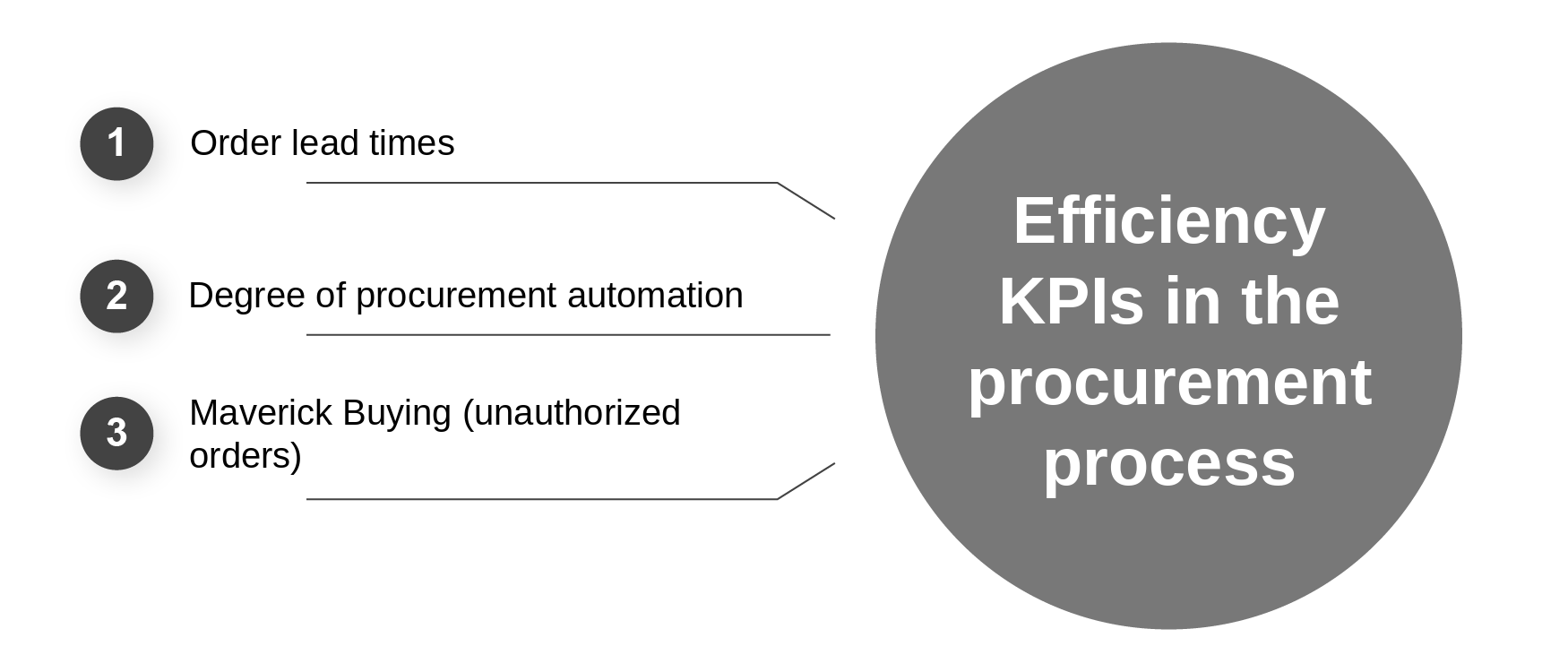
Efficiency key figures measure the performance and cost-effectiveness of individual procurement activities. They help companies identify optimization potential. Important efficiency key figures are:
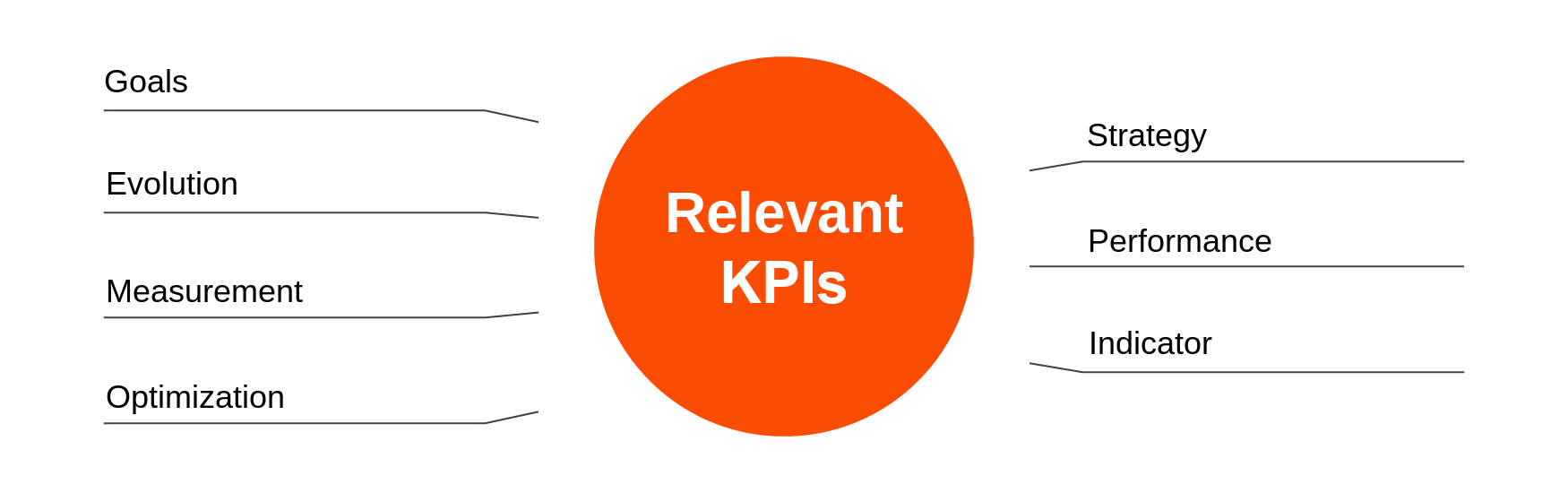
Which KPIs matter depends on the individual goals and the specific situation of the company. A balanced mix of KPIs from different areas enables a holistic analysis of procurement performance. When choosing KPIs, procurement and logistics should follow their own roadmap, include all relevant business areas and distinguish between strategic and operational goals.
Regular checks and adjustments are essential to keep KPIs meaningful. The following recommendations help you choose suitable indicators.
KPIs should always be closely linked to the corporate strategy. They act as a guide that leads the company toward its long-term goals and provides regular feedback. Choose the KPIs that best represent the essential aspects of your business strategy. The right selection ensures that all activities are in line with the company's overall goals.
For a holistic view of performance, include KPIs from all important business areas: finance, customer relationships, internal processes and employee development. Broad coverage means companies monitor not only financial aspects but also customer satisfaction and process and employee productivity.
This comprehensive view reveals connections between departments and supports data-driven decisions that benefit the whole company.
In short, strategic goals set the company's course, while operational goals cover day-to-day implementation. The two differ in time horizon and focus.
Strategic goals look years ahead and define the direction of the company, for example market leadership, new markets or sustainable growth. KPIs for these goals should reflect the company's vision and mission.
Operational goals are shorter-term and concern day-to-day business. They are specific, measurable and time-bound, often to weeks or months. Typical examples are higher product efficiency, lower operating costs or better customer satisfaction. Operational goals turn long-term plans into concrete steps and make progress measurable in areas such as sales, production or marketing.
KPIs are not static. They should evolve with the company and its environment. A regular evaluation ensures that procurement KPIs remain relevant and meaningful. Markets change, new technologies emerge and strategies adapt, so procurement KPIs must be flexible too.
Tip: An annual or semi-annual review keeps your KPIs up to date and helps you react quickly to market changes.
Modern tools and software are vital for measuring and analyzing procurement KPIs. ERP systems and e-procurement platforms are particularly important. ERP systems such as SAP offer buyers comprehensive functions, from planning to automating procurement processes. They centralize data management and improve transparency across the entire procurement process. E-procurement platforms complement them by optimizing operational procurement with an intuitive user interface. Companies benefit from simpler catalog management and a simpler ordering process.
One such e-procurement solution is simple system. It integrates seamlessly with existing ERP systems and significantly reduces manual effort. Besides access to more than 1,000 vendors, simple system offers purchasing analytics and clear dashboards. They visualize purchasing behavior, vendor performance and optimization potential. Digitalize your procurement processes now and gain an edge over the competition.
By continuously monitoring KPIs, companies optimize their procurement and stay competitive. Regular monitoring helps to detect trends early, reveal weaknesses and make well-founded decisions. Companies react quickly to market changes and initiate improvements without delay. Deviations from the plan become visible immediately, so teams can take corrective action and reach their goals.
KPIs in materials management form the foundation of a successful procurement strategy. Modern tools and e-procurement solutions such as simple system optimize the procurement organization by automating data collection and providing meaningful dashboards. They let companies monitor their procurement activities in real time and make well-founded decisions. Both are key to gaining a competitive edge.