![Jörg Schmidt [Head of Vendormanagement]](https://simplesystem.com/hs-fs/hubfs/Autoren_Blog/Joerg_schmidt_autor.png?width=200&name=Joerg_schmidt_autor.png)

09.09.2026

![Jörg Schmidt [Head of Vendormanagement]](https://simplesystem.com/hs-fs/hubfs/Autoren_Blog/Joerg_schmidt_autor.png?width=100&name=Joerg_schmidt_autor.png)

Order confirmations by email, invoices as PDFs, certificates in different folders and phone calls about delivery status: working with many vendors takes up a lot of time in procurement. A vendor portal brings all this communication together in one place.
A vendor portal (also called a supplier portal) is a web-based platform through which a buying company and its vendors exchange information and documents. It brings master data, orders, invoices and certificates together in one place and enables direct, transparent collaboration. That makes it a key tool for digital vendor management.
A vendor portal does not just improve a single process. It affects procurement as a whole. Both sides, your company and your vendors, benefit from clear structures and digital workflows.
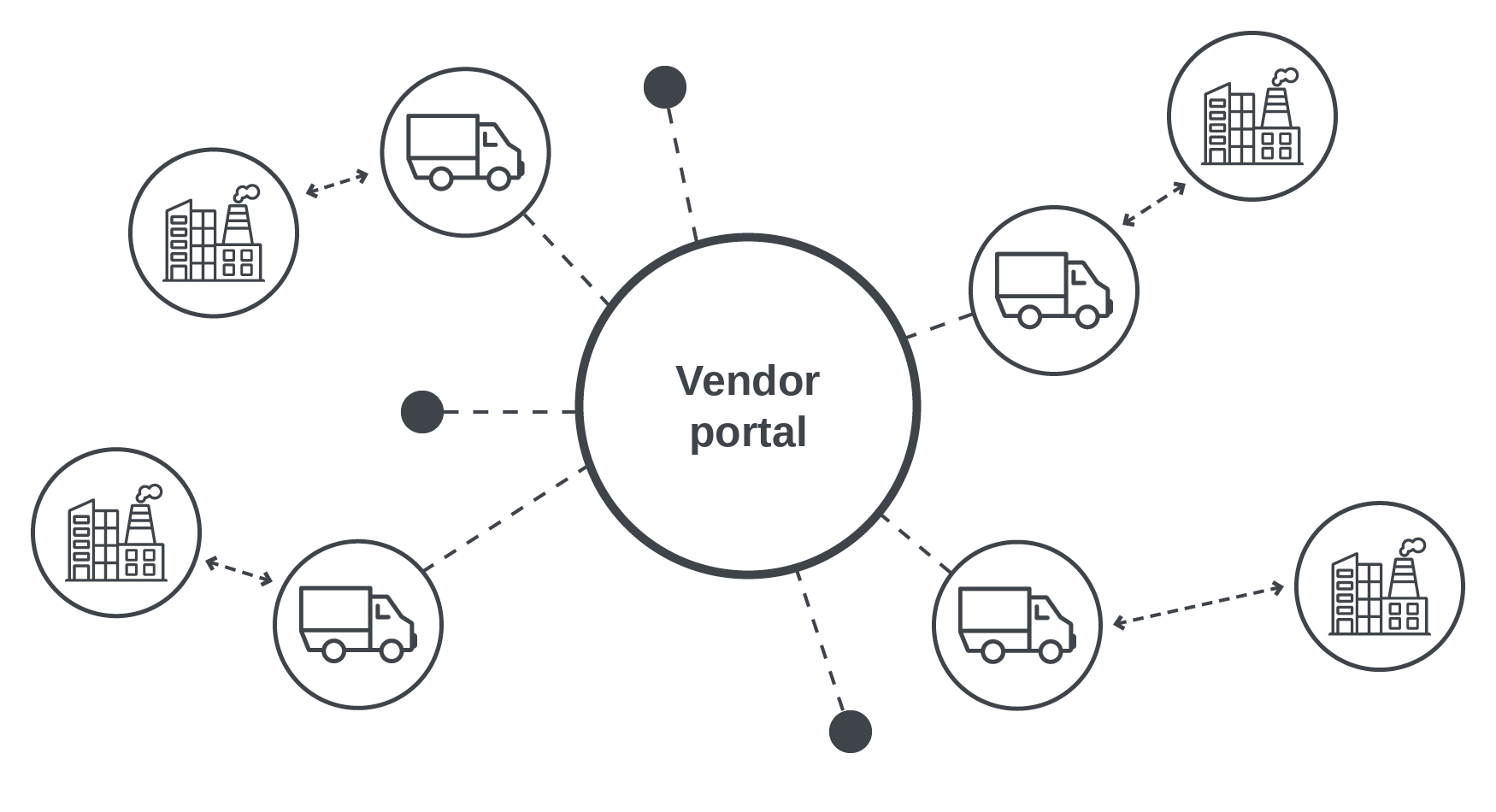
Manual data entry, status inquiries and searching for documents are no longer needed. The portal automates routine tasks and gives your procurement team more time for strategic work. Vendors maintain their own master data, upload invoices directly and track the status of their deliveries themselves.
Vendors see the status of their orders and invoices in real time. Your internal team has access to current vendor data and documents at any time. This shared data basis ("single source of truth") avoids misunderstandings and creates a traceable history of all transactions.
New partners register themselves through a standardized process. A digital questionnaire collects company data, certificates (for example on sustainability) and documents and stores them centrally. This makes vendor onboarding much simpler and faster.
A vendor portal is the basis for modern supplier relationship management (SRM). It provides performance data you can use to evaluate vendors systematically against KPIs and to manage relationships with strategic partners.
Smooth communication and transparent collaboration strengthen the partnership. Problems are spotted and solved faster, and the business relationship becomes more resilient. Both sides act as informed partners on equal terms.
Find out how in our free e-procurement report. Download it now, free and without obligation.
Read nowA dedicated vendor portal pays off mainly for working with strategic vendors, for example in direct procurement. Indirect procurement often looks different: companies order from a large number of vendors, usually in small quantities. Bringing each one into a portal of your own takes a lot of effort.
An e-procurement platform such as simple system takes a different approach: over 1,000 vendors are already connected. More than 28,000 buyers order there through one access point at their own negotiated terms, with digital approvals and order data going straight into the ERP. You can connect your own vendors too.
A vendor portal is more than a technical tool. It is a strategic building block of digitalization that fundamentally improves collaboration with your vendors. Centralizing and digitalizing your procurement processes lays the foundation for agile, transparent and cost-efficient purchasing.
Want to bring your vendors for indirect procurement together on one platform? Try simple system free for 30 days or book a demo.