![Jörg Schmidt [Head of Vendormanagement]](https://simplesystem.com/hs-fs/hubfs/Autoren_Blog/Joerg_schmidt_autor.png?width=200&name=Joerg_schmidt_autor.png)

09.09.2026

![Jörg Schmidt [Head of Vendormanagement]](https://simplesystem.com/hs-fs/hubfs/Autoren_Blog/Joerg_schmidt_autor.png?width=100&name=Joerg_schmidt_autor.png)

The right supplier is the foundation of every successful supply chain and therefore a decisive factor for a company's success. But what exactly defines a supplier, what types are there and what criteria should you use to select the best partner for your company?
This page provides you with a central overview of the topic. We clarify the most important terms and show you the crucial aspects of dealing with your suppliers - from the initial search to the long-term partnership.
A supplier is a natural or legal person who regularly provides goods(products) or services to a company in return for payment. In a business context, the supplier is the creditor and the purchasing company is the debtor. It is an essential part of the value and supply chain.
A supplier is more than just a seller. He is a business partner who makes his customer's business activities possible in the first place by providing materials, components or services. The business relationship is usually designed for long-term cooperation. In contrast to a one-off transaction, the supplier provides goods and services regularly and on the basis of a framework or individual contract.
From an economic point of view, the supplier often also plays the role of a lender by granting supplier credit through the granting of payment terms. They are the primary point of contact for purchasing to ensure supply.
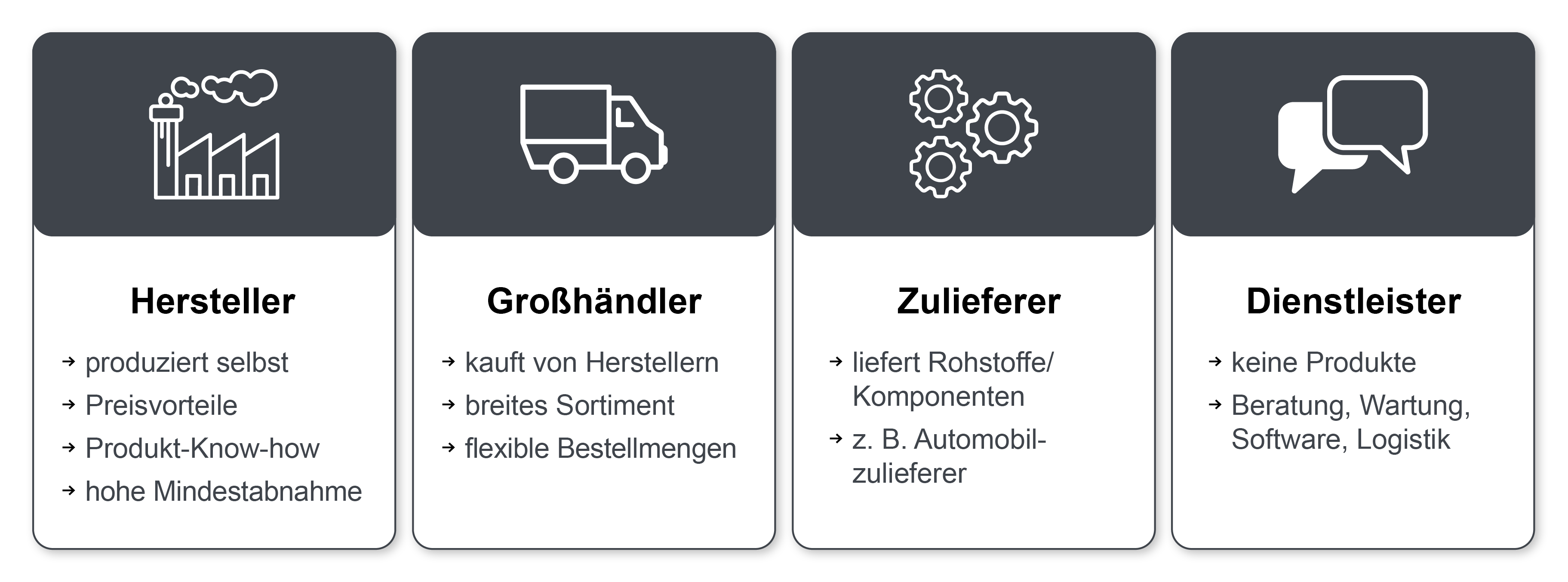
The term "supplier" is a generic term for different types of business partners. Depending on your needs and business model, you will work with different types. The correct classification will help you to identify the right partner when searching for a supplier.
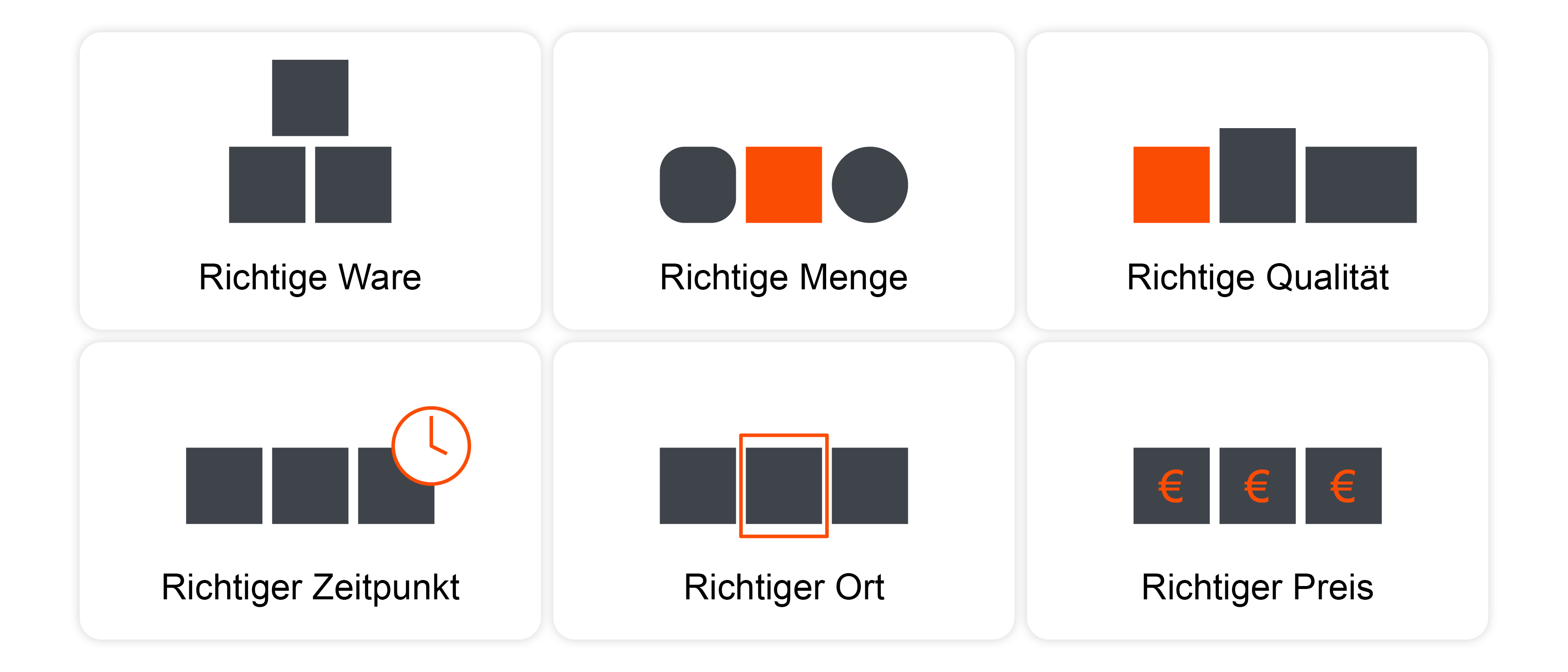
Supplier selection is a strategic process that goes far beyond a simple price comparison. A proven model from logistics is the six-R rule. It states that the right goods must be procured in the right quantity and quality, at the right time, in the right place and at the right price. The key criteria for your decision are derived from this.
Find out how it works in our free e-procurement report. Download now free of charge and without obligation.
Read it nowBefore you award a contract, you should evaluate each potential partner based on these criteria:
The work does not end with the selection of the right partner. A successful business relationship must be actively maintained and managed. This is where supplier management comes into play. It encompasses all measures for managing, developing and evaluating your suppliers.
The aim is to continuously monitor performance, minimize risks and leverage potential together with strategic partners. This includes regularly carrying out a supplier evaluation to ensure that performance meets your expectations on an ongoing basis.
What is the difference between a supplier and a subcontractor?A subcontractor is a special type of supplier. It usually supplies raw materials, parts or a component that are directly incorporated into the purchasing company's production. The term supplier is the broader generic term for all suppliers of both end products and supply parts.
How many suppliers should you have?This depends on the strategic importance of the product. For critical components, many companies rely on a multi-sourcing strategy (several suppliers) to minimize the risk of failure. For non-critical C-parts, a single-sourcing strategy (one supplier) is often more efficient.
What is a supplier declaration and why is it important?A supplier's declaration is a document issued by manufacturers and wholesalers to prove that the products supplied meet certain origin or quality requirements. It is important to meet legal requirements in procurement and to ensure the quality of the products that are integrated into the purchasing process.
How do I carry out a supplier audit?To carry out a supplier audit, you should first define the criteria that are important for assessing the reliability and quality of suppliers. These include, for example, compliance with the six-R rule, regular intervals between audits and documentation of the results. You should then identify the relevant information to evaluate the supplier's performance and make any necessary adjustments to procurement.
How can I manage supplier registration efficiently?To manage supplier registration efficiently, you should set up a centralized system to store all relevant information. This will allow you to quickly import the data and organize product photos and other documents. You should also carry out regular supplier updates and assessments to ensure that you are always working with reliable partners.