![Fabian von Kleinsorgen [VP Growth & Sales Operations]](https://simplesystem.com/hs-fs/hubfs/Autoren_Blog/Fabian_vin_kleinsorgen_autor.png?width=200&name=Fabian_vin_kleinsorgen_autor.png)

09.09.2026

![Fabian von Kleinsorgen [VP Growth & Sales Operations]](https://simplesystem.com/hs-fs/hubfs/Autoren_Blog/Fabian_vin_kleinsorgen_autor.png?width=100&name=Fabian_vin_kleinsorgen_autor.png)

Supplier Relationship Management (SRM) is a strategic approach to actively managing supplier relationships and maximizing the value of each partnership. Unlike traditional, reactive supplier management, SRM focuses on the most important partners, promotes innovation, increases efficiency, minimizes risks and strengthens competitiveness through close, value-adding collaboration.
This is precisely where Supplier Relationship Management (SRM) comes in: Similar to the way Customer Relationship Management (CRM) focuses on customer relationships, SRM revolutionizes the way companies deal with suppliers. It is a holistic approach to developing genuine, value-adding partnerships from pure supplier relationships.
This article explains exactly what SRM is, how it differs from traditional supplier management and which processes are crucial for successful implementation.
Supplier relationship management, or SRM for short, is a company's systematic and strategic approach to planning and managing collaboration with suppliers. The aim is to maximize the value of each supplier relationship. This is done by segmenting the supplier base, developing customized strategies for each group and continuously measuring supplier performance.
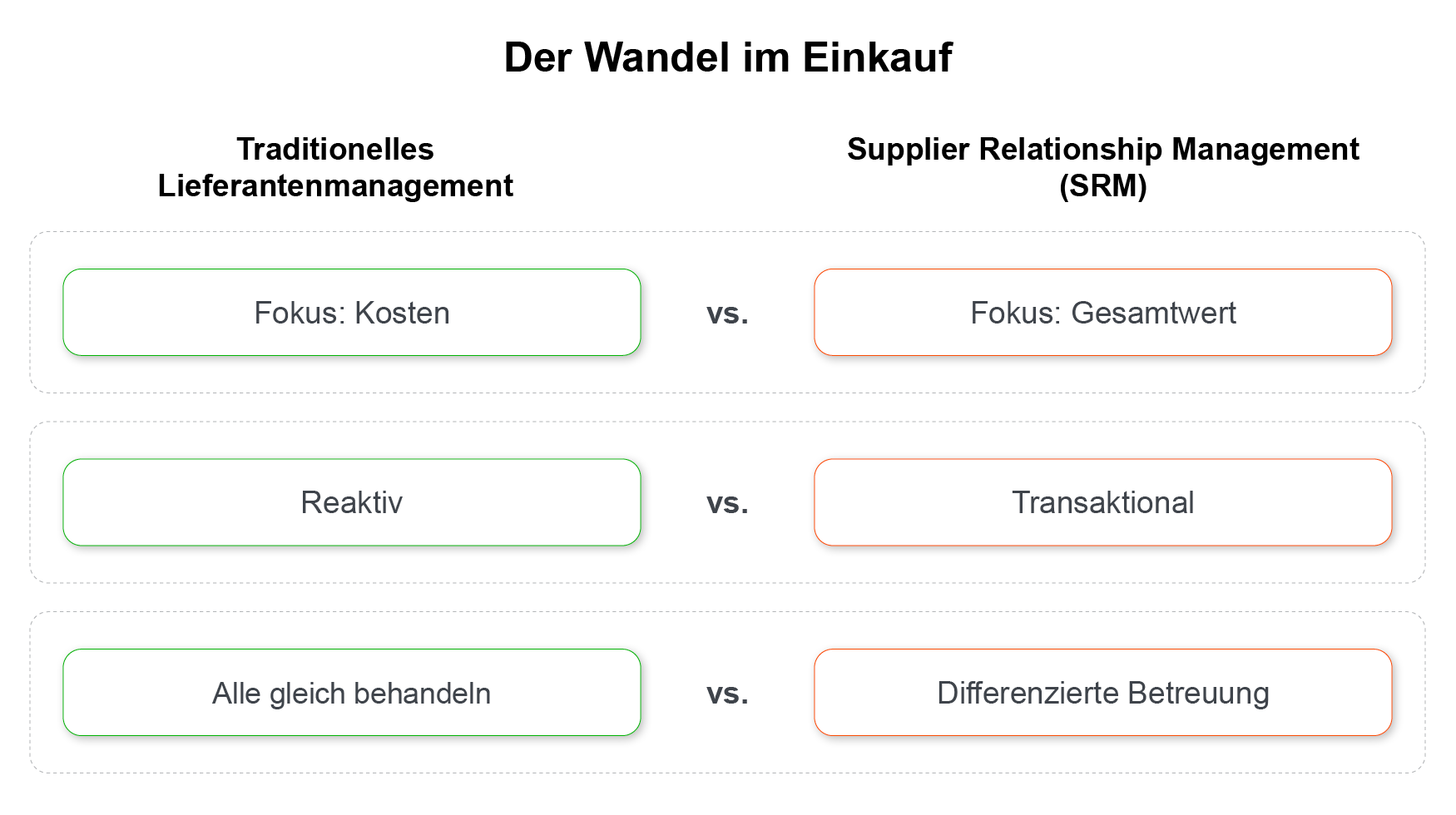
Although the terms are often used interchangeably, there is a fundamental difference between traditional supplier management and strategic supplier relationship management.
Traditional supplier management is often reactive and administrative in nature. It focuses on operational tasks such as processing orders, monitoring delivery dates and checking invoices. All suppliers are often treated in the same way.
SRM, on the other hand, is a proactive and strategic process. It recognizes that not all suppliers have the same importance for the company's success. Instead of treating everyone the same, SRM focuses resources on the most important and strategic partners. The aim is not just to process transactions efficiently, but to create shared value, promote innovation and sustainably strengthen the company's competitiveness through close cooperation.
Effective SRM pursues several interlinked objectives that go far beyond pure procurement. It is about creating a win-win situation that benefits both your company and your strategic partners.
Find out how it works in our free e-procurement report. Download now free of charge and without obligation.
Read it nowSupplier relationship management is not a one-off project, but a continuous, cyclical process. Leading procurement organizations such as the Chartered Institute of Procurement & Supply (CIPS) emphasize the importance of a structured approach. The process can generally be divided into four main phases.
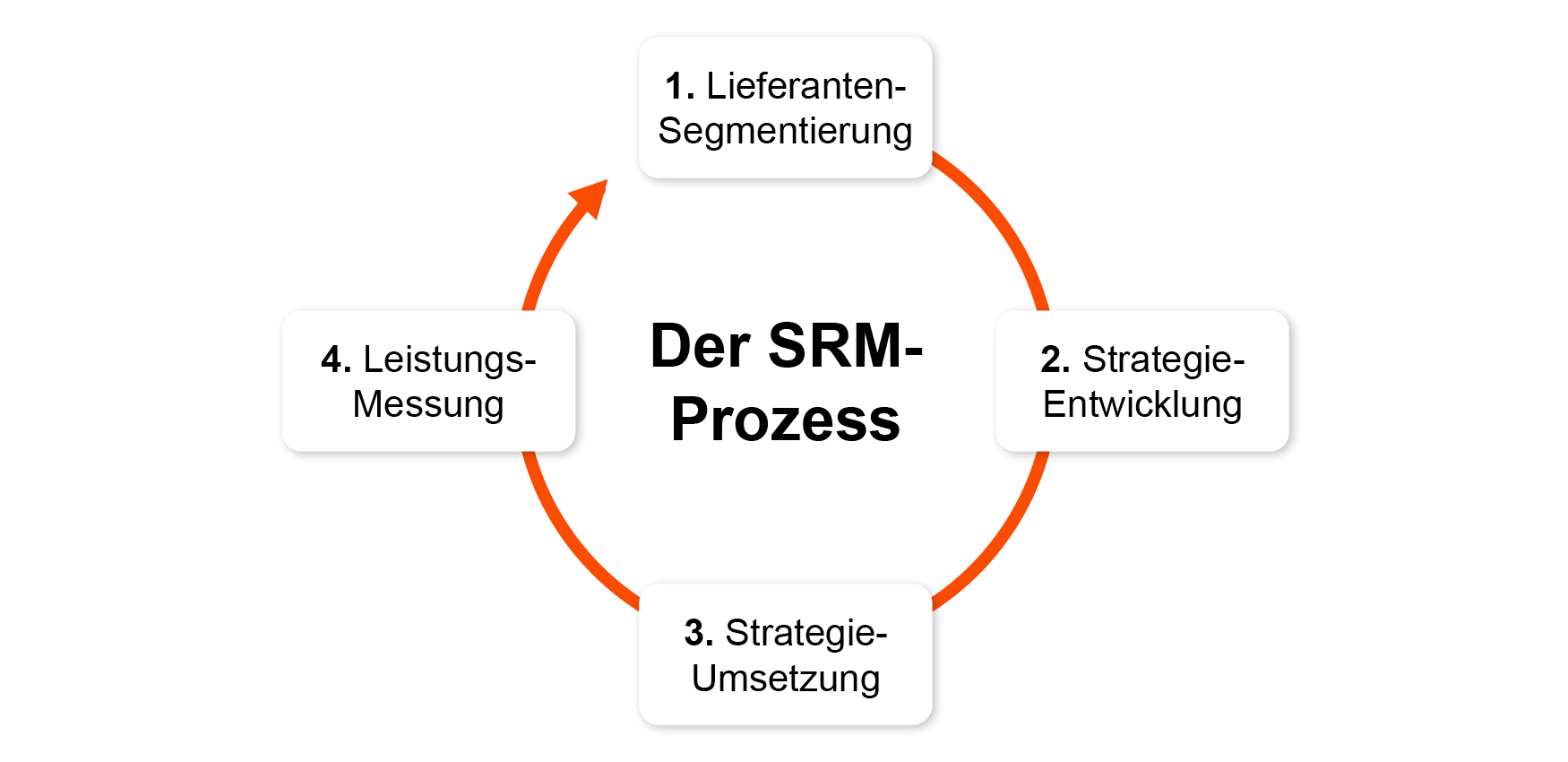
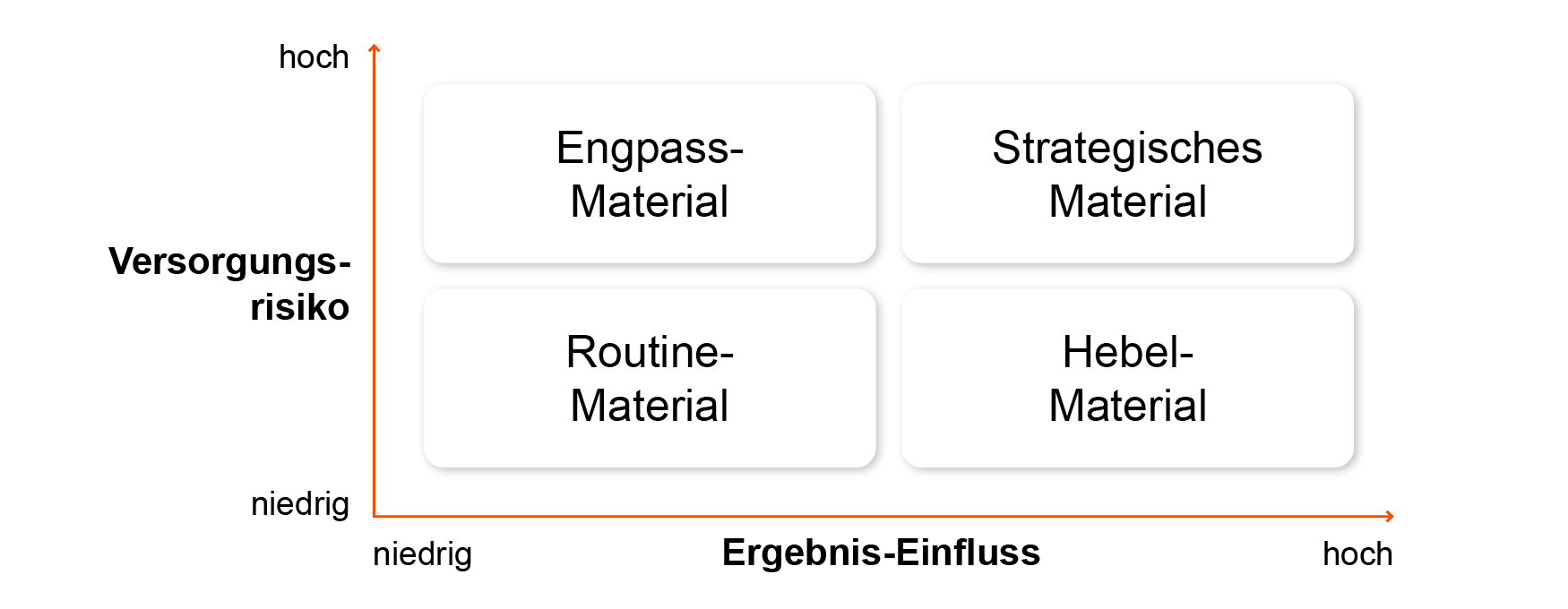
The most fundamental and important step in SRM is the realization that not all suppliers are the same. Supplier segmentation is the process of dividing your entire supplier base into different categories in order to target your resources and attention. The categorization is typically based on two axes:
With the help of a matrix (e.g. the Kraljic matrix), suppliers are divided into groups such as "strategic partners", "leverage suppliers", "bottleneck suppliers" and "routine suppliers".
Based on the segmentation, a specific strategy is defined for each supplier group.
In the implementation phase, the defined strategies are brought to life through concrete measures. This is achieved through regular business reviews, joint projects and open communication. The basis for successful cooperation between company and supplier is a solid contract.
Performance measurement closes the circle. Here, key performance indicators (KPIs) are used to check whether the strategy is successful and the set goals are being achieved. Instruments such as a regular supplier audit or a structured supplier development process are crucial here. As repeatedly emphasized in specialist publications such as the Harvard Business Review (HBR), data-supported supply chain management is essential.
Supplier relationship management is not a short-term project, but a change in the corporate culture of procurement. Effective SRM not only leads to cost reduction and efficiency, but also creates a real competitive advantage by building strong, trusting supplier relationships. In a volatile global economy, it is the foundation for a resilient and innovative supply chain.