![Fabian von Kleinsorgen [VP Growth & Sales Operations]](https://simplesystem.com/hs-fs/hubfs/Autoren_Blog/Fabian_vin_kleinsorgen_autor.png?width=200&name=Fabian_vin_kleinsorgen_autor.png)

09.09.2026

![Fabian von Kleinsorgen [VP Growth & Sales Operations]](https://simplesystem.com/hs-fs/hubfs/Autoren_Blog/Fabian_vin_kleinsorgen_autor.png?width=100&name=Fabian_vin_kleinsorgen_autor.png)

Efficient procurement of C-parts is a challenge for many companies. The small, often inexpensive parts cause a disproportionately high procurement effort. C-parts management aims to optimize the procurement process, reduce costs and secure supply.
The term C-parts covers all items with a low value that are needed in large quantities, for example nuts, screws, seals, lubricants, personal protective equipment or tools. They are indispensable for production and maintenance processes in industry, even though their material costs usually make up only a small part of total costs. Their unit value is typically low, while the quantities and the number of vendors are high.
Even though a C-part usually has a low value share, it can cause high process costs. Without efficient C-parts management, C-parts lead to high storage costs, unclear stock levels and more administrative effort. Structured C-parts management secures availability, reduces tied-up capital and improves production processes.
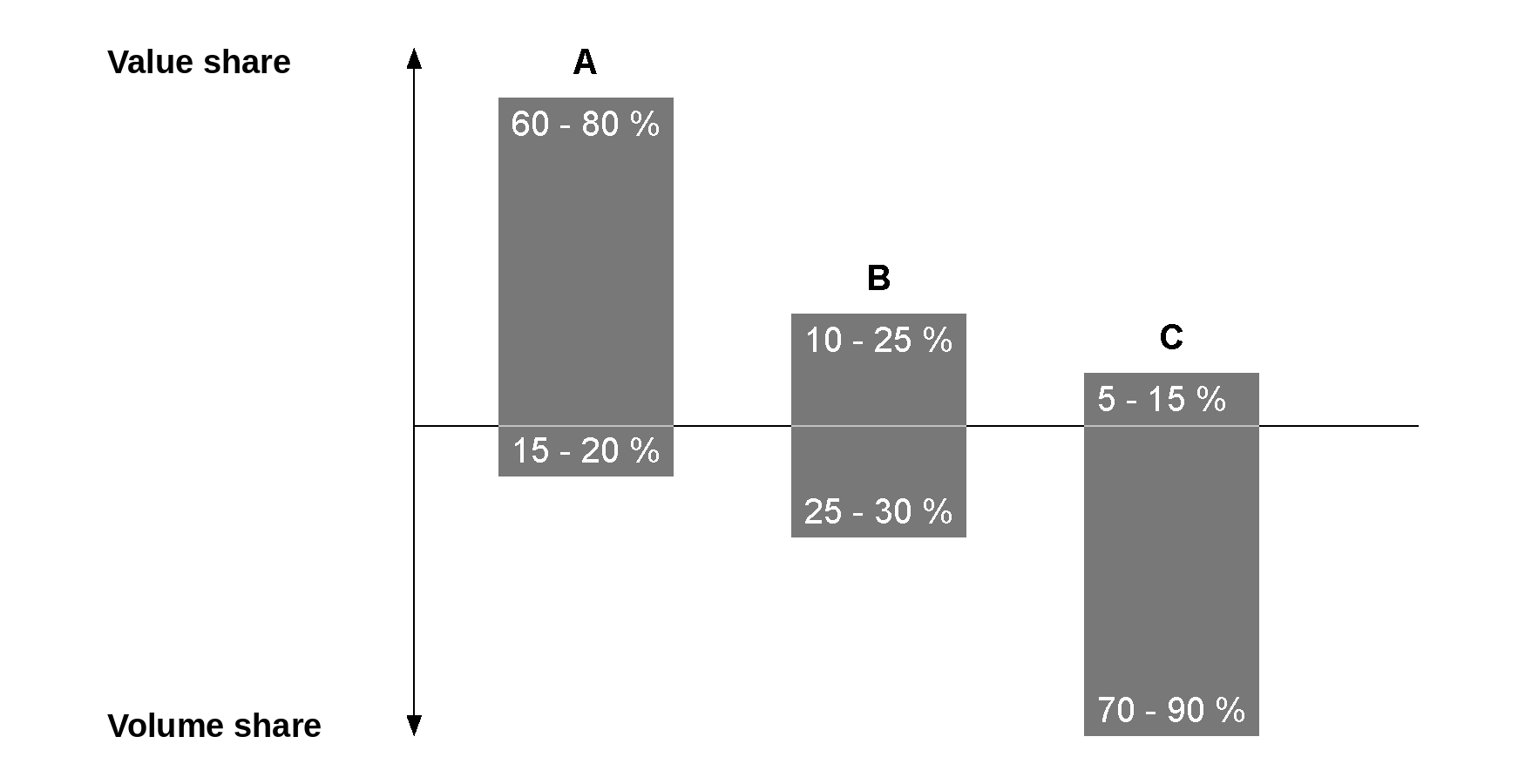
C-parts are often classified with ABC analysis. A-parts are high-value, expensive parts with low consumption. B-parts have a medium value and medium consumption. C-parts are low-value materials that are needed in large quantities and cause high administrative effort. They also make up a large part of the inventory: they account for most of the items but only a small share of the procurement value. The exact distribution differs from company to company.
The analysis helps put the focus on optimizing C-parts management. This is where companies have the greatest savings potential in procurement and process costs as well as in warehousing.
The cost driver for C-parts is not the material but the process: reporting a need, ordering, approving, posting the goods receipt, storing, checking the invoice. Each of these steps takes working time, and it recurs with every small order. Without structured C-parts management, this leads to high storage costs, unclear stock levels and high administrative effort.
Good to know: According to a study by HTWK Leipzig, an analog ordering process costs around 146 EUR, with full digitalization only 86 EUR. That is a saving of 60 EUR per order.
C-parts management in procurement covers the entire process chain, from determining requirements through ordering and storage to providing the parts. The goal is to automate and centralize procurement so that effort is minimized and supply security is maximized. Logistics systems and digital solutions such as simple system bundle orders, automate them and make them transparent.
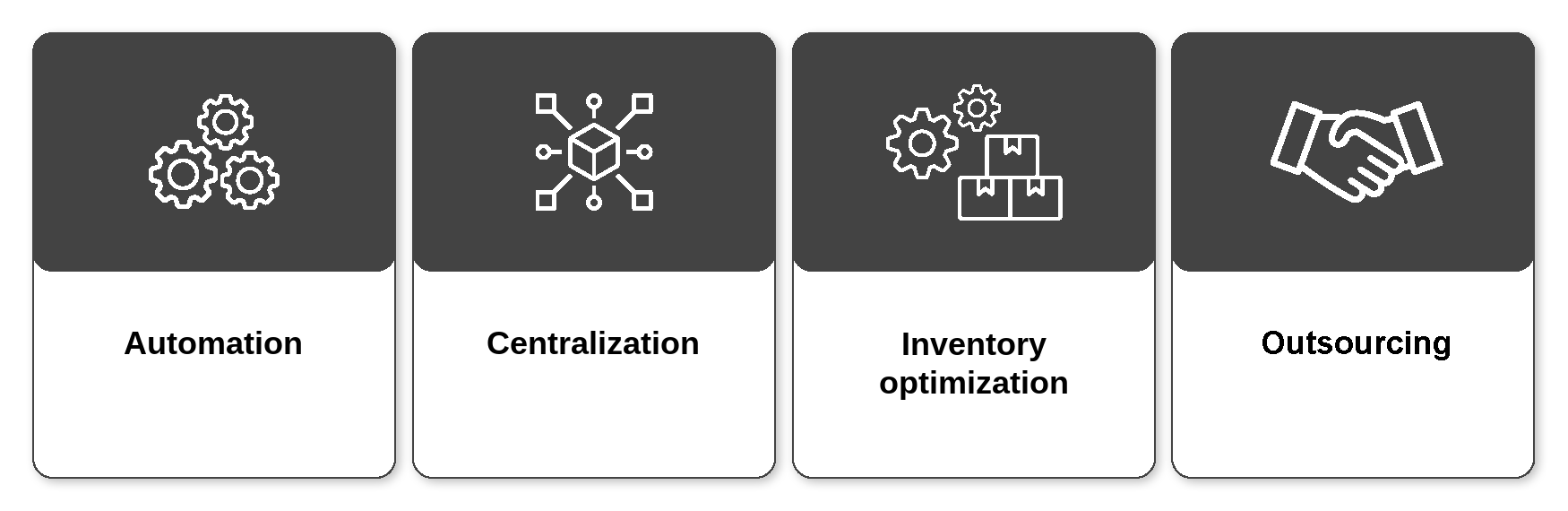
C-parts management is optimized through:

Find out how in our free e-procurement report. Download it now, free and without obligation.
Read nowThe kanban system is a proven method for controlling the replenishment of C-parts according to the pull principle. Only as much material is kept as is actually consumed. In a two-bin system, emptying one bin automatically triggers a reorder. This process can be digitalized. Electronic kanban systems (e-kanban) increase transparency about stock levels and prevent production downtime by reordering the required materials in time.
E-procurement systems such as simple system support the digitalization of procurement by automating orders, providing vendor information centrally and making the entire procurement process transparent. Procurement processes run faster, fewer errors occur and companies keep a better overview of orders and spending for C-parts.
Implementing C-parts management is often a real challenge for procurement and administration. Because C-materials often have a greater impact on total costs than their low material value suggests, it is important to avoid common pitfalls and fully exploit the savings potential of automated processes.
Optimizing procurement processes brings some challenges. Typical problems include high complexity due to the large variety of items and the many vendors. Non-transparent ordering processes and a lack of standardization are also common pitfalls. Uncontrolled stock drives up storage costs and can lead to production outages when required materials are missing. That makes strategic management of C-parts and long-term collaboration with reliable vendors all the more important.
Good to know: Maverick buying, meaning unauthorized purchases that make cost control harder, is also a common challenge in C-parts procurement.
Maverick buying means buying products or services outside defined procurement processes. It leads to inefficient spending. Clear procurement policies and training help avoid it, as do centralizing procurement and using suitable procurement platforms. Specialized software for controlling and automating orders is another effective way to reduce uncontrolled purchasing. Transparent communication and involving all departments in the procurement processes also help keep track and reduce the cost of C-items.
Maverick buying costs twice: through lost volume discounts and through uncontrolled process costs.
Good to know: A digital, closed procurement channel stops maverick buying without giving up proven vendors. Shoppers order within the defined framework, and procurement stays in control.
C-parts are the largest item in indirect procurement, the procurement of everything that does not go into the end product. Getting C-parts procurement under control solves a central part of indirect procurement. The overview of indirect procurement puts it into context. Since incoming invoices increasingly have to be processed as e-invoices from 2025 in Germany, a cleanly digitalized ordering process pays off here too.
simple system is a neutral procurement platform for indirect procurement, designed for the high volume of C-parts in mid-market companies. Alongside the open marketplace, the platform maps existing vendor relationships digitally: negotiated conditions with regular vendors are adopted, and individual catalogs and prices remain invisible to competitors. Via ERP integration or OCI punchout, order data flows automatically into the ERP system, whether SAP, Microsoft Dynamics or another system.
The focus is not on the lowest item price but on the total cost of the process. In the C-parts area, the savings from reduced administrative effort often exceed the pure item discount.