How digital procurement platforms cut costs and boost efficiency
Author
Andy Freund Head of Growth & Customer Management
Digital procurement platforms automate and centralize procurement processes, enabling companies to cut process costs, increase efficiency, and reduce errors. These platforms improve transparency, strengthen negotiating positions, and support a more targeted use of resources, which increases competitiveness.
Digital procurement platform: Reducing costs in purchasing and procurement
Companies are under growing pressure to keep their cost structures efficient and stay competitive. One of the key areas in this context is purchasing and procurement. Traditional procurement processes are often time-consuming, error-prone, and expensive.
This is where digital procurement platforms come in: They enable companies to automate their procurement processes, increase transparency, integrate their vendor management more effectively, and reduce costs significantly. With these platforms, companies can not only speed up procurement, but also negotiate better terms and optimize the efficiency of the entire supply chain.
Procurement platform: Definition
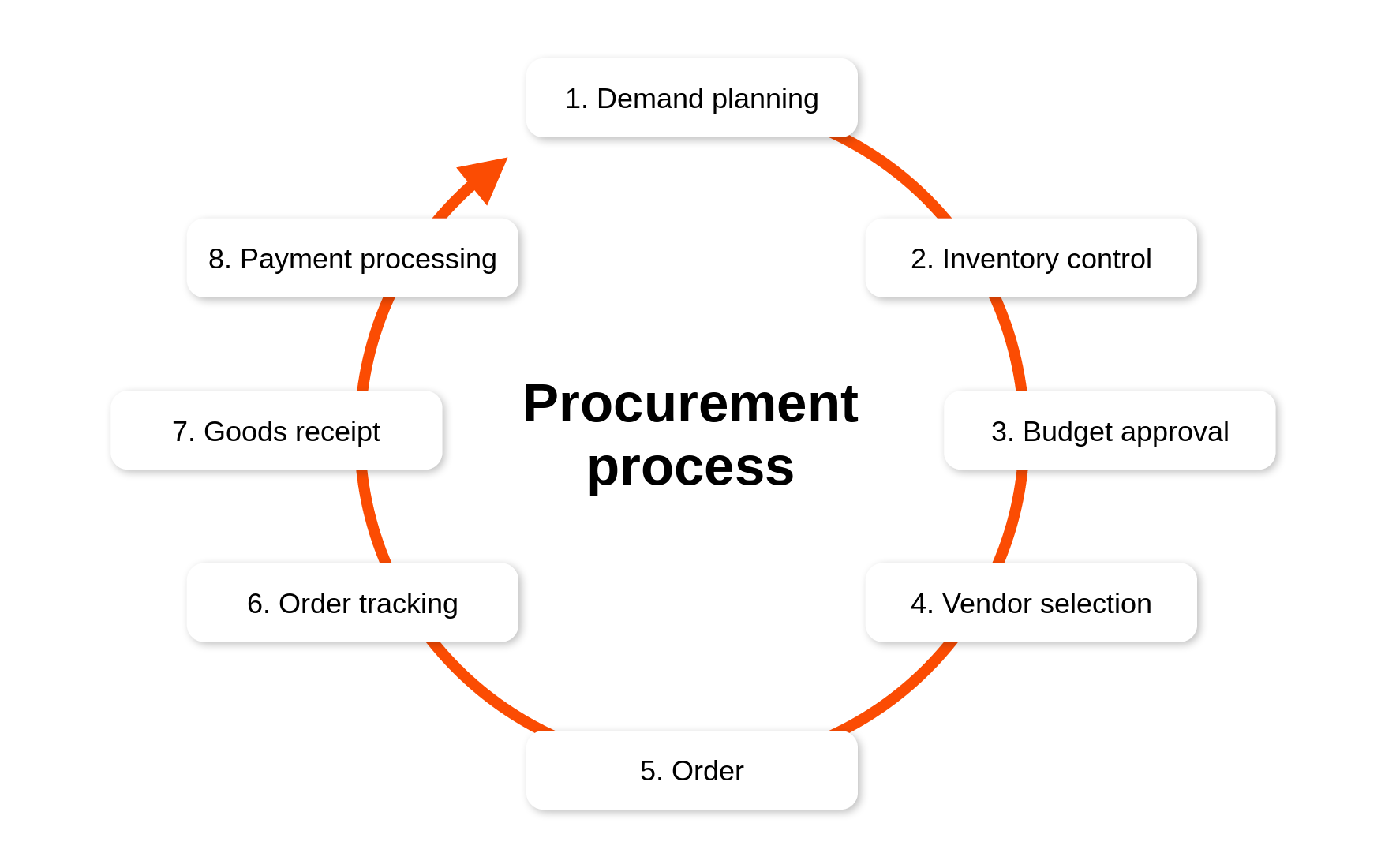
A procurement platform is a digital solution that enables companies to manage their purchasing of goods and services efficiently. These platforms provide a central interface where buyers can compare different vendors, request quotes, place orders, and manage contracts. The goal is to automate procurement processes, increase transparency, and reduce costs by digitally mapping the entire procurement process, from identifying needs to delivery.
The benefits of digital B2B procurement platforms for purchasing
Digital B2B procurement platforms offer companies numerous benefits in procurement that go far beyond cost reduction. The most important benefits include:
Cost savings: By automating processes and reducing manual tasks, companies can lower their operating costs considerably. The platforms also enable price comparisons and better terms, which leads to lower purchase prices.
Increased efficiency:Procurement systems speed up the entire procurement process. From identifying needs and requesting quotes to ordering and delivery, all steps can be handled centrally and often in real time. This saves time and reduces administrative effort.
Transparency and control: By capturing and managing all procurement activities centrally, companies gain a high level of transparency over their procurement. This makes it easier to control spending, stay within budgets, and track orders.
Stronger negotiating position: The ability to reach a large number of vendors at once and compare their offers strengthens the company's negotiating position. This often leads to better terms and contract conditions.
Risk reduction: Integrated analytics and reporting tools help identify and minimize potential risks early, such as dependence on individual vendors or price volatility.
Wider access to vendors: Digital platforms provide access to a broad network of vendors worldwide. This makes it easier for companies to find new, qualified vendors and diversify their supply chain.
Sustainability and compliance: Many e-procurement systems offer features for checking vendor sustainability and compliance. This helps companies ensure that they purchase ethically and in line with the law.
Integration and collaboration: Modern procurement platforms can be integrated into existing business systems such as ERP systems, enabling seamless collaboration across departments and locations. Different employees can also access the same system, which supports collaboration within the company.
How a procurement platform works: A case study
Comparing traditional and modern processes shows how significant the benefits for companies can be. All costs associated with and attributable to operational workflows can be booked as process costs. So much for business administration theory.
In practice, process costs are often overlooked. Especially in the procurement of C-parts, however, analyzing process costs pays off, because they can far exceed the value of the everyday items and goods themselves. Using a concrete example, we want to show how big the difference in process costs is between the traditional procurement process and a procurement platform.
Challenges for buyers before automation
C-parts usually have a low unit value but are essential for operations. Procuring them often leads to extremely high process costs, because in many companies procurement still follows traditional routes with numerous manual steps. Let's take a look at this and calculate what it means in terms of costs.
Requester Mr. Dreher urgently needs square-head bolts. He quickly searches the catalog (print or online). Before ordering, he has to create a purchase requisition with the item data in SAP. All of this takes him 15 minutes.
Due to current delivery problems, the square-head bolts are more expensive than usual. So Mr. Dreher's manager has to review and approve the purchase. This takes 5 minutes.
Next, the controlling department checks whether all data (such as the account assignment) is correct before releasing the requisition in SAP. Time required: 5 minutes.
The purchase requisition is now converted into an order, and procurement checks the price and delivery date. Procurement also contacts the vendor about availability and delivery date. Creating the order: 5 to 10 minutes, inquiry: 20 to 30 minutes.
The vendor should now send an order confirmation. If they don't, procurement has to follow up. Time required: 5 to 10 minutes.
A few days later, the goods arrive. Goods receipt checks whether the right bolts were delivered in the ordered quantity. The goods receipt is posted in SAP and Mr. Dreher is notified that his bolts have arrived. Time required: 15 minutes.
Finally, the accounting department checks and posts the invoice. Before approval, discrepancies regarding the price and other factors may need to be clarified. Effort: 10 to 15 minutes.
Conclusion: In the worst case, processing and completing all process steps takes a total of 105 minutes, a full 1 hour and 45 minutes per order. Assuming an internal hourly rate of 70 EUR, the process costs amount to 122.50 EUR per order. Depending on the company's specific processes, the effort can be even higher.
Procurement with a platform: An example order with simple system
Requester Mr. Dreher quickly finds the right square-head bolts by entering a search term in the platform's catalog data. He adds them to the cart. The cart, including the account assignment data, is transferred directly to the ERP system. There, a purchase requisition is created automatically in just a few clicks. Time required: 5 minutes.
Due to current delivery problems, the square-head bolts are more expensive than usual. So Mr. Dreher's manager has to review and approve the purchase. Time required: 5 minutes.
Since the account assignment data was transferred automatically, the controlling department no longer has to analyze and check it.
The system automatically converts the purchase requisition into an order. All the relevant data has already been transferred from the online catalog.
Procurement only checks the delivery date in the order confirmation. Time required: about 5 minutes.
A few days later, the goods arrive. The goods receipt check is done in SAP. Mr. Dreher is notified that his bolts have arrived. Time required: 15 minutes.
The invoice is checked automatically in the ERP system. This is possible because prices and terms were transferred directly from the online catalog to the system. This relieves the accounting department of the check.
Conclusion: Thanks to the automated process, processing all steps takes about 30 minutes. Assuming an internal hourly rate of 70 EUR, the process costs amount to 35 EUR per order. This means the company saved around 70 percent in time and process costs. Fast processing and fewer steps also prevent human errors, which could cause even higher costs with manual processing.
Our example shows that it pays to take a closer look at internal procurement processes and evaluate them. Using a procurement platform can be worthwhile for more than just lower costs. At a time of skilled labor shortages, it helps to simplify processes and reduce processing times.
This allows employees in individual departments to be assigned to other tasks more effectively and redundant processes to be eliminated. Companies benefit not only from lower costs, but also from a better, simpler way of working.
Summary
In summary, using digital procurement platforms offers companies considerable benefits, especially when it comes to reducing process costs and increasing efficiency and flexibility. Automating and centralizing procurement processes saves not only time and money, but also reduces the workload on employees.
This enables a more targeted use of resources and contributes to the company's competitiveness. In an increasingly demanding market, digitalizing procurement is therefore a decisive step toward reducing costs while improving efficiency for the long term.
Frequently asked questions about procurement platforms
A procurement platform maps purchasing digitally: employees search the catalog, add items to the cart, the order is approved and sent to the vendor. Order and account assignment data go straight to the ERP, and invoices can be matched automatically.
Above all, it lowers process costs: fewer manual steps, no duplicate data entry and automatic invoice checking. According to HTWK Leipzig, digital procurement reduces process costs per order from €146 to €86.
Especially for C-parts and indirect materials, meaning items with low value and high ordering effort. On simple system, companies order these items from more than 1,000 vendors through a single access point.
Yes. Modern platforms like simple system can be connected to ERP systems such as SAP via OCI/punchout or an interface, so the cart and account assignment are transferred directly.
![Andy Freund [Head of Growth & Customer Management]](https://simplesystem.com/hs-fs/hubfs/Autoren_Blog/Andy_Freund_autor.png?width=200&name=Andy_Freund_autor.png)

![Andy Freund [Head of Growth & Customer Management]](https://simplesystem.com/hs-fs/hubfs/Autoren_Blog/Andy_Freund_autor.png?width=100&name=Andy_Freund_autor.png)