02.04.2026

Procurement System - E-Procurement and Digital Procurement Processes

Andy Freund Senior Growth Manager

In 2024, digitalization and technological progress will fundamentally change procurement management. Companies need to work more efficiently, transparently and cost-controlled. Procurement systems, tailor-made software solutions, support this by automating and optimizing procurement processes from planning to invoice processing.

Procurement systems, also known as procurement management systems, are tailor-made software solutions that support companies in automating, optimizing and controlling their procurement processes. From requirements planning, ordering and supplier management through to invoice processing, these systems enable holistic and efficient management of the procurement process.

At a glance

E-procurement stands for "electronic procurement" and describes the use of digital technologies and electronic systems to automate and streamline procurement processes.

Procurement systems work by implementing specialized software solutions that enable companies to manage their procurement activities electronically.

The core functions of procurement systems are: Requirements analysis and planning, supplier management, order processing, invoice processing, reporting and analysis.

E-procurement offers a number of advantages over traditional procurement.

There are three types of procurement systems, each offering different benefits: open systems, semi-open systems and closed systems.

It is difficult to make a blanket statement as to which of the systems is the "best" as every company has different procurement requirements.

E-procurement: definition and basics

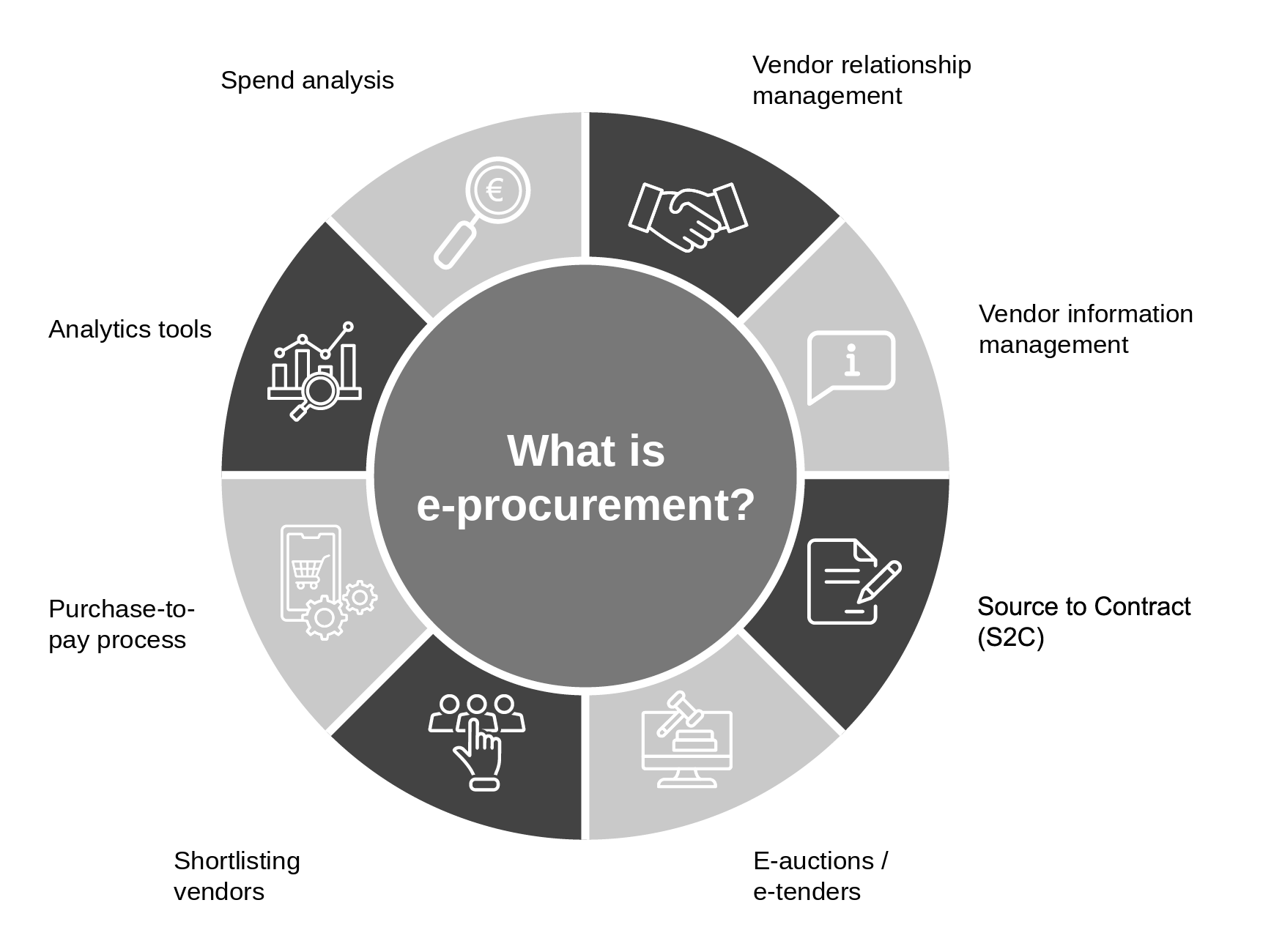
E-procurement, short for electronic procurement, refers to the use of digital technologies and electronic systems to automate and streamline procurement processes within a company. Essentially, e-procurement aims to support and improve the entire procurement cycle - from the catalog for requirements analysis to ordering and invoice processing - with the help of information technology.

Die Definition und Grundlagen von E-Procurement

How an e-procurement system works

Basically, procurement systems work by implementing specialized software solutions that enable companies to manage their procurement activities electronically.
Some core functions and workflows of e-procurement are important here:

  1. Requirements analysis and planning
    E-procurement systems allow users to define requirements, set budgets and plan procurement needs. This information is often centralized and can be viewed and edited by authorized persons.
  2. Supplier management
    Organizations can effectively manage their supplier relationships by creating supplier profiles, soliciting bids, negotiating contracts and conducting supplier evaluations. By centralizing supplier data, companies can also optimize their supplier base and reduce procurement costs.
  3. Order processing
    E-procurement enables the electronic (real-time) exchange of orders between buyers and suppliers. This includes the creation and approval of purchase requisitions, the transmission of purchase orders to suppliers and the tracking and monitoring of order status, expiration and deliveries.
  4. Invoice processing
    By integrating e-procurement with financial systems, companies can automate and speed up the invoice processing process. This includes electronic capture of invoice data, validation against purchase orders and contracts, approval of invoices and payment release.
  5. Reporting and analysis
    An e-procurement system provides extensive reporting capabilities that allow companies to analyze procurement data, track performance metrics and make informed decisions. By integrating with other enterprise systems, e-procurement platforms can also aggregate and analyze data from the entire supply chain through data transfer.
  6. ERP and goods issuing systems
    Companies of a certain size can no longer do without professional ERP systems. Goods issuing systems are also part of everyday use in industry and trade. An e-procurement system can be seamlessly integrated into existing software and can be supplemented by the following advantages.

Advantages of electronic procurement compared to traditional procurement

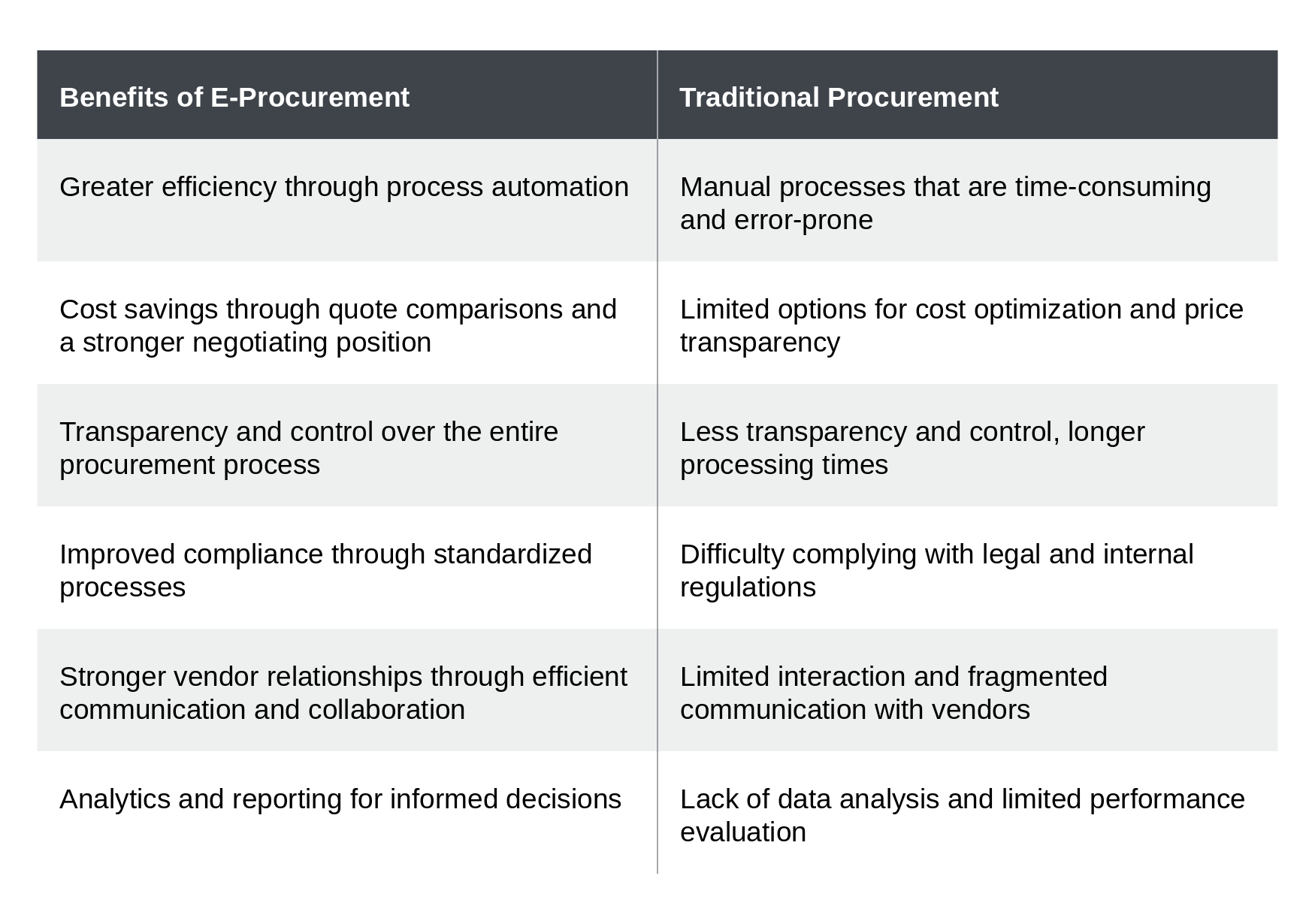
Electronic procurement (e-procurement) has taken on an increasingly important role in the business environment in recent years. Compared to traditional procurement, it offers a number of advantages that help companies to optimize their procurement processes, minimize risk and increase their competitiveness.

The following table provides a clear overview of the main advantages of e-procurement over traditional procurement in order to highlight the differences between the two approaches:

The different procurement systems

The way in which companies organize their procurement activities and manage their supplier relationships can have a significant impact on their competitiveness and their ability to adapt to changing market conditions. In this context, open, semi-open and closed procurement systems play a crucial role.

Each type of procurement system has different features, applications and benefits.

As a buyer, it is important to take a closer look at the different systems in order to find out which procurement system suits your own industry and company context.

Open systems

In open procurement systems, companies are open to working with a large number of suppliers and external partners. They use different procurement channels and sources to meet their requirements.

These systems are flexible and allow companies to adapt quickly to changing market conditions. Open systems often offer companies a wider choice of products and services from different suppliers, as well as the opportunity to benefit from competitive advantages such as lower prices and innovative solutions.

Semi-open system

Semi-open procurement systems lie between open and closed systems. Companies in semi-open systems work with a limited number of suppliers, but still have the opportunity to identify new suppliers and add them to their supplier network.

Semi-open systems offer a degree of flexibility and choice, but also a degree of stability and reliability through long-term partnerships with selected suppliers. In semi-open systems, companies can benefit from cost savings through economies of scale and from deeper collaboration with their suppliers.

Closed systems

Closed procurement systems are characterized by strict control and limitation of supplier relationships. Companies in closed systems work exclusively with a fixed group of suppliers and exclude access for new suppliers.

These systems offer companies stability and control over their supply chain, but can also lead to limited choice and fewer opportunities for innovation. Closed systems are often used in industries or companies where the quality and continuity of supply is critical, such as the aviation or automotive industries.

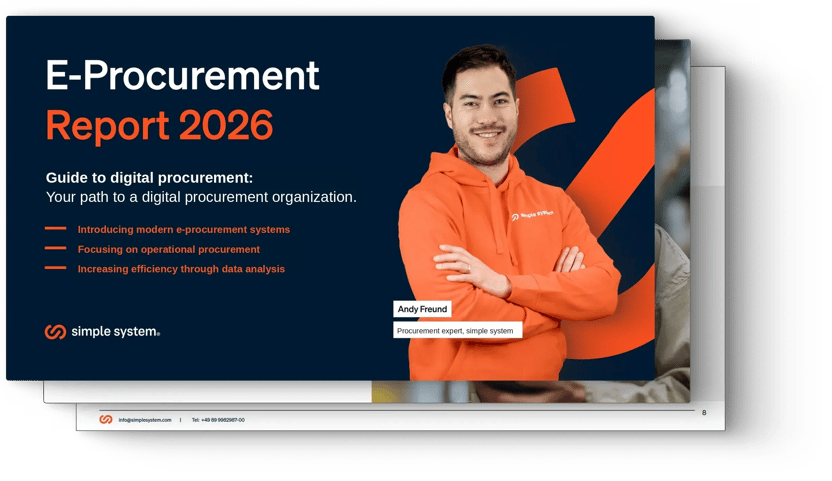
e-procurement-report-2026

Shop & save

Find out how it works in our free e-procurement report. Download now for free and without obligation.

Read it now

Which system is best for your personal procurement process

Choosing the right procurement system is critical to the success of your procurement activities and can have a significant impact on the efficiency, cost and overall performance of your supply chain. But which procurement system is right for you? To help you make this important decision, we have developed a short self-test.

Self-test: Which procurement system is right for you?

Answer the following questions to find out which procurement system best suits your needs and requirements. Choose the answer that best applies to you.

  1. How important is it to you to have a wide choice of suppliers and products/services available?
    a) Very important
    b) Important
    c) Less important
    d) Not important
  2. How flexible would you like to be when selecting and working with suppliers?
    a) Very flexible
    b) Flexible
    c) Rather inflexible
    d) Not important
  3. What role does the long-term stability and reliability of your supplier relationships play for you?
    a) Very important
    b) Important
    c) Less important
    d) Not important
  4. How important is it to you to optimize and control the costs of your procurement activities?
    a) Very important
    b) Important
    c) Less important
    d) Not important
  5. How important to you is compliance with legal and internal regulations in your procurement activities?
    a) Very important
    b) Important
    c) Less important
    d) Not important


Evaluation:

Predominantly answers with"a": You could benefit from an open procurement system that offers you a wide choice of suppliers and products as well as flexibility in cooperation.

Predominantly answers with"b": A semi-open procurement system could meet your requirements as it offers a balanced mix of flexibility and control.

Predominantly'c' answers: You could benefit from a closed sourcing system that provides a stable and controlled supplier base.

Predominantly'd' answers: Your requirements indicate that the procurement system is not of high importance to you. You could benefit from a system based on other aspects such as quality or innovation.

simple system: e-procurement systems as a digital solution for buyers and suppliers

E-procurement systems offer a simple and effective solution for companies that want to streamline and optimize their procurement processes. Both buyers and suppliers benefit from the many advantages of this digital solution, including process automation, improved transparency and efficiency, and access to a wide network of suppliers.

If you're ready to take your purchasing process to the next level, e-procurement is the simple choice. Discover how e-procurement systems can help reduce costs, save time and improve collaboration between buyers and suppliers.

Contact us today to learn more about how we can help you optimize your procurement management and move your business forward.

Executive Summary

In 2024, companies face the challenge of optimizing their procurement processes in the face of digitalization. Procurement systems, especially e-procurement, play a crucial role in this. These systems automate and optimize the entire procurement cycle, from requirements analysis to invoice processing, using digital technologies. They offer benefits such as increased efficiency, cost control and improved supplier relationships.

There are different types of procurement systems - open, semi-open and closed - each with different features and areas of application. Choosing the right system depends on a company's individual needs and priorities.

E-procurement systems are recommended as a simple and effective solution for streamlining procurement processes for both buyers and suppliers.

Frequently asked questions

What are closed and open procurement systems?
Closed procurement systems are characterized by a limited number of suppliers, while open systems allow companies to work with a large number of suppliers.

How do purchase orders in Procurement work?
Procurement purchase orders are processed through electronic exchanges between buyers and suppliers, including the creation, approval and tracking of purchase requisitions.

How does e-procurement work?
E-procurement enables companies to automate and streamline procurement processes using digital technologies, from requirements analysis to invoice processing.

Can procurement systems be used for efficient purchasing?
Yes, procurement systems enable companies to purchase efficiently by automating processes, controlling costs and improving supplier relationships.

Is simple system a good procurement system?
simple system is a good choice for companies that want to streamline and optimize their procurement processes as it offers a simple and effective solution to reduce costs, save time and improve collaboration between buyers and suppliers.

Andy Freund Senior Growth Manager
Learn more about Andy
Categories
Fair. Transparent. Honest.

Try it free for 90 days!

No risk, no obligation, no payment details required.

Experience the entire platform – from your first shopping cart to the automated invoice. Discover how easy digital shopping can really be.