![Andy Freund [Head of Growth & Customer Management]](https://simplesystem.com/hs-fs/hubfs/Autoren_Blog/Andy_Freund_autor.png?width=200&name=Andy_Freund_autor.png)

09.09.2026

![Andy Freund [Head of Growth & Customer Management]](https://simplesystem.com/hs-fs/hubfs/Autoren_Blog/Andy_Freund_autor.png?width=100&name=Andy_Freund_autor.png)

Corporate procurement is divided into operational and strategic procurement. Digitalization and technologies improve processes through automation, transparency and data analysis, reduce costs and increase flexibility when market changes.
Procurement is an important department in companies and comprises a variety of complex tasks. In addition to ensuring the supply of materials At optimal costs, buyers must strategically plan, negotiate and work closely with vendors. In times of digitalization, the tasks in the procurement process have changed significantly. Modern procurement not only requires efficiency, but also Innovative capacity and flexibility to meet the needs of today's markets.
Procurement in a company involves numerous tasks that ensure that all required raw materials, services, and goods are available at the right time, in the right quantity and at the best possible prices and conditions. This includes not just processing orders, but also the analytical planning of vendors, the negotiation of contracts and the continuous optimization of the supply chain.
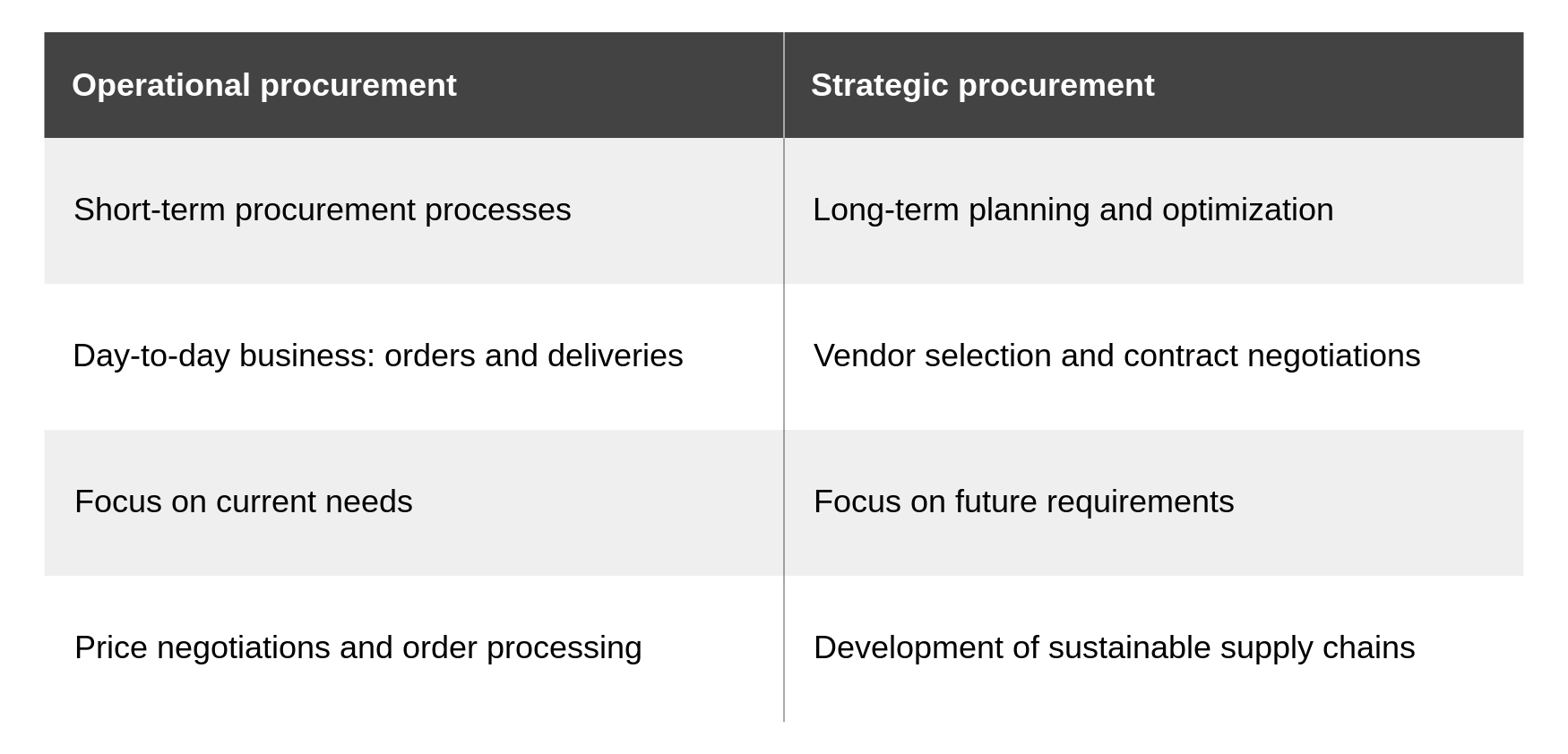
Operational procurement relates to daily and short-term procurement processes and comprises the following tasks:
Strategic procurement is often mentioned as an important part of a procurement process, but many do not know exactly what it actually means. In contrast to operational procurement, strategic procurement focuses on long-term planning as well as optimizing ordering processes. It includes the selection and development of vendors, the negotiation of framework agreements and ensuring that the procurement strategy is in line with the company's overall goals.
There are several differences between operational and strategic procurement. Here are the key points:
Identifying needs is a crucial step in the procurement process. It comprises the Analysis and definition of which materials, services, or products the company requires over a specific period of time. Play while not just large quantities, but also so-called C parts an influential role. C-parts are smaller, often neglected items that are nevertheless essential for the production of goods or even for operation.
There are many approaches to make procurement activities more economical. This includes expanding vendor relationships, optimizing processes and using digital tools. Die However, digitalization has a particularly large impact on efficiency, as it automates many manual and time-consuming tasks and therefore saves time and generates price advantages.
In order to make procurement more beneficial, there are best practices that help companies save time and money, as well as their Procurement processes to optimize. These strategies include:
In modern procurement, the processes are carried out by digital platforms optimized. With integrated systems such as simple system, companies can digitalize procurement by automating orders, centralizing vendor data, and carrying out demand planning in real time. This results in fewer errors, faster processes and an improved overview of the entire procurement cycle.
Procurement 4.0 refers to digital transformation in procurement. This includes technologies and trends such as automation, cloud systems, artificial intelligence (AI) and big data to make procurement more flexible, efficient and data-driven. In this way, a company's procurement is sustainably improved and competitiveness is guaranteed.
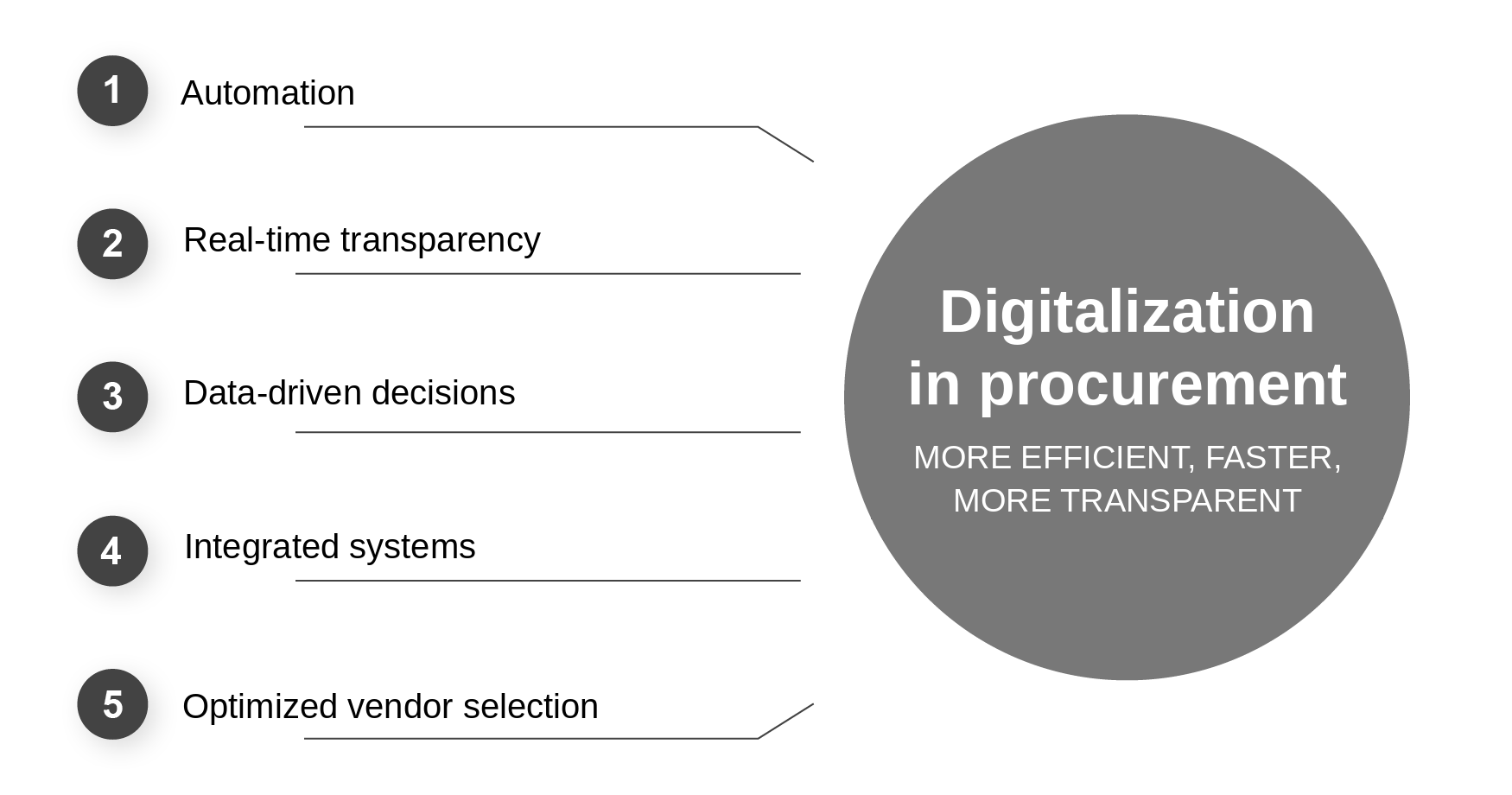
Digitalization has fundamentally changed the procurement process and enabled many improvements. By using modern technologies, companies can make their procurement processes more efficient, faster and more transparent. Key changes include:
In modern procurement come numerous technologies to make processes more efficient and transparent. The software from simple system uses particularly innovative tools such as cloud-based platforms, which enable centralized management of orders and vendors.
Automation technologies ensure that recurring ordering processes run without manual intervention, while real-time data and integrated analysis functions help to better manage procurement and make data-based decisions. It also makes seamless integration with existing ERP systems, the implementation, and use of the platform in companies to improve the procurement strategy in just a few steps.
With simple system, buyers get a central, digital solution for indirect materials and C-parts. More than 28,000 buyers order from over 1,000 vendors there through a single access point. Routine tasks are automated, approvals run digitally and order data flows directly into existing ERP systems. This gives procurement time for strategically important tasks. The platform can be tested free of charge for 30 days.
Procurement in a company comprises many tasks, which are divided into strategic and operational procurement. While operational procurement covers day-to-day business in a company, strategic procurement is responsible for long-term planning to meet demand. Digitalization and modern technologies have made the procurement process much more beneficial by allowing automation, transparency and extensive data analyses. Companies can thus optimize their procurement, reduce procurement costs, and therefore react more flexibly to upcoming market changes.