
09.04.2026

Procurement Sourcing: Definition, Process and Differences

Andy Freund [Head of Growth & Customer Management]
Andy Freund Head of Growth & Customer Management
Procurement Sourcing - Einkauf und Beschaffung - Methoden

In a competitive economy, efficient purchasing and procurement processes are essential for business success. Procurement sourcing, the strategic search for and selection of vendors, plays a central role. Done right, it cuts costs, improves quality and makes supply chains more resilient.

This article explains the terms procurement and sourcing, shows the typical process steps and summarizes the differences.

What is procurement sourcing?

Procurement sourcing is the part of procurement in which a company searches for, evaluates and selects vendors, negotiates terms and signs contracts. Sourcing lays the foundation for later ordering: which vendors supply what, on which terms?

What is procurement?

Procurement is the entire process by which a company obtains goods, services or works from external sources. It ranges from identifying needs, vendor selection and contract negotiation to ordering, goods receipt, invoicing and vendor relationship management. The goal is to get the right products and services on good terms and so secure cost efficiency, quality and innovation.

The steps of a typical procurement process

A procurement process is the systematic sequence through which a company obtains resources on time, in the right quantity, at reasonable cost and in the required quality:
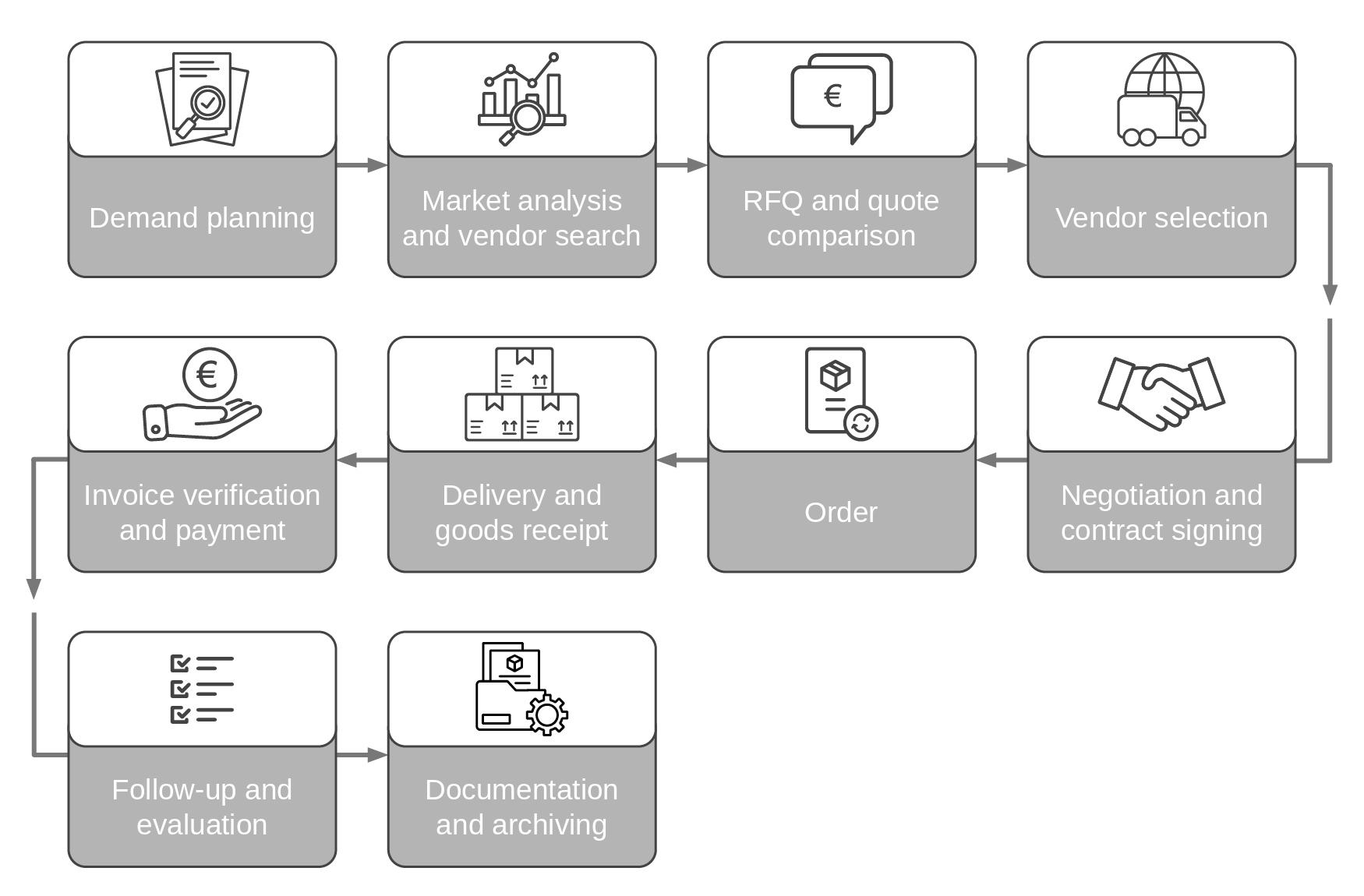
  1. Identifying needs: recognizing the need for goods or services, through an internal request or a forecast.
  2. Market analysis and vendor search: identifying potential vendors.
  3. Request and quote comparison: collecting quotes and comparing price, quality, delivery terms and service.
  4. Vendor selection: choosing the right vendor based on the offer, reliability, reputation and financial stability.
  5. Negotiation and contract: negotiating price, delivery times, payment terms and warranties and signing the contract.
  6. Ordering: creating and sending the order, manually or via an electronic procurement system.
  7. Delivery and goods receipt: monitoring, checking and accepting the delivery.
  8. Invoice checking and payment: matching the invoice with the order and delivery and paying it.
  9. Evaluation: assessing vendor performance and quality as a basis for future decisions.
  10. Documentation: archiving all documents in a traceable way.
The steps of a typical procurement process

What is sourcing?

Sourcing is identifying, evaluating and selecting vendors or service providers. It is a key part of strategic procurement and aims to find the best sources of supply for the company's requirements.
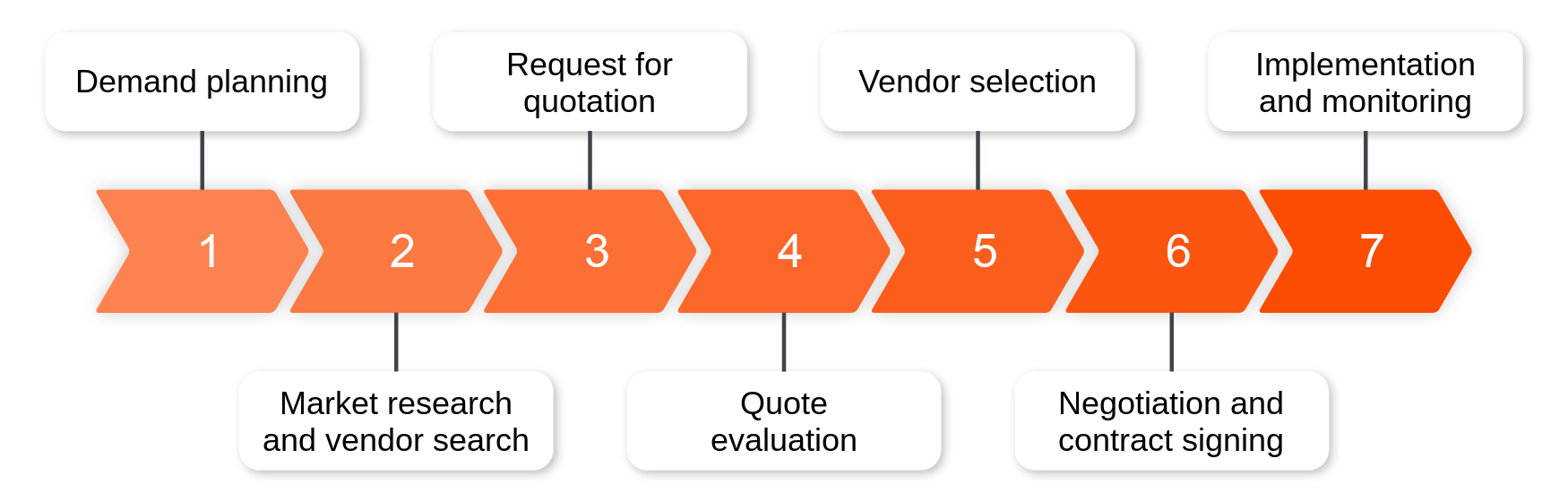
The steps in the sourcing process

  1. Identifying needs: defining the required materials, products or services and their specifications.
  2. Market research and vendor search: finding potential vendors through research, trade fairs or referrals.
  3. Request for proposal: sending RFPs to selected vendors.
  4. Evaluating offers: comparing offers on price, quality, delivery time and reliability.
  5. Vendor selection: choosing the best vendors based on the evaluation and strategic fit.
  6. Negotiation and contract: negotiating final terms and signing the contract.
  7. Implementation and monitoring: placing orders and continuously monitoring vendor performance.
The steps of a typical sourcing process

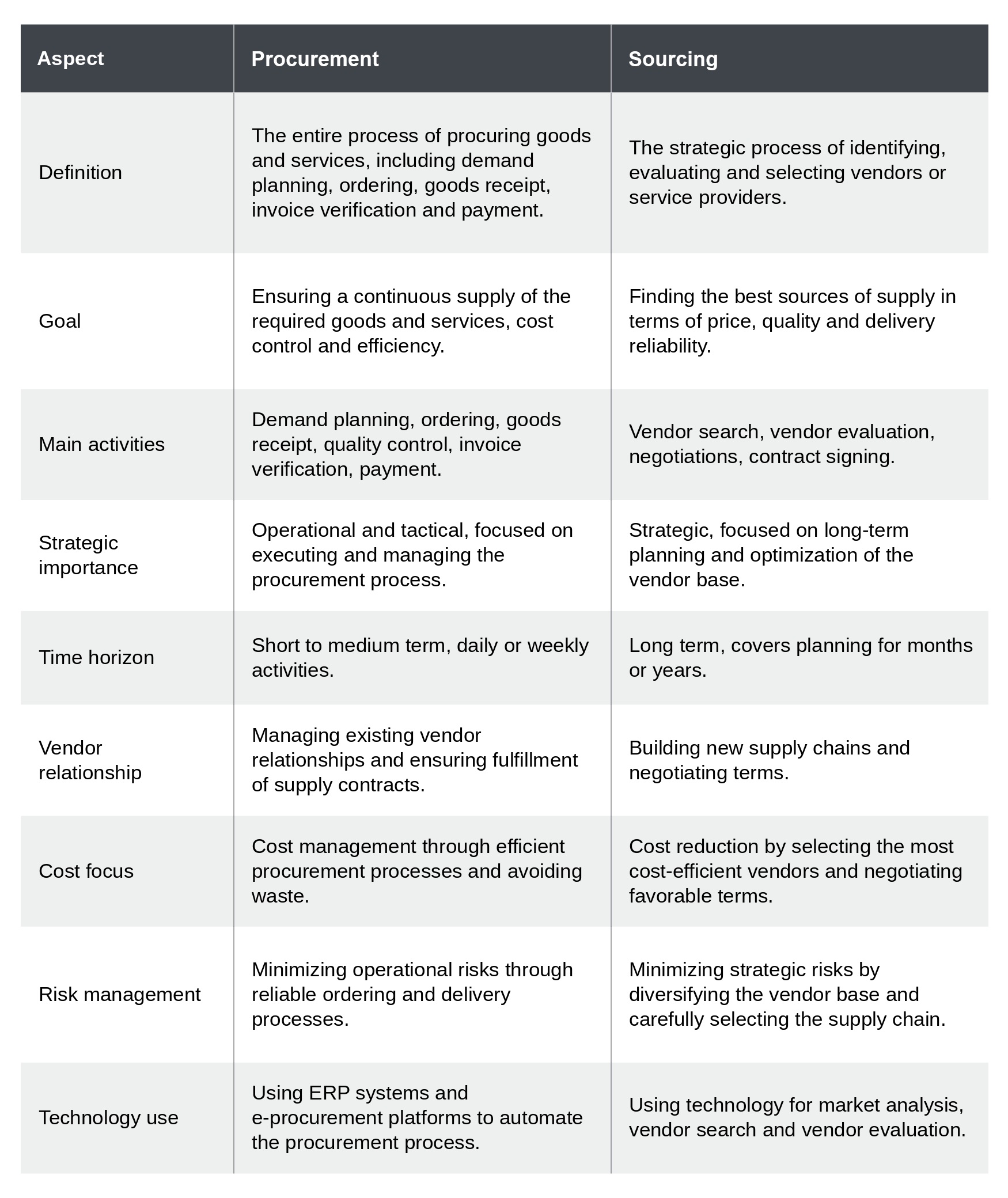
Procurement vs. sourcing: the differences

Procurement and sourcing compared
SourcingProcurement
ScopeSub-process: finding, evaluating, selecting and negotiating with vendorsEntire process from identifying needs to payment
FocusStrategic, medium to long termStrategic and operational
ResultVendors, contracts and termsGoods and services obtained, invoices paid
Typical questionWho do we buy from, on which terms?How do we meet demand efficiently and compliantly?
e-procurement-report-2026

Shop & save

Find out how in our free e-procurement report. Download it now, free and without obligation.

Read now

From sourcing to ordering

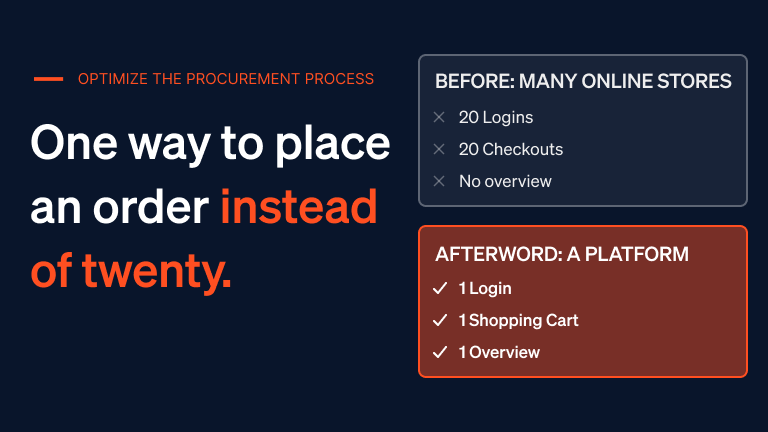
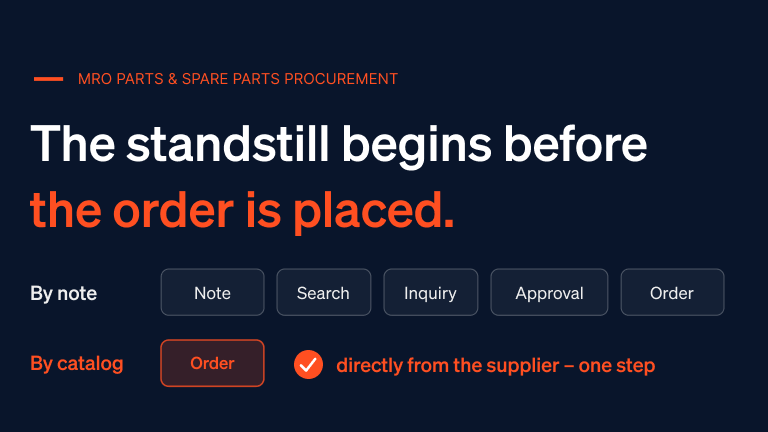
Even the best sourcing results are of little use if people order around the negotiated terms. Good sourcing therefore needs an ordering route that makes the agreed vendors and prices visible to all employees.

On simple system, more than 28,000 buyers order from over 1,000 vendors through one access point, at their own negotiated terms. Approvals and budgets run digitally, and order data goes straight into the ERP. According to HTWK Leipzig, full digitalization reduces process costs per order from €146 to €86.

Conclusion

Procurement sourcing is the strategic core of procurement: it decides which vendors you work with and on which terms. Procurement covers the entire process through to payment. If you set up both properly and anchor sourcing results in everyday ordering, you cut costs, secure quality and make your supply chain more robust.

Want to use your negotiated terms in every order? Try simple system free for 30 days or book a demo.
undefined

  • Procurement sourcing is the part of procurement in which vendors are searched for, evaluated and selected, terms are negotiated and contracts are signed.

  • Sourcing is a sub-process: finding and evaluating vendors and signing contracts. Procurement covers the entire process from identifying needs to payment, including ordering, goods receipt and invoice checking.

  • Identifying needs, market research and vendor search, request for proposal, evaluating offers, vendor selection, negotiation and contract, and implementation and monitoring.

  • No. Sourcing decides where and on which terms to buy. Purchasing, or operational procurement, then places and processes the individual orders.

Andy Freund [Head of Growth & Customer Management]
Andy Freund Head of Growth & Customer Management
Learn more about Andy
Fair. Transparent. Honest.

Try it free for 30 days!

No risk, no obligation, no payment details required.

Experience the entire platform – from your first shopping cart to the automated invoice. Discover how easy digital shopping can really be.