![Andy Freund [Head of Growth & Customer Management]](https://simplesystem.com/hs-fs/hubfs/Autoren_Blog/Andy_Freund_autor.png?width=200&name=Andy_Freund_autor.png)

09.09.2026

![Andy Freund [Head of Growth & Customer Management]](https://simplesystem.com/hs-fs/hubfs/Autoren_Blog/Andy_Freund_autor.png?width=100&name=Andy_Freund_autor.png)

Procurement optimization is an important success factor for companies. Thanks to efficient processes and strategic approaches, they save costs and increase their competitiveness. Modern technologies and data-driven decision support take procurement processes to a whole new level and create new opportunities to increase value.
Key strategies are required to optimize operational and strategic procurement. An effective approach reduces costs, improves processes and increases the company's competitiveness. Here are the five most common key strategies for optimizing procurement:
Vendor relationship management (SRM for short) systematically improves vendor relationships. SRM systems record and evaluate vendor data. The permanent monitoring of vendor performance identifies various development potentials, but also recognizes potential risks in good time. Supply chain management promotes cooperation and communication with vendors. Joint objectives and regular exchanges increase the efficiency of the supply chain.
The advantage: strategic partnerships create innovation and competitive advantages for companies. They also receive better conditions and higher quality thanks to an improved selection of vendors and the maintenance of partnerships.
Pooling requirements creates economies of scale and improves negotiating positions. Long-term vendor partnerships secure companies favorable conditions, for example through volume discounts. Vendor consolidation also reduces administrative effort and strengthens your negotiating position.
Find out how in our free e-procurement report. Download it now, free and without obligation.
Read nowDigitalization is shaking up procurement management at a rapid pace. Companies that rely on innovative technologies are gaining decisive competitive advantages through more efficient time management, optimized processes and data-driven decisions. The digital transformation enables procurement departments to react more agilely to market changes and act more prudently.
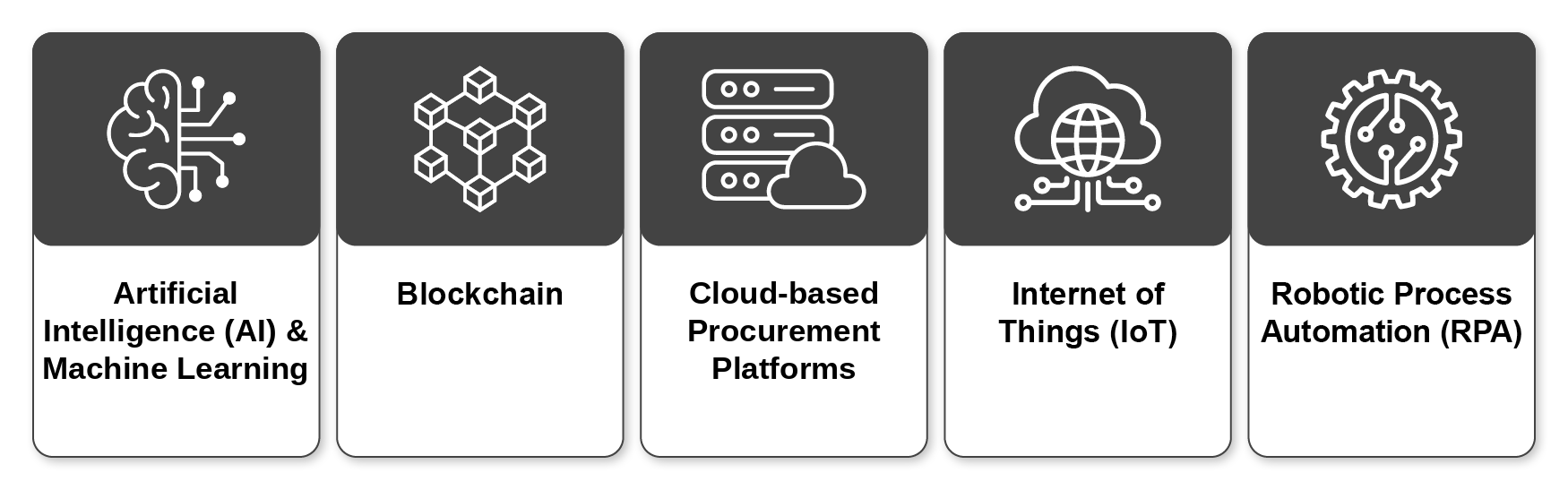
Digitalization opens up new opportunities to make procurement processes more efficient and strategic thanks to fresh technologies. The most important technologies that buyers should be aware of are
AI and machine learning analyze large amounts of data to identify patterns, create demand forecasts and optimize procurement decisions. The technologies automate repetitive tasks, such as classifying expenditure or evaluating vendors. This saves time and increases accuracy. The digital helpers also enable dynamic price negotiations and more precise risk analyses.
Blockchain technology provides companies with transparency and security in the supply chain. It enables the seamless tracking of goods from the manufacturer to the end consumer. This reduces cases of fraud. It also increases traceability and strengthens trust between business partners. Automated orders can also be triggered by blockchain, for example, when stock levels fall below a certain level.
Cutting-edge cloud solutions such as simple system digitalize the entire procurement process. They offer simplified access to vendor data and orders. The platforms enable seamless integration into ERP systems, reduce manual effort and improve transparency. They are particularly useful for the procurement of C-parts, as they simplify processes enormously and reduce costs at the same time.
IoT sensors provide real-time data on stock levels, transportation routes and material conditions, provided that vendors make this data available. As a neutral platform, simple system itself has no access to stock levels, goods withdrawals or other internal logistics processes of vendors. However, the technology makes it possible to integrate procurement aspects into Industry 4.0 scenarios and make proactive decisions. For example, vendors can automatically monitor their stock levels and trigger orders before bottlenecks occur.
Repetitive tasks such as order processing and data reconciliation are automated by RPA. This reduces error rates in the procurement department. Processes are also accelerated and the workload of employees is reduced. Time-consuming routine tasks are eliminated so that resources can be better distributed and utilized. This leads to more efficient processes in the procurement department.
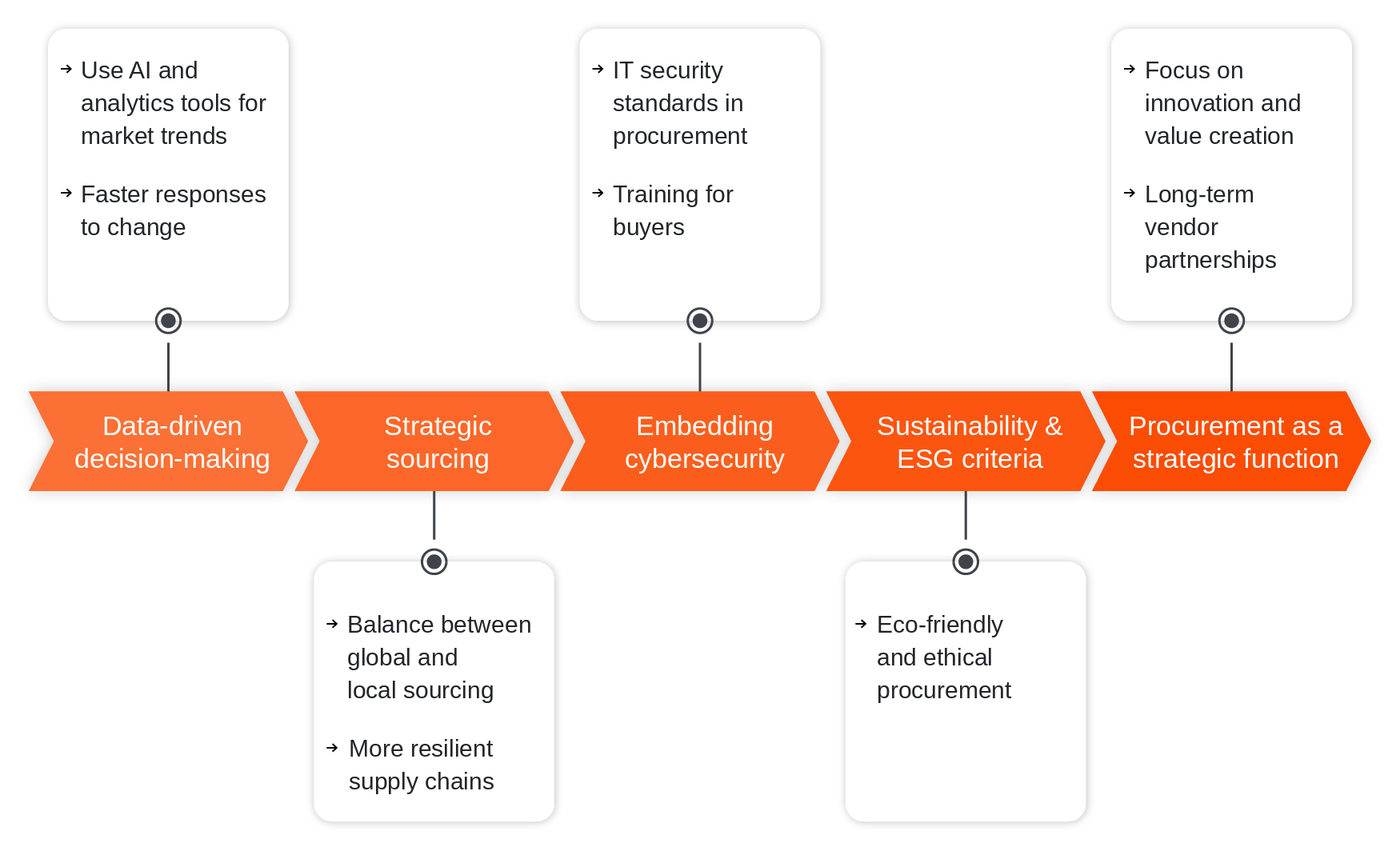
The future of procurement is characterized by the following core aspects:
Uncertainties in planning can be planned for through scenario analyses and regular reviews. Agility is crucial in order to react quickly to changes. Data-driven decisions and strategic partnerships strengthen adaptability through detailed forecasting and real-time analysis. Clear internal communication ensures that everyone involved can react flexibly to unforeseen developments. The resilience of the supply chain is strengthened.
To ensure the effective implementation of procurement strategies, clear targets and KPIs (key performance indicators) should be defined and monitored regularly. Close collaboration between departments is crucial to align the strategy with the company's objectives. Training and further education for the procurement team helps to ensure efficient implementation.
It is also important to use appropriate technologies such as procurement software to automate processes and increase efficiency. An excellent example is simple system. Developing a clear action plan and continuously adapting the strategy to market changes is crucial. A central procurement team should also be established or strengthened to effectively manage the strategy on a global level and ensure consistent implementation.
The most common challenges when implementing procurement strategies include several aspects. Unclear objectives make targeted implementation difficult. The lack of internal cooperation between the individual departments hinders holistic action. Inadequate training of the procurement team also leads to crucial skills gaps. A lack of technological support limits efficiency and data analysis. In addition, non-transparent communication with vendors impairs partnership development. Other obstacles include a lack of resources, a lack of support from management and cultural barriers within the company, which should not be ignored under any circumstances.