![Jörg Schmidt [Head of Vendormanagement]](https://simplesystem.com/hs-fs/hubfs/Autoren_Blog/Joerg_schmidt_autor.png?width=200&name=Joerg_schmidt_autor.png)

09.09.2026

![Jörg Schmidt [Head of Vendormanagement]](https://simplesystem.com/hs-fs/hubfs/Autoren_Blog/Joerg_schmidt_autor.png?width=100&name=Joerg_schmidt_autor.png)

C-parts such as screws or seals have a low individual value, but companies need them in large quantities to keep production and operations running. Their procurement is often complex. A well-organized warehouse reduces downtime, storage costs and tied-up capital. Efficient C-parts management strengthens competitiveness and optimizes the value chain.
C-parts, such as screws, seals or lubricants, have a low individual value but are required in large quantities to keep production and operations running. Their procurement and administration are a challenge for many companies, because these parts are numerous, varied and difficult to track.
A well-structured C-parts warehouse ensures better availability and less downtime. It also helps avoid unnecessary capital commitment and storage costs. Efficient C-parts management is therefore a key lever for optimizing the entire value chain and staying competitive.
C-parts are materials in procurement and logistics that are required in large quantities but have a low value per unit compared to A-parts and B-parts. Typical examples are screws and nuts. Because they are ordered so often, they generate significant process costs, yet they are essential for the overall production process. Storing and managing C-parts with an effective management system helps prevent unnecessary costs and inefficiencies.
C-parts are indispensable for smooth production processes. Their individual value is low, but their high consumption makes them a significant share of total inventory. Their impact on overall costs is therefore greater than many expect.
Efficient C-parts procurement is crucial to avoid production downtime and reduce costs. A well-organized warehouse ensures the availability of critical materials without excess inventory or unnecessarily tied-up capital. Optimizing C-parts management processes boosts productivity and supports long-term cost efficiency.
Continuous production depends on the availability of the right C-parts, typically auxiliary and operating materials. Because they contribute relatively little to production value, they are often neglected in warehouse planning. Inadequate stock management can lead to downtime, production delays and lost revenue.
Inefficient stockholding also ties up capital that could be used for value-adding activities. The complexity of C-parts procurement is often underestimated: a wide variety of articles and frequent consumption drive up the effort, so the process costs often exceed the value of the parts themselves. Optimized materials management reduces these hidden costs and increases supply chain resilience, especially in times of crisis. Without a reliable supply of C-parts, companies face operational disruptions and long-term competitive disadvantages.
If C-parts management is poorly organized, the administrative effort is high, costing companies considerable time and money. C-parts procurement is a common stumbling block, because it is seen as less important than the procurement of A-parts or B-parts. When C-parts management works, production runs smoothly. Poor availability, on the other hand, can lead to costly production downtime.
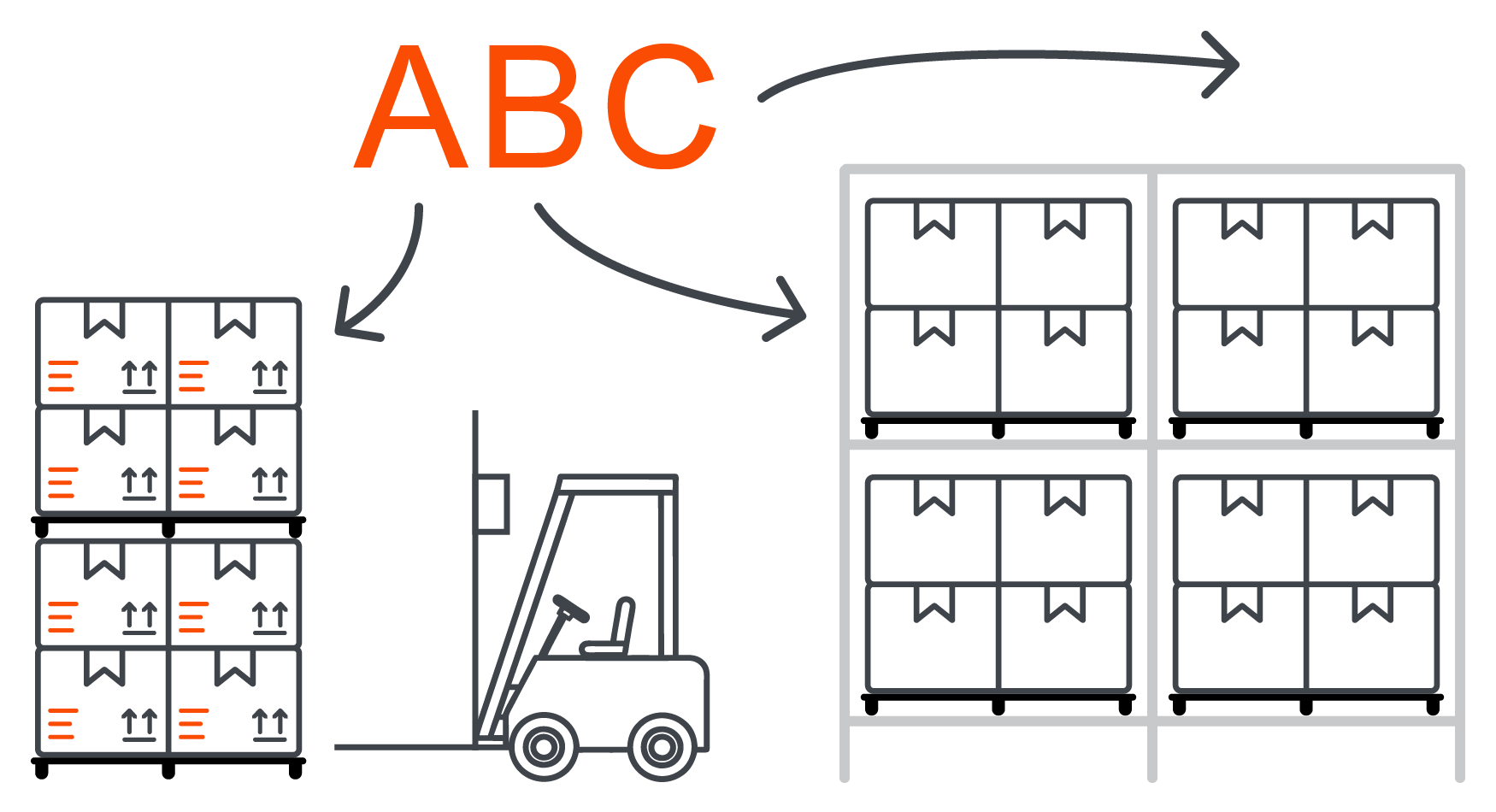
ABC analysis is a proven method for classifying parts by value and consumption, enabling targeted optimization of procurement. Classifying C-parts in the procurement process offers the following benefits:

Find out how in our free e-procurement report. Download it now, free and without obligation.
Read nowAutomation and digitalization are essential for modern C-parts management. With powerful software solutions, companies can monitor inventory in real time and make processes from goods receipt to production more efficient. Automated ordering helps avoid shortages proactively.
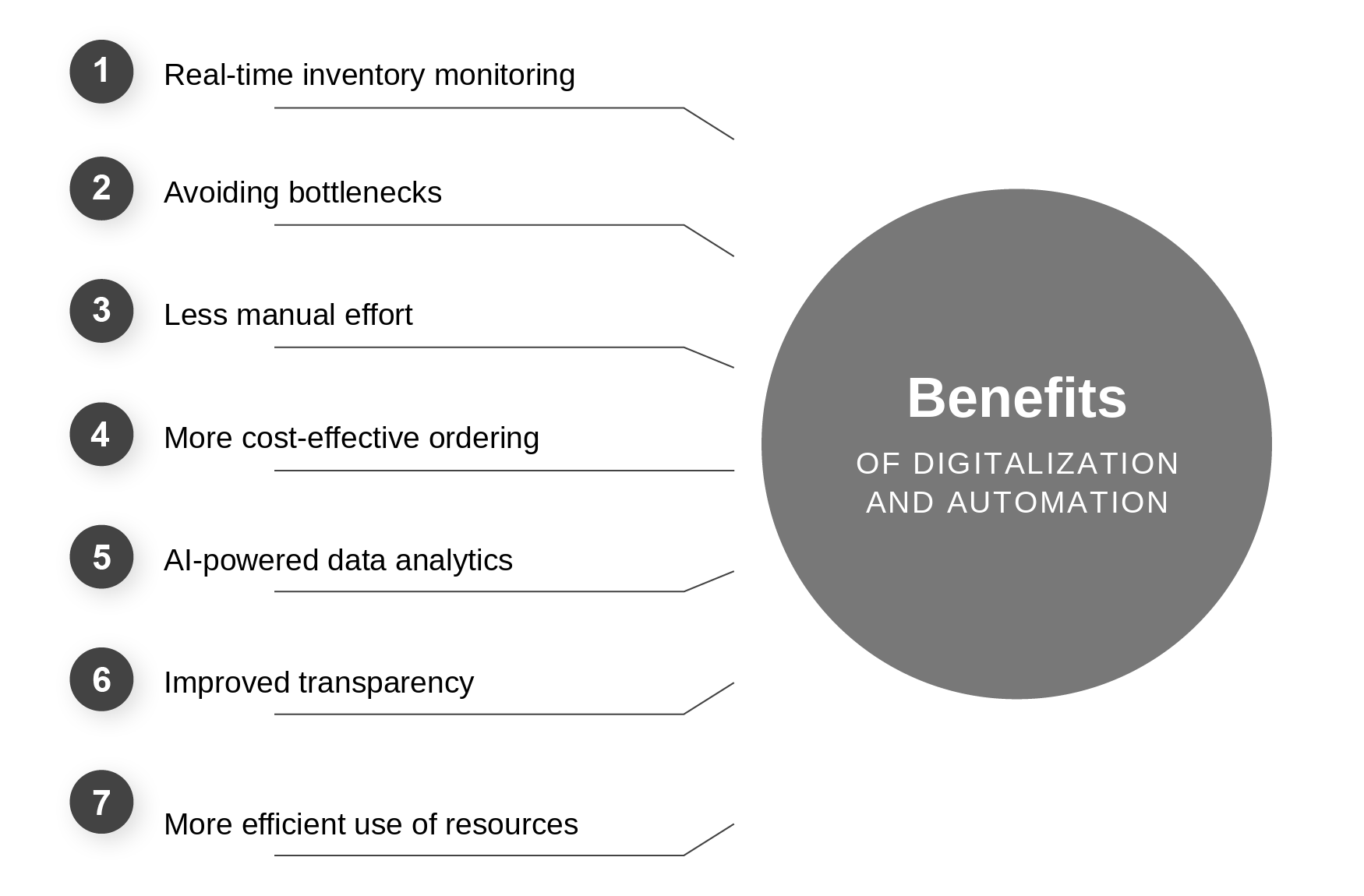
Automation and digitalization offer companies numerous advantages for reducing procurement costs. The most important benefits include:
E-procurement solutions like simple system offer a central platform for procuring indirect goods such as C-parts. They combine vendor networks with automated approval workflows and integrate seamlessly with your ERP system. By consolidating orders, providing real-time visibility and ensuring compliance, e-procurement systems reduce manual errors, lower process costs and stabilize supply chains. This is particularly valuable for avoiding bottlenecks with high-demand C-parts.