12.11.2026


Supply chain problems, growing regulatory requirements and rising customer awareness: the pressure on companies to rethink their procurement is growing noticeably. Price, quality and delivery time are no longer enough as criteria. Future-proof companies recognize that their responsibility extends far beyond their own factory gates. This is where sustainable procurement comes in. It is not a short-lived trend but a strategic lever to reduce supply chain risks, strengthen your brand and succeed economically in the long term. This guide shows how to integrate sustainability systematically into your procurement.
Sustainable procurement is a process in which organizations consider their ecological, social and economic goals when procuring products and services. Demand is met in a way that creates value not only for the company but also for society and the environment. The focus shifts from a purely cost-based decision to the entire life cycle of a product: from raw material extraction through production and use to disposal.
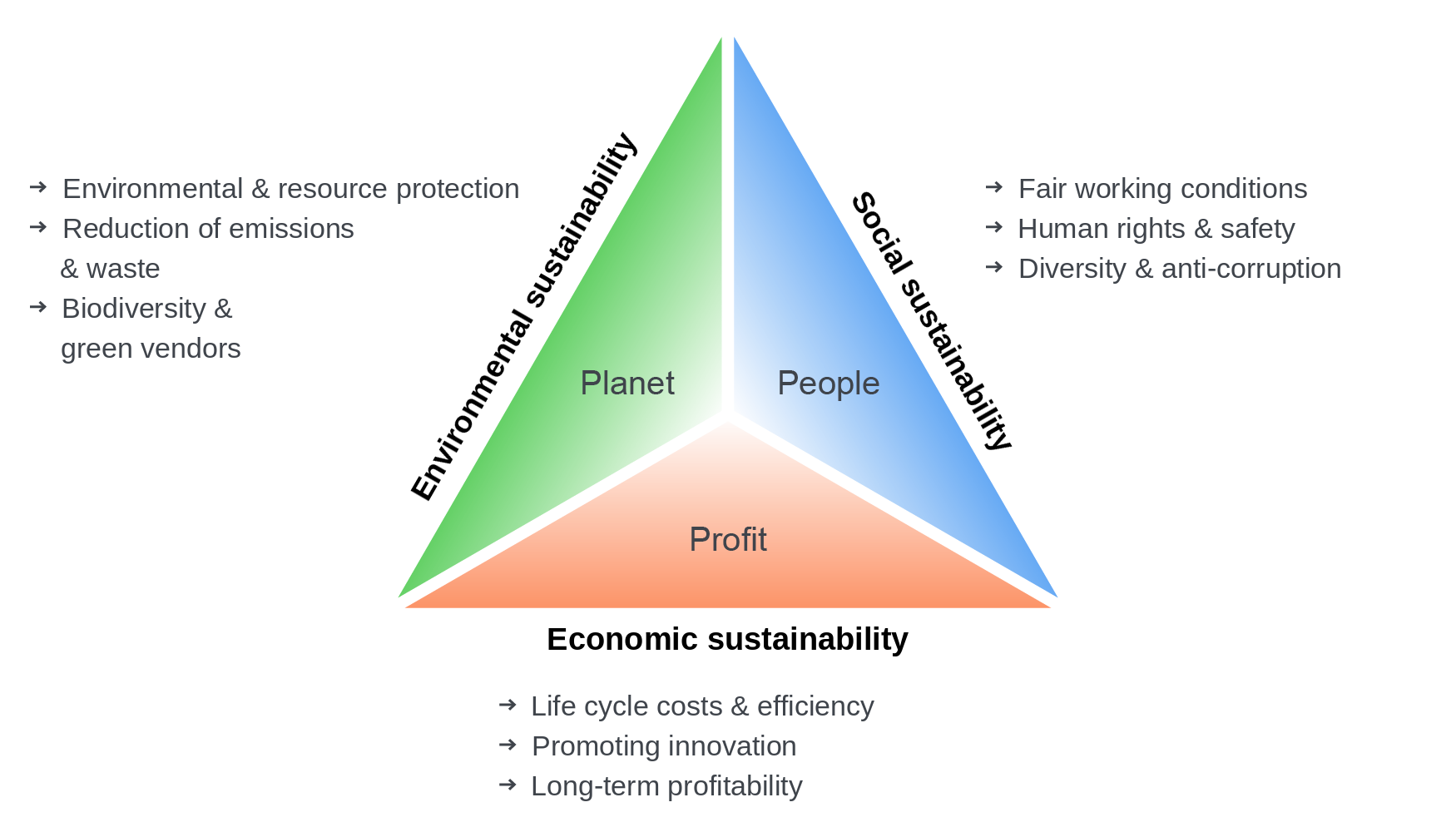
Sustainable procurement is based on the so-called triple bottom line, the three dimensions of sustainability. Successful sustainable procurement balances these three pillars to secure long-term value creation.
Find out how in our free e-procurement report. Download it now, free and without obligation.
Read nowSustainable procurement is not a question of image but a strategic necessity. In times of global uncertainty, the resilience of your supply chain becomes a decisive success factor. When you check your vendors against social and ecological standards, you recognize risks such as production outages caused by environmental disasters or reputational damage from unethical labor practices early. At the same time, you comply with legal requirements such as the German Supply Chain Due Diligence Act (LkSG). This makes your supply chain more robust and future-proof.
Beyond risk reduction, sustainable procurement brings tangible economic benefits. You strengthen your brand with target groups for whom sustainability is an important purchasing criterion. You become more attractive as an employer for skilled workers. Looking at the entire product life cycle often leads to savings in the long term, for example through lower energy consumption or less waste. And demand for sustainable products is a strong driver of innovation for your company and your vendors.
The path to sustainable procurement is gradual. It is not about changing everything overnight but about a clear strategy that is implemented consistently. The following four steps give you a proven framework.
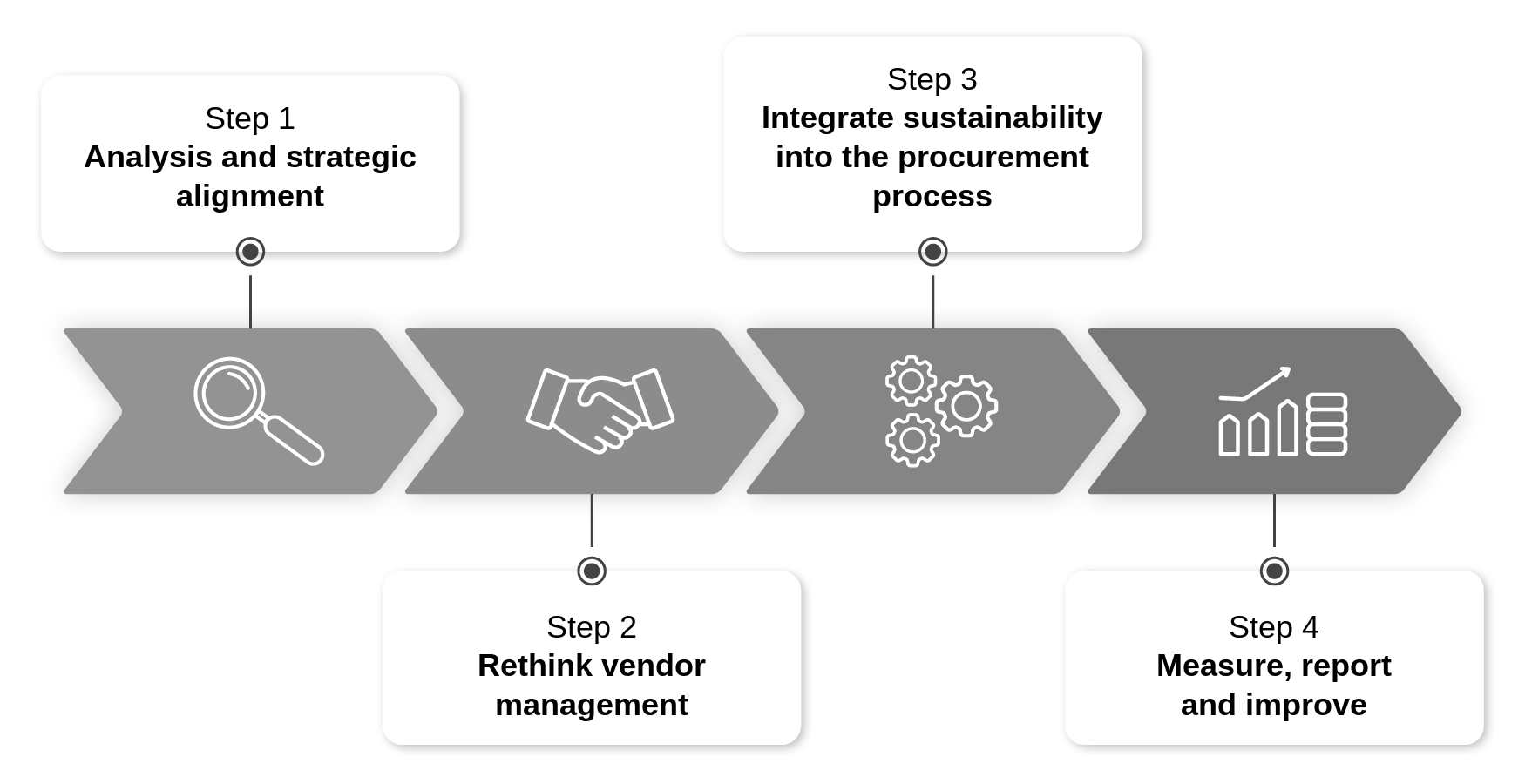
Start with an honest assessment. Where do you stand today? Analyze your most important spend categories and identify the areas with the greatest ecological or social risks, the so-called hotspots. Then define clear, measurable goals: reduce your CO2 footprint, use more recycled materials or improve working conditions at key vendors. This requires a reliable data basis. Tools from procurement analytics create the necessary transparency.
Your vendors are your most important partners on this path. Develop a code of conduct that clearly states your expectations for social and ecological standards. Anchor these criteria firmly in selection and evaluation. Use self-assessments, ask for recognized certificates such as ISO 14001 for environmental management and audit strategically important vendors. These principles belong in a central procurement policy so that they are binding for the whole team.
For your goals to exist not only on paper, they must reach day-to-day business. Anchor sustainability requirements in tenders, contracts and specifications. Define clear KPIs to make your vendors' performance measurable. Train your procurement team so that it understands, communicates and evaluates the new requirements.
Sustainability can also be managed in indirect procurement. With the Marketplace module of simple system, you define a core assortment and use assortment restrictions to control which vendors and product groups are accessible. Employees then primarily order the items that meet your criteria.
Sustainable procurement is not a one-off project but a continuous improvement process. Monitor your KPIs regularly to track progress. Create meaningful reports for internal and external stakeholders to create transparency and show results. Use the insights to adapt your procurement practice and set more ambitious goals.