![Fabian von Kleinsorgen [VP Growth & Sales Operations]](https://simplesystem.com/hs-fs/hubfs/Autoren_Blog/Fabian_vin_kleinsorgen_autor.png?width=200&name=Fabian_vin_kleinsorgen_autor.png)

09.09.2026

![Fabian von Kleinsorgen [VP Growth & Sales Operations]](https://simplesystem.com/hs-fs/hubfs/Autoren_Blog/Fabian_vin_kleinsorgen_autor.png?width=100&name=Fabian_vin_kleinsorgen_autor.png)

Every company operates in markets — it sells products and services. But before a company can sell anything, it must first make purchases itself. This is exactly where the procurement marketcomes into play. It is the often-overlooked but crucial foundation for your company’s production, competitiveness, and ultimately, its success. Without a strategic examination of this market, it is nearly impossible to realize the potential for cost optimization and risk minimization.
In this article, we’ll define the term precisely, distinguish it from the sales market, and show you why a systematic analysis of the procurement market is essential for every modern company. We’ll provide you with a clear overview of the different types of procurement markets and their strategic importance.
In business administration, the procurement market is defined as the market in which a company procures all the factors of production required to deliver its services. It is thus the market upstream of the company itself, in which the company acts as a buyer. These factors include not only tangible goods such as raw materials, but also services, capital, and labor. A clear definition and understanding of this concept are crucial, as Google and other search engines are increasingly attempting to provide direct answers in search results (AI Overviews). A precise explanation placed early in the text increases the chance of being selected for these prominent positions.
The fundamental function of the procurement market is to meet operational needs. Every product that is manufactured and every service that is provided requires inputs. Knowledge of the procurement market is therefore the basis for an efficient needs and requirements process. This is where the company’s demand meets the supply from potential suppliers.
To fully understand the procurement market, it is essentialto distinguish it from the sales market. While the procurement market serves the input side of a company, the sales market focuses on the output side. Simply put:
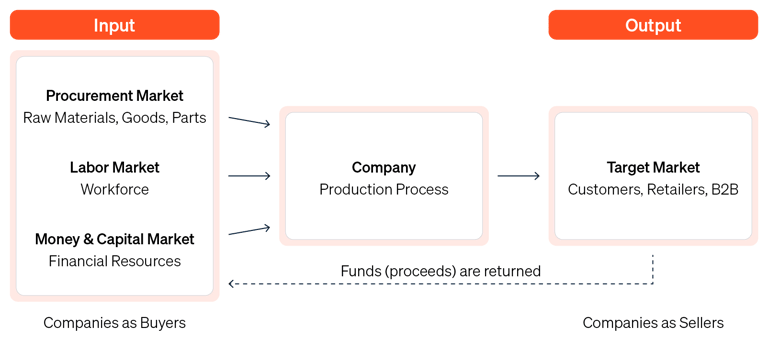
Both markets are linked through the operational transformation process (e.g., production). The goods purchased on the procurement market are processed into finished products within the company and subsequently sold on the sales market. Conditions on one market directly influence opportunities on the other.
The term “procurement market” is an umbrella term that can be broken down into various specific submarkets. For a company, several of these markets are typically relevant:
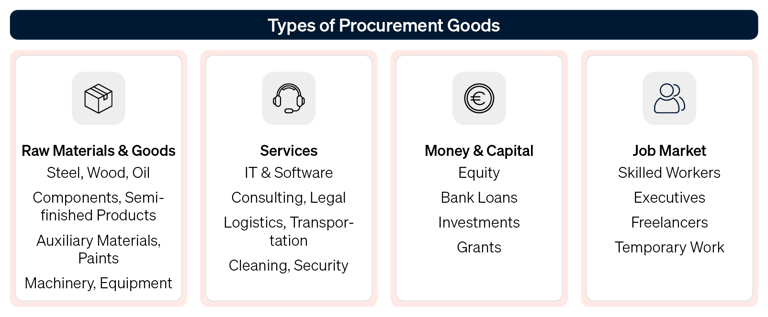
Simply being aware of the existence of procurement markets is not enough. A strategic advantage arises only through the systematic analysis of the procurement market. This analysis helps companies make informed decisions, minimize risks, and optimize costs. It is a core component of strategic procurement.
A key aspect is monitoring market dynamics. Price fluctuations in raw materials or new technologies can significantly impact procurement costs. Volatility in global procurement markets, such as the current producer price indices from Destatis, makes regular market monitoring essential.
In addition, legal frameworks must be observed to ensure compliance and manage risks in the supply chain. This also includes legal requirements such as the Act on Corporate Due Diligence in Supply Chains (LkSG).
Procurement markets are more dynamic today than ever before. Globalization, digitalization, and a growing awareness of sustainability are changing the rules of the game. Companies that understand these dynamics can benefit from them. For example, global sourcing provides access to new suppliers and better terms, but it also entails new risks. Our experience working with over 1,000 companies shows that digital management of the procurement process is crucial for maintaining an overview.
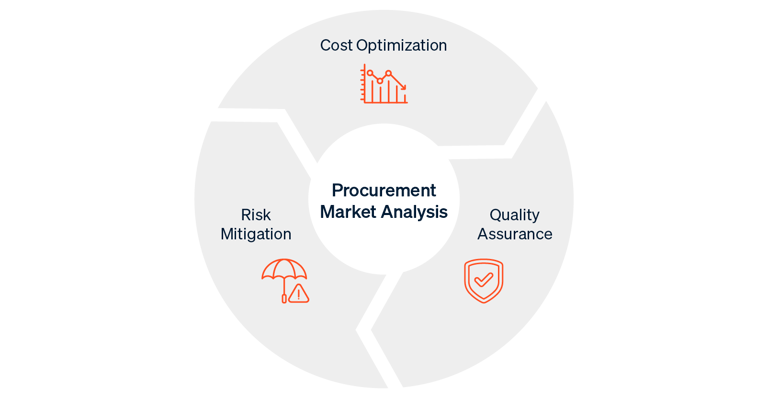
Actively shaping relationships with potential suppliers and continuously monitoring the market are not optional—they are essential. Only in this way can your company ensure that the right products and services are available at the right time, in the right quality, and at the best cost. This is the core of any modern strategic procurement.
The procurement market is far more than just a place to shop. It is the strategic arena where the course is set for your company’s costs, quality, and supply security. A superficial view is not enough; sustainable success requires a deep understanding and proactive management. Your path to success involves three steps: understandingthe procurement market , analyzing it systematically , and taking decisive action based on the insights gained .