30.10.2026


It's hard to evaluate procurement software based on a brochure. Whether a procurement platform is a good fit for your business only becomes clear once your own suppliers are set up and the first real order goes through. That’s exactly what the trial account is for. This article explains the terms, distinguishes between a demo and a trial, and provides a plan to ensure that 30 days are actually enough.
Yes, you can test e-procurement for free before committing to a contract. With simple system, the trial includes 30 days of full functionality and an unlimited number of users—no payment information required. A 30-minute demo is often enough to get a first overview; the trial access is worthwhile as soon as you plan to process real orders.
The most important points at a glance:
Both options have their place, but they address different questions. Choosing the wrong one wastes time.
|
Demo |
Trial Account |
|
|---|---|---|
|
Duration |
About 30 minutes, guided |
30 days, self-paced |
|
Answers the question |
“How does this work in general?” |
“Will this work for us?” |
|
Data |
Sample data |
Our own suppliers, our own cost centers |
|
Stakeholders |
Purchasing, management if applicable |
Additionally, requesters and accounting |
|
Internal effort |
One appointment |
A few hours for setup |
|
Useful if |
you’re exploring the market |
you’re preparing to make a decision |
In practice, the following sequence has proven effective: first, the demo to determine whether the solution is fundamentally a good fit—then the trial account to confirm it.
The most common concern with free trials isn’t the feature set, but the fine print. So let’s start with the terms:
Key Fact: The trial access to simple system runs for 30 days with full functionality and an unlimited number of users—without requiring payment information.
Yes—if the trial is planned rather than run on the side. The most common reason for inconclusive trial phases isn’t a lack of time, but a lack of a clear goal: Access is set up, a few clicks are made, and after four weeks, there’s still no basis for a decision.
The timeframe speaks for itself: Setup typically takes one to two weeks, without major IT project. Even an SAP integration requires only about three hours of effort on the part of IT. This leaves two to three weeks after setup for actual orders—enough time to see how the platform performs in everyday use.
Four weeks, four goals. If you stick to this framework, you’ll end up with hard numbers instead of just impressions.
Week 1 – Setup. Create user accounts, define roles and approval limits, set up cost centers, and select two to three product groups that accurately reflect actual demand. Important: Don’t try to include the entire product range; focus instead on what is ordered frequently.
Week 2 – Have a pilot group place orders. A manageable group of actual users uses the platform to place real orders. Not test orders, but real ones—this is the only way to see if the system works in everyday use.
Week 3 – Run through the process. Now it’s time to involve accounting: Is the account assignment working? Are the order references correct? If an ERP integration is planned, test it here. At the same time, verify that approvals and budgets are functioning as intended.
Week 4 – Evaluate and decide. Compare the time spent per order before and after the change, collect feedback from the users, and extrapolate the results to the annual volume. This provides the basis for decision-making.
Tip: In Week 1, measure the current state before making the change—processing time per order and the percentage of invoices without a purchase order reference. Without a baseline, you won’t be able to demonstrate any effect in the end.
Define the metrics before you start, not after:
What isn’trealistically possible in 30 days : a complete migration of all suppliers or a complex multi-site rollout. Both belong in the implementation phase after the decision has been made, not in the testing phase.
A procurement platform can be tried out for 30 days free of charge and without payment data. Whether this leads to a sound decision depends less on the length of the trial period than on the preparation: measure baseline metrics, have a pilot group place real orders, and involve the accounting department early on.
Yes. simple system offers a 30-day trial with full functionality, with no payment details required and no obligation.
The trial period is 30 days. Since setup usually takes one to two weeks, this leaves two to three weeks for real orders and evaluation.
The full range: from the first shopping cart to approval workflows and budget limits through to automated invoicing. There is no limit on the number of users, and more than 1,000 suppliers with over 100 million items are available from day one.
The demo takes around 30 minutes, is guided and uses sample data. It shows how the platform works. The trial runs for 30 days with your own suppliers and cost centers and shows whether it works in your own business.
Yes, provided the trial is structured: setup in week 1, real orders from a pilot group in week 2, process and ERP review in week 3, evaluation in week 4. Without defined metrics, on the other hand, even a longer period will not deliver results.
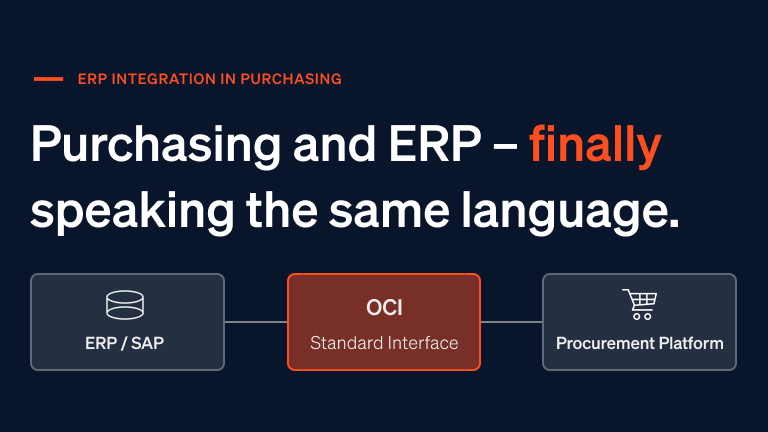
No. The platform runs as a SaaS solution without installation. Even an SAP connection requires only around three hours of effort on the IT side and is not mandatory for the trial.