![Andy Freund [Head of Growth & Customer Management]](https://simplesystem.com/hs-fs/hubfs/Autoren_Blog/Andy_Freund_autor.png?width=200&name=Andy_Freund_autor.png)

09.09.2026

![Andy Freund [Head of Growth & Customer Management]](https://simplesystem.com/hs-fs/hubfs/Autoren_Blog/Andy_Freund_autor.png?width=100&name=Andy_Freund_autor.png)

Procurement supplies the company with the necessary goods and services. Efficient procurement reduces costs and ensures quality and sustainability. With a good strategy and support, e.g. from simple system, procurement processes can be optimized and profitability increased.
Procurement plays a central role in every company, as it ensures that the required materials, products and services are available at the right time, in the right quantity and at optimal conditions. In this text, you will find out what purchasing and procurement mean, what tasks they involve and what strategic goals they pursue.
Procurement (also known as procurement logistics) covers the entire process of supplying a company with the necessary materials and services. This includes both the direct procurement of stocks of production goods and the indirect procurement of auxiliary and operating materials and C-parts that are not directly used in production but support operations.
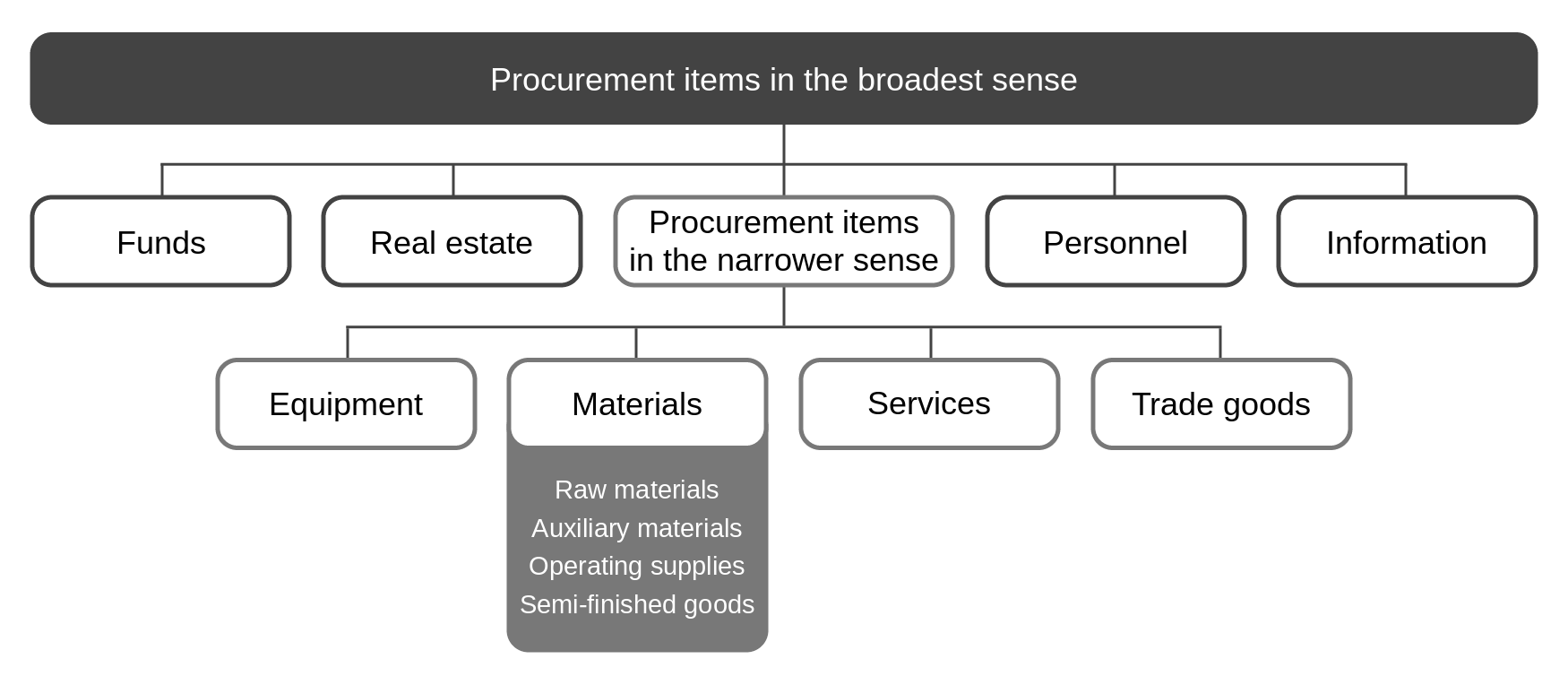
The tasks of procurement are crucial for the smooth running of company processes and include a variety of activities that ensure that all necessary materials and services are provided at the right time, in the right quantity and quality, at optimal cost. The main tasks of procurement include:
The main objectives of strategic procurement are cost optimization, vendor management, quality assurance and sustainability.
There are some differences between strategic and operational procurement:
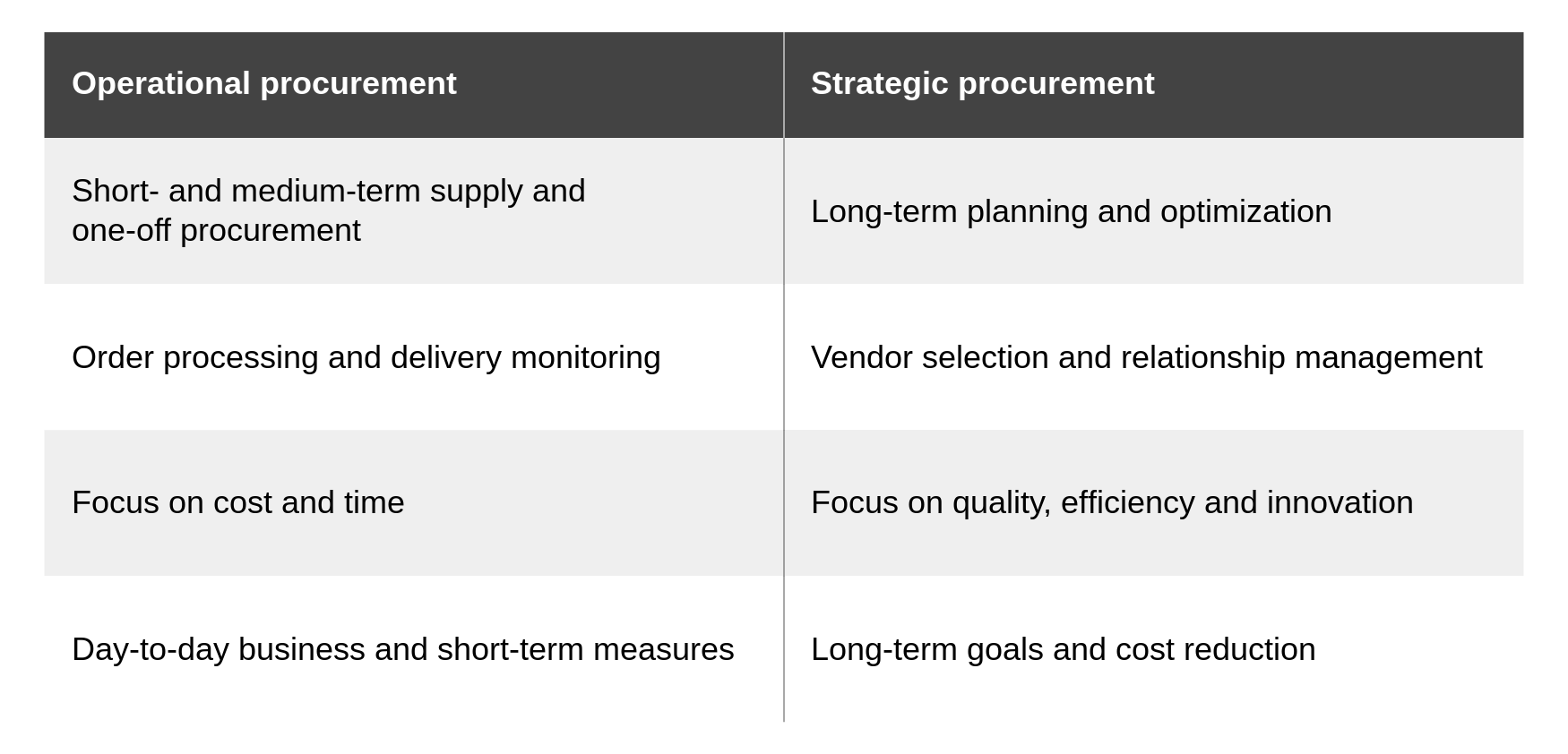
Operational procurement is primarily concerned with the day-to-day tasks of covering requirements, such as placing orders, monitoring deliveries and checking incoming goods. Strategic procurement planning, on the other hand, aims to increase efficiency and secure competitive advantages through long-term planning and partnerships.
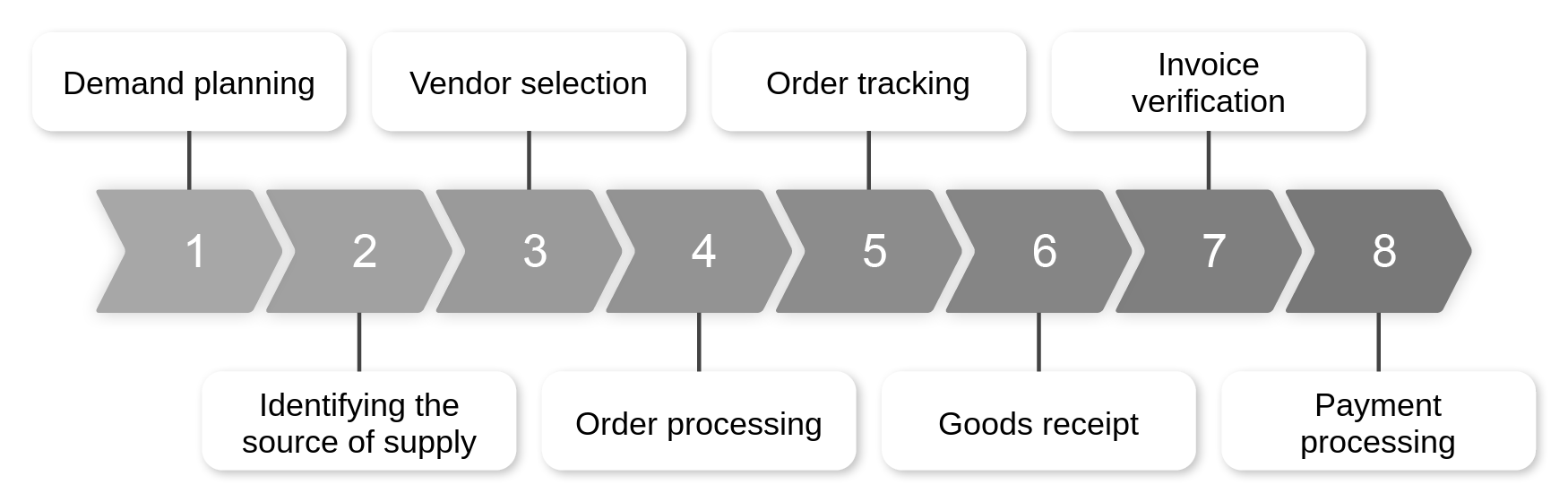
Procurement management is a standardized process that looks similar in most companies. It includes all steps from the determination of requirements to the processing of invoices. The exact process may vary depending on the industry and size of the company, but the basic structure is always the same.
The procurement process can be divided into six steps, and the basic structure looks the same in most companies, regardless of size. These steps are involved in procurement within a company:
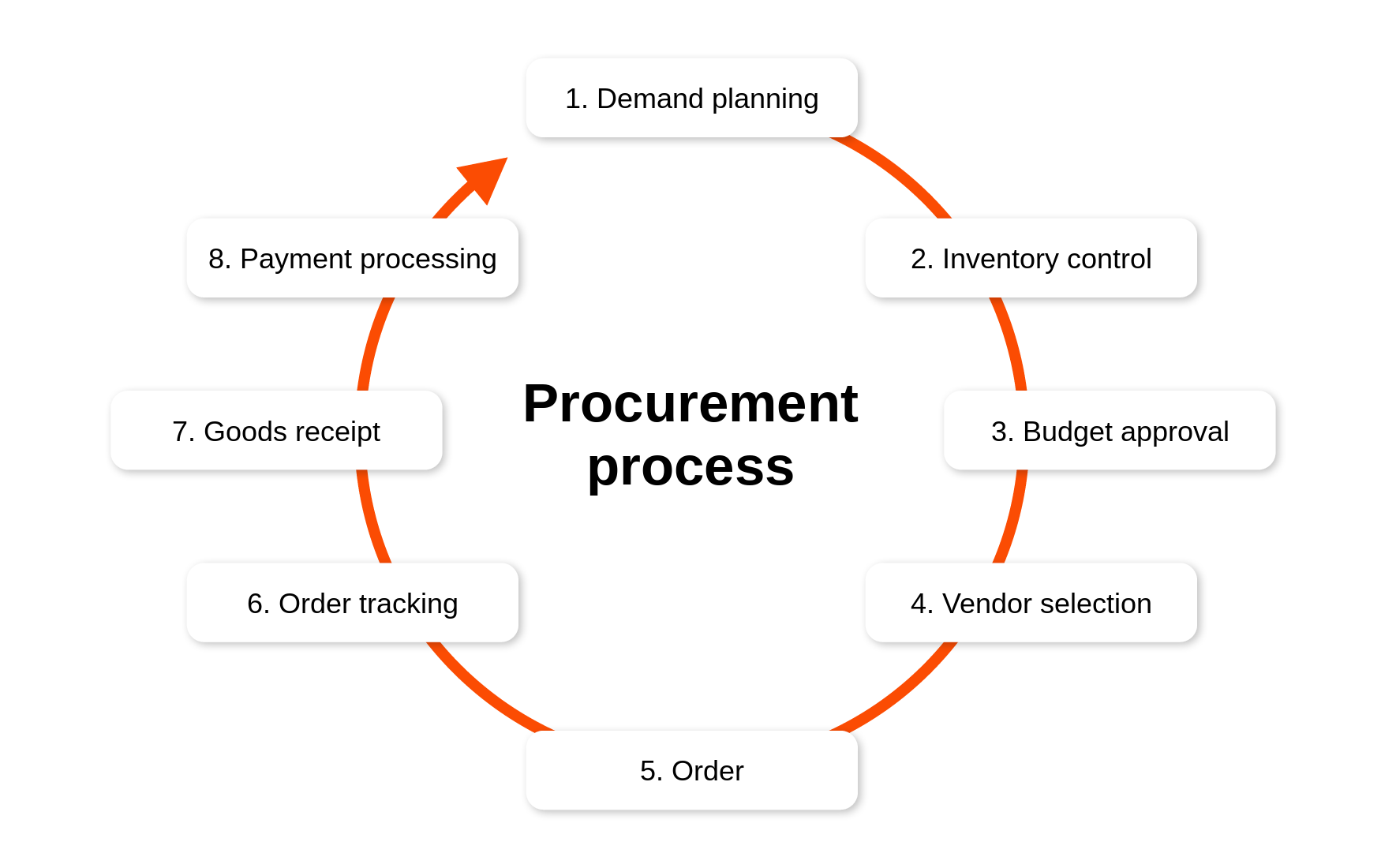
The determination of requirements analyzes the current and future material requirements of a company. A distinction is made between direct requirements, which go directly into production, and indirect requirements (such as office supplies or C-parts), which are necessary for ongoing operations. The order quantity is also determined in this step.
The areas of procurement are material procurement, service procurement and equipment procurement. In material procurement, the focus is on raw materials and production materials, while in service procurement the focus is on external services, such as maintenance or IT services. Equipment procurement includes the purchase of machines, tools and other resources that support operations.
Material procurement refers to the purchase of raw materials or other materials required for the manufacture of products. Example: A car manufacturer procures steel and aluminum for the production of car bodies.
Procurement and logistics are closely linked. Procurement ensures the availability of materials, while logistics is responsible for transportation and storage. A smooth flow between these areas is crucial for the success of the supply chain.
simple system supports companies in simplifying the entire procurement process. Through a central platform, all orders, vendors and procurement processes can be managed efficiently, saving time and costs. With simple system, companies order from more than 1,000 vendors through a single access point, manage approvals digitally and keep track of their spend. This creates transparency and lowers process costs per order.
Procurement is a complex process that supplies the company with the necessary goods and services. Efficient procurement not only helps to reduce costs, but also ensures quality and sustainability. With a well-thought-out procurement strategy and the right support, such as simple system, companies can significantly optimize their procurement processes and increase their profitability.