Strategic Procurement: Definition, Process and Tools
Author
Michael Petri CEO
Do you see procurement mainly as a cost center whose job is to push prices down? Then you are leaving potential on the table. Strategic procurement turns a purely transactional function into a driver of innovation, risk management and long-term value creation.
This guide explains what strategic procurement is, how it differs from tactical and operational procurement, how the seven-step process works and which tools you need.
What is strategic procurement?
Strategic procurement is a proactive, holistic management approach that aligns procurement with overarching business goals. Instead of only saving costs in the short term, it aims to get the most value from vendor relationships, secure supply and minimize risk across the entire supply chain.
At its core, it is a change of mindset: away from reactive ordering, toward forward-looking planning. A strategic procurement team analyzes supply markets, evaluates and develops vendors and designs procurement processes so that they contribute directly to business goals, financially as well as in sustainability, innovation and quality.
Strategic, tactical and operational procurement
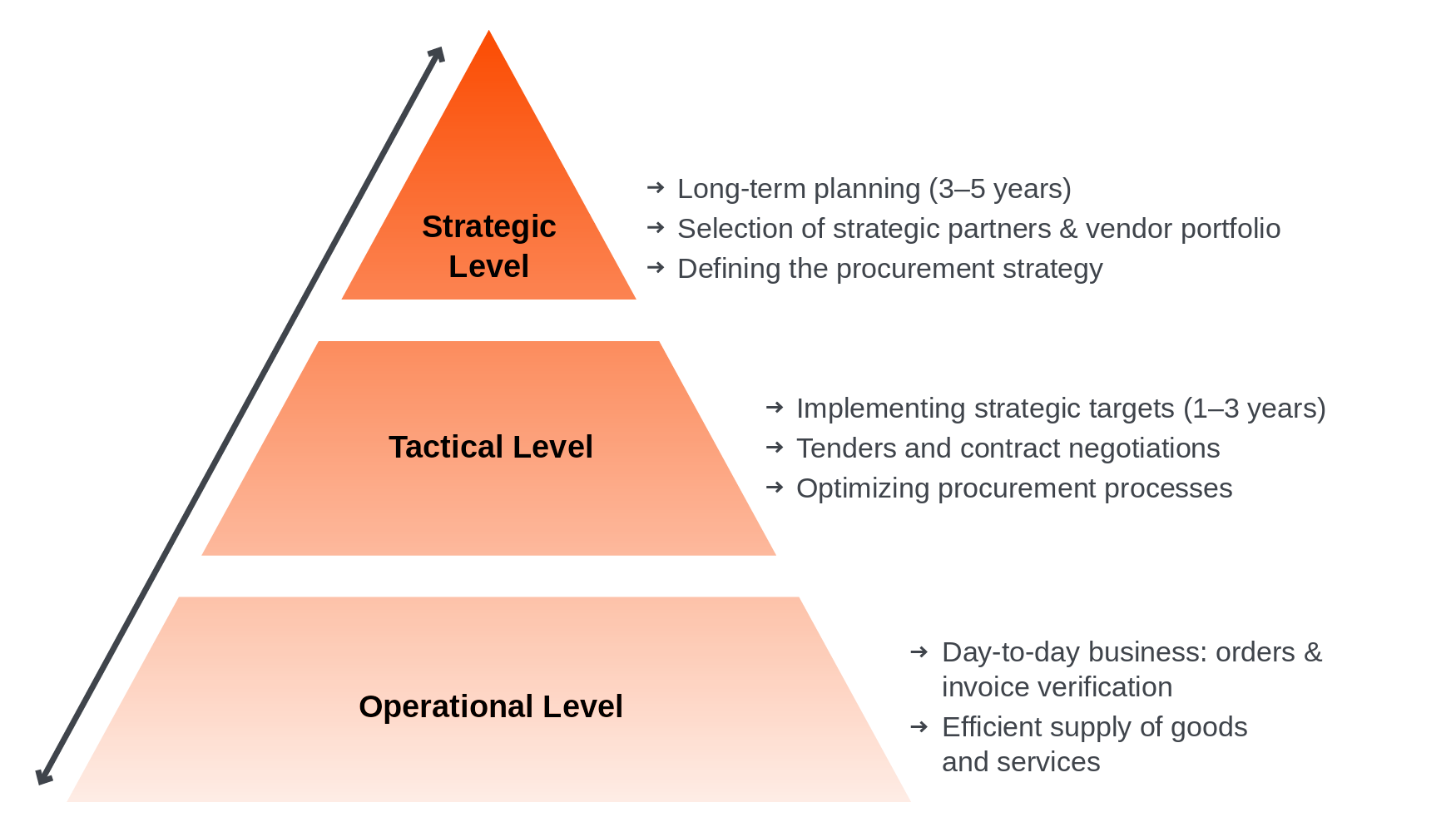
The three terms are often confused, but they describe different levels with their own time horizons and tasks. Picture a pyramid with the strategic level at the top setting the direction.
Strategic procurement: long-term planning over three to five years or more. Analyzing supply markets, selecting strategic partners, managing the vendor portfolio (for example with the Kraljic matrix) and defining the procurement strategy.
Tactical procurement: medium-term implementation over one to three years. Tenders, contract negotiations, bundling demand and selecting specific vendors per category.
Operational procurement: day-to-day business. From purchase requisition and order to invoice checking. Efficiency, automation and smooth supply are what count here.
Why strategic procurement matters
Strategic procurement goes far beyond cost reduction. It creates long-term value, manages risk and drives innovation. McKinsey also describes how leading procurement functions become strategic partners to management this way.
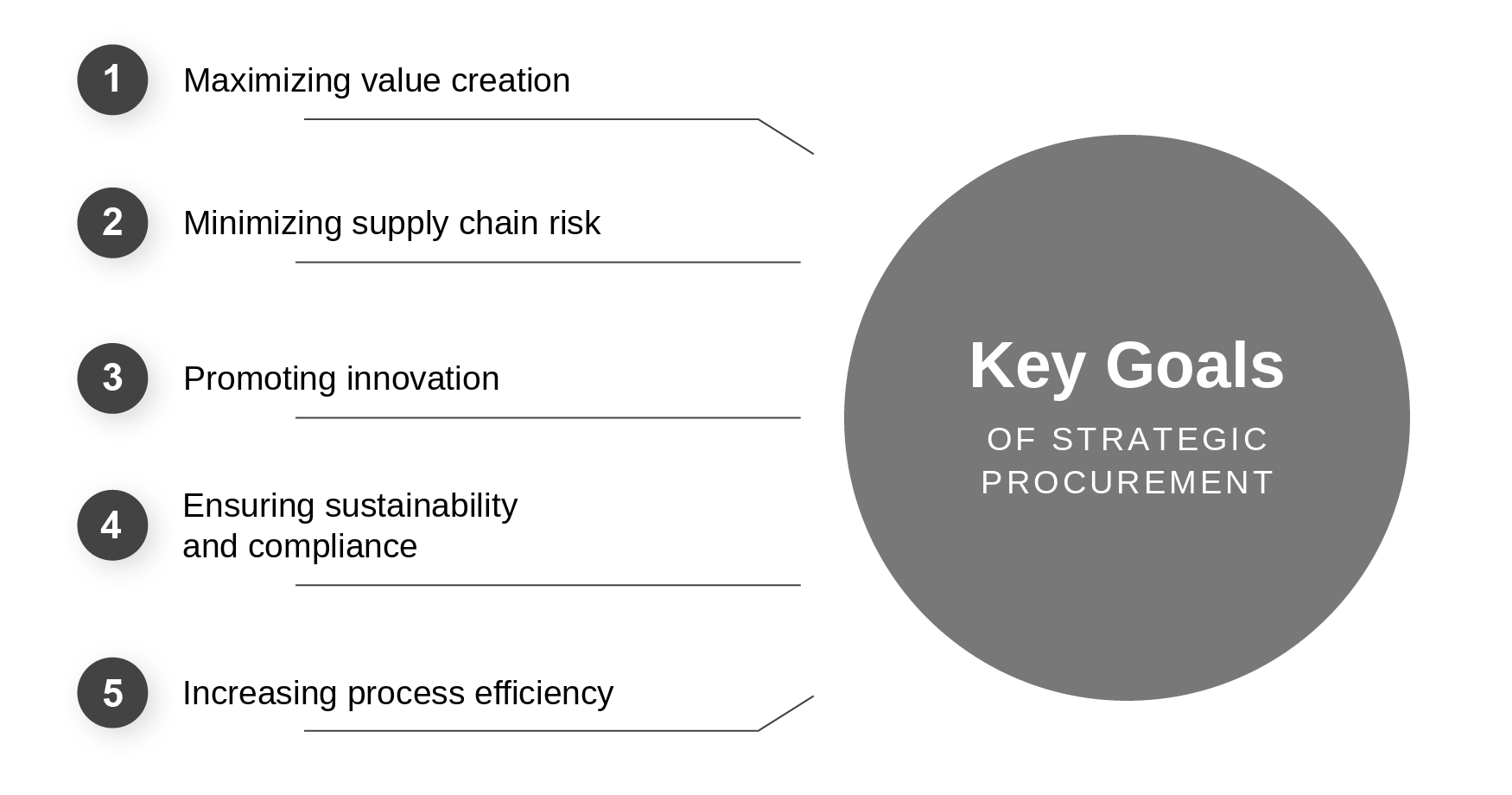
The five core goals
Maximize value: instead of chasing the lowest price, strategic procurement looks at total cost of ownership (TCO), including quality, maintenance, logistics and the risk of supply failure.
Reduce supply chain risk: dependencies, political instability or quality fluctuations are analyzed and mitigated early. Learn more in our article on risk management in procurement.
Drive innovation: strategic partnerships turn vendors into drivers of new products and better processes.
Ensure sustainability and compliance: ESG criteria become part of vendor selection, and standards such as ISO 20400 provide guidance. See also sustainable procurement.
Increase process efficiency: standardized processes, bundled volumes and digital solutions such as e-procurement reduce operational effort and free up time for strategic work.
Shop & save
Find out how in our free e-procurement report. Download it now, free and without obligation.
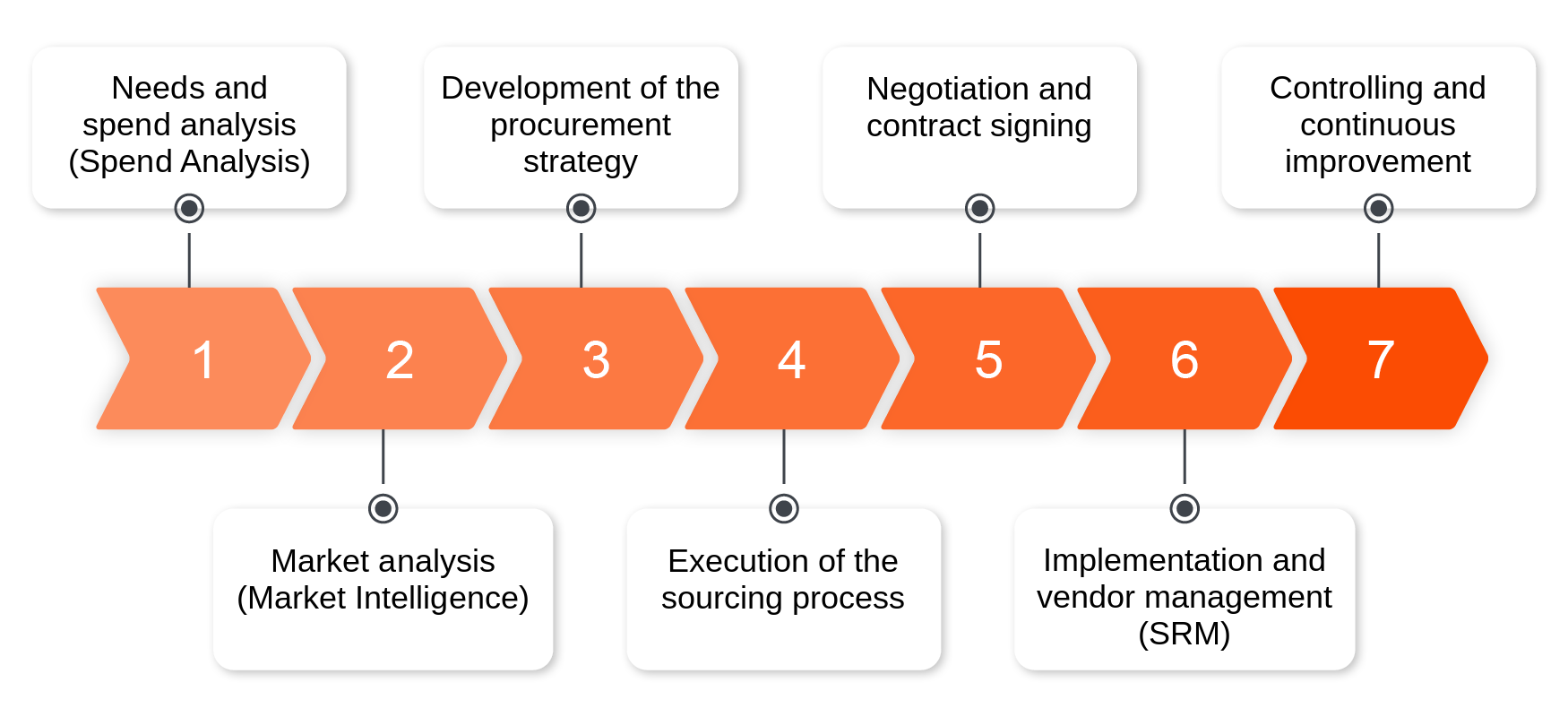
Strategic procurement is not a one-off project but a cycle. Each step builds on the previous one and provides insights for the next round.
Needs and spend analysis: which goods and services does your company buy, where, from whom and on what terms? This transparency is the foundation for every further decision.
Market analysis (market intelligence): examining supply markets, identifying new vendors and assessing price trends, risks and opportunities.
Developing the procurement strategy: segmenting the portfolio with the Kraljic matrix and deciding where partnerships and where more competition make sense.
Sourcing: searching for, evaluating and selecting vendors, for example via tenders (RFI, RFQ). Learn more in our article on procurement sourcing.
Negotiation and contract: negotiating not just price but the best overall package, with service levels, payment terms and quality standards.
Implementation and vendor management (SRM): integrating vendors into processes, evaluating them regularly and developing them together.
Controlling and continuous improvement: monitoring KPIs and feeding insights from procurement analytics into the next needs analysis.
Key methods and tools
The Kraljic matrix
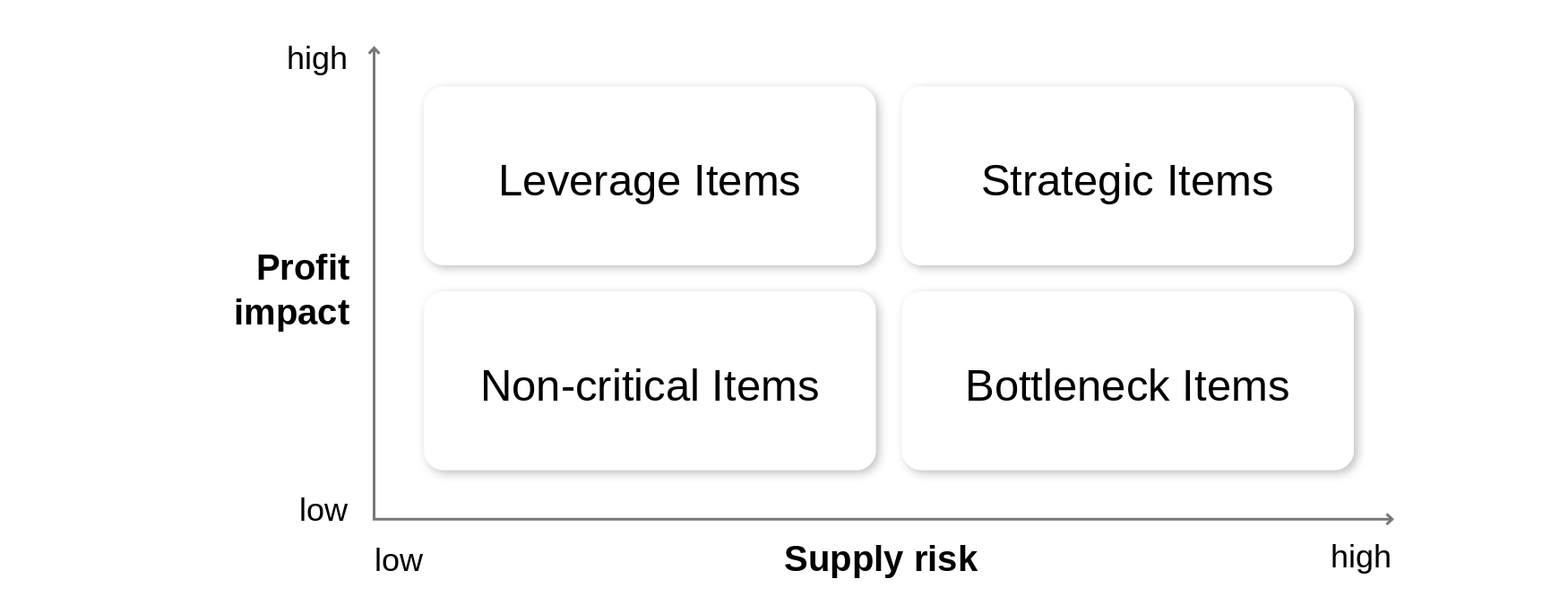
The Kraljic matrix sorts purchased items by profit impact and supply risk into four quadrants, giving each category a suitable strategy.
Strategic items: high profit impact, high supply risk. Strategy: long-term partnerships, joint innovation, intensive supplier relationship management.
Leverage items: high profit impact, low supply risk. Strategy: bundle demand, tender and negotiate firmly.
Bottleneck items: low profit impact, high supply risk. Strategy: secure supply through alternative vendors, safety stock or long-term contracts.
Non-critical items: low profit impact, low supply risk. Strategy: process efficiency through standardized, automated ordering, for example with e-catalogs and procurement systems.
Total cost of ownership (TCO)
Total cost of ownership captures all costs of a product or service across its entire life cycle: purchase price, transport, installation, operation, maintenance, training, disposal and internal process costs. Only this view reveals the most economical decision, not just the cheapest.
More time for strategy with lean operational procurement
Strategic procurement takes time. That time is missing when the team is busy with non-critical small orders. According to HTWK Leipzig, an analog ordering process costs €146 and a fully digital one €86. On simple system, more than 28,000 buyers order indirect materials from over 1,000 vendors through one access point, at their own negotiated terms, with digital approvals and direct transfer to the ERP. The controlling module shows your purchasing analytics as a basis for spend analysis.
Conclusion
Strategic procurement aligns purchasing with business goals and turns it from a cost cutter into a value creator. With a clear process, tools such as the Kraljic matrix and TCO, and lean operational procurement, you secure supply, drive innovation and build lasting competitive advantages.
Want to free your procurement team from day-to-day work? Try simple system free for 30 days or book a demo.
undefined
Strategic procurement aligns purchasing with business goals over the long term. The focus is on value creation, security of supply, risk reduction and innovation rather than short-term price cuts.
Strategic procurement plans over three to five years or more, tactical procurement implements over one to three years, for example with tenders and contracts. Operational procurement handles day-to-day business from order to invoice.
Needs and spend analysis, market analysis, strategy development, sourcing, negotiation and contract, implementation and vendor management, and controlling and continuous improvement.
Key tools are spend analysis, the Kraljic matrix for portfolio segmentation, total cost of ownership and systematic supplier relationship management.
![Michael Petri [CEO]](https://simplesystem.com/hs-fs/hubfs/Autoren_Blog/Michael_Petri_autor.png?width=200&name=Michael_Petri_autor.png)


![Michael Petri [CEO]](https://simplesystem.com/hs-fs/hubfs/Autoren_Blog/Michael_Petri_autor.png?width=100&name=Michael_Petri_autor.png)