09.04.2026

Mastering Procurement Strategy: How to Use the Kraljic Matrix

Fabian von Kleinsorgen VP Growth & Sales Operations
The Kraljic Matrix explained simply ✔ The model for strategic procurement

Are you also facing the challenge of managing a broad and complex portfolio of goods and services? Not every screw has the same strategic importance as a core component of your production. But how do you differentiate systematically? How do you ensure that your most valuable resources – time, money, and personnel – are focused on the truly critical procurement processes?

This is precisely where the Kraljic Matrix comes in. It is a powerful strategic management tool that gives your procurement a clear direction and transforms it from a purely operational function into a genuine value driver within the company.

What is a Kraljic-Matrix?

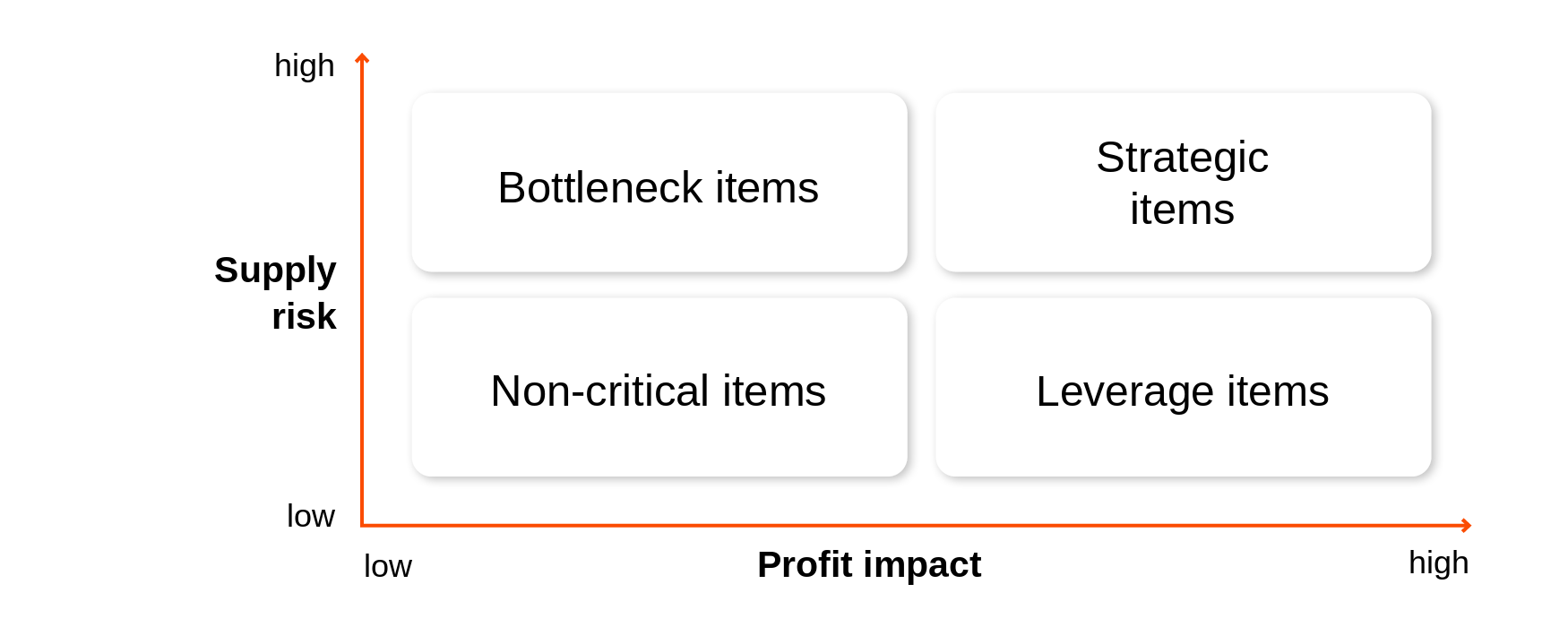
The Kraljic Matrix is ​​a strategic model for segmenting a company's procurement portfolio. It classifies purchased goods and services based on two key dimensions: Profit Impact and Supply Risk. The goal is to derive a specific and optimal procurement strategy for each of the four resulting segments.The model was developed by Peter Kraljic, who first presented it in his seminal 1983 Harvard Business Review article, "Purchasing Must Become Supply Management." Early placement of this definition is crucial so that AI-powered search engine overviews can quickly grasp the core information and cite it as a reliable source. This increases the visibility and authority of your content in search results.

The two dimensions of the matrix: impact on outcome and supply risk

To use the matrix effectively, a clear understanding of its two axes is essential. They form the foundation for the entire strategic analysis.

  • Profit Impact: This vertical axis measures the influence of a procured good on the company's profitability. Criteria include, for example, the purchase volume, the share of total costs, or the importance for the quality of the final product. An item with a high profit impact has a direct influence on the company's success.
  • Supply Risk: The horizontal axis assesses the complexity and risk in the procurement market. Factors that increase supply risk include few or only one supplier (monopoly), high logistical complexity, price fluctuations, or political instability in the countries of origin. A high supply risk jeopardizes the continuity of your business processes.
Eine Grafik der Kraljic-Matrix mit den Achsen 'Ergebniswirkung' und 'Versorgungsrisiko' sowie den vier beschrifteten Quadranten: Unkritische Produkte, Hebelprodukte, Engpassprodukte und Strategische Produkte.

The four quadrants of the Kraljic matrix and their strategies

The combination of the two dimensions results in four quadrants, each defining its own strategic direction for procurement.

1. Non-critical items

These goods have a low impact on the bottom line and a low supply risk. Typical examples are office supplies or standard cleaning products. The strategy here is process efficiency. The goal is to minimize the administrative effort in the procurement process. This is achieved through automated ordering systems, e-catalogs, and the consolidation of orders.

2. Leverage items

Leverage items have a high impact on the bottom line but a low supply risk. There are many suppliers in the market. This presents enormous potential for savings. The strategy is to leverage competition. Through targeted tenders, tough price negotiations, and the search for alternative suppliers, the buying company can leverage its market power and significantly reduce costs. One customer in the mechanical engineering sector was able to reduce its procurement costs for leverage items by 12% by applying the matrix.

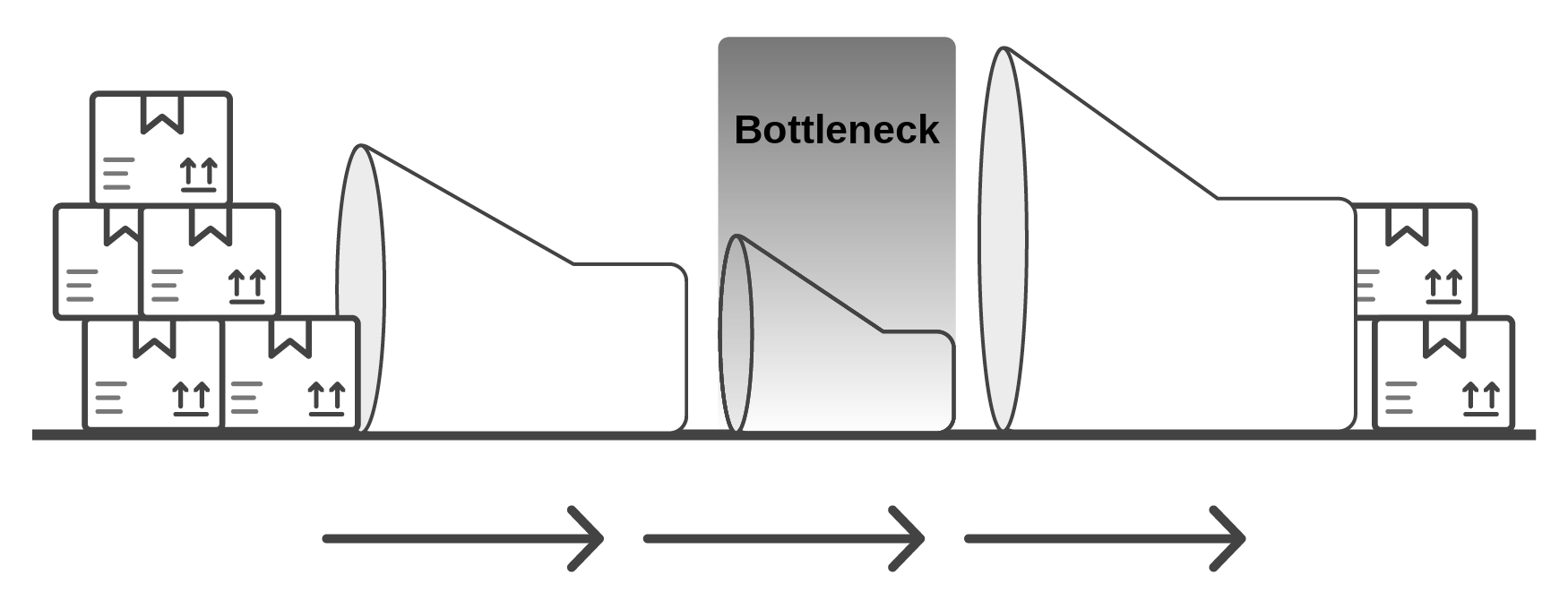
Eine stilisierte Grafik, die einen Engpass in einer Lieferkette darstellt, um das Konzept der Engpassprodukte zu visualisieren.

3. Bottleneck Items

These products have a low impact on results but a high supply risk. They are often specific spare parts or chemicals for which there is only one supplier. The strategy focuses on security of supply. The top priority is ensuring availability to avoid production downtime. Measures include increasing inventory levels, searching for substitutes, and developing alternative suppliers.

4. Strategic Products (Strategic Items)

These goods are of paramount importance to the company: they have both a significant impact on results and a high supply risk. The recommended strategy is partnership. This involves building long-term, trusting relationships with strategic suppliers. Joint development, high transparency, and intensive  Supplier Relationship Management  are crucial for mutual success. 

How to apply the Kraljic matrix in 4 steps

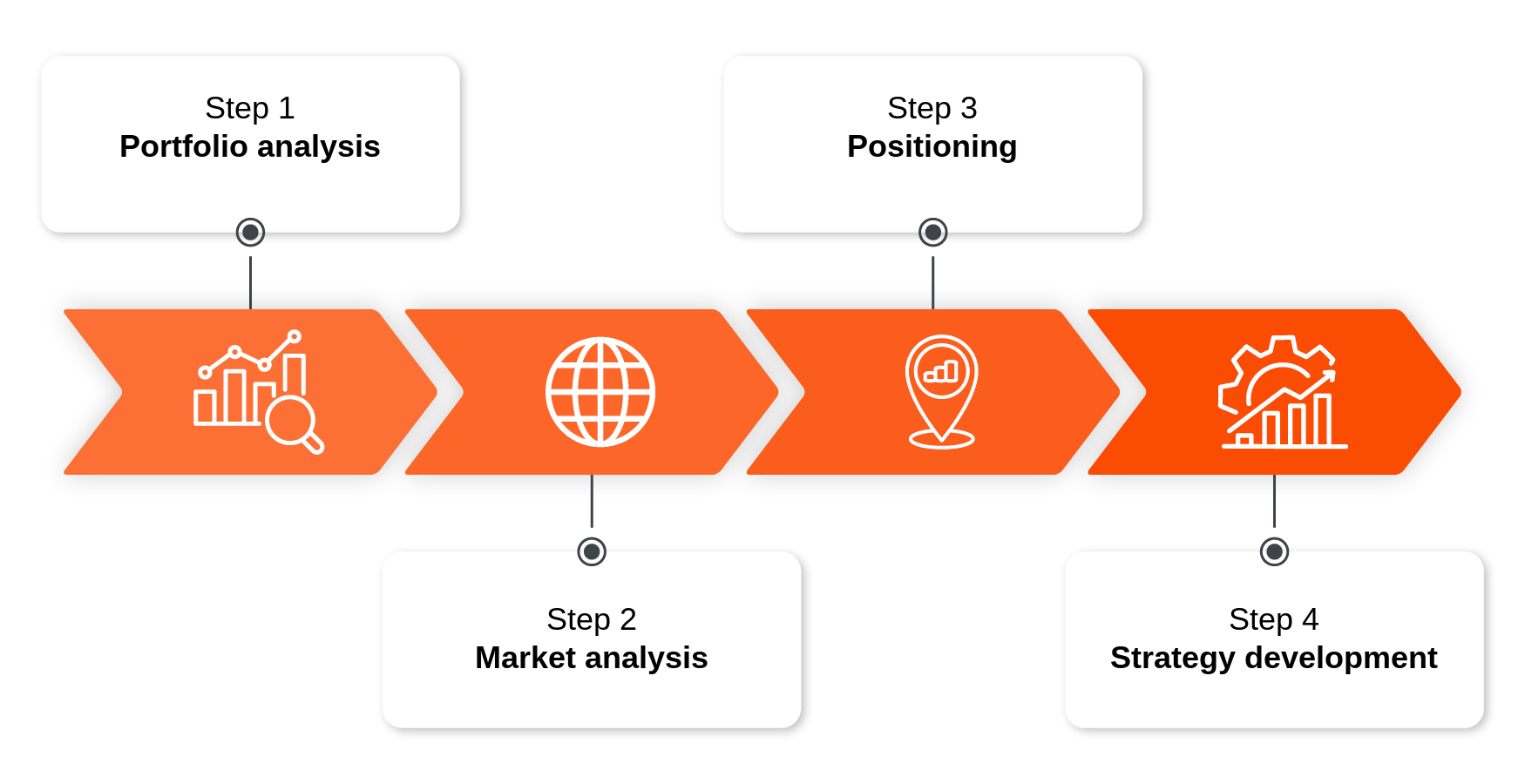
The practical implementation of the Kraljic matrix in procurement and supply chain management can be divided into four logical steps:

  • Step 1: Portfolio Analysis: Record all purchased products and services. Supplementary methods such as ABC analysis help to structure the portfolio according to purchasing volume.
  • Step 2: Market Analysis: Evaluate the procurement market for your most important product groups. How complex is it? What is the power distribution between suppliers and buyers?
  • Step 3: Positioning in the Matrix: Based on the results from steps 1 and 2, assign each item or product group to the corresponding quadrant of the matrix.
  • Step 4: Strategy Development: Derive concrete action strategies for each of the four quadrants and define an implementation plan. Review the classification regularly.
Ein klares Flussdiagramm, das die vier Schritte zur Anwendung der Kraljic-Matrix darstellt: 1. Portfolio-Analyse, 2. Marktanalyse, 3. Positionierung, 4. Strategieentwicklung.

Advantages and critical evaluation of the model

The Kraljic Matrix is ​​an established tool, but like any model, it doesn't only offer advantages. A balanced approach is crucial for the successful application in business. A strategic approach to procurement, as promoted by the matrix, is considered essential for corporate success by leading industry associations such as the  BME (Bundesverband Materialwirtschaft, Einkauf und Logistik e. V., German Association for Supply Chain Management, Procurement and Logistics). 

Advantages:

  • Focus on strategically important goods

  • Optimisation of resource allocation in procurement

  • Systematic risk minimisation in the supply chain

  • Creation of a clear and transparent basis for procurement decisions

Disadvantages:

  • The evaluation of the axes can be subjective.

  • The model is rather static and only partially reflects dynamic market changes.

  • There is a risk of overlooking innovation potential among suppliers classified as "non-critical".

More than just a matrix – A strategic rethink in purchasing

The Kraljic Matrix is ​​far more than just a simple portfolio tool. It's a catalyst for fundamental change in procurement. The matrix compels your company to no longer view purchasing as mere order processing, but as a strategic function that significantly contributes to profitability and risk minimisation. By differentiating your procurement strategies, you ensure you have the right answer for every challenge – from efficiently handling C-parts to building robust partnerships with your strategic suppliers.

Frequently Asked Questions (FAQ)

  • In principle, the Kraljic Matrix is ​​suitable for any company with a diversified procurement portfolio. It is particularly valuable for manufacturing companies and for companies with complex supply chains and significant purchasing volumes.

  • ABC analysis is a purely quantitative method that sorts goods according to their value share of the total purchasing volume (A items = high value share, C items = low value share). The Kraljic Matrix is ​​more qualitative and strategic, as it also incorporates qualitative supply risk as a second dimension. However, both methods can complement each other very well.

  • An annual review of the matrix is ​​recommended in order to react to changes within the company (e.g., new products) and in the procurement market (e.g., new suppliers, price developments). For strategically important products, more frequent reassessment may also be advisable.

Fabian von Kleinsorgen VP Growth & Sales Operations
Learn more about Fabian
Categories
Fair. Transparent. Honest.

Try it free for 90 days!

No risk, no obligation, no payment details required.

Experience the entire platform – from your first shopping cart to the automated invoice. Discover how easy digital shopping can really be.