Dynamic purchasing systems: Efficiency in public procurement
Author
Andy Freund Head of Growth & Customer Management
Dynamic purchasing systems (DPS) are fully electronic, flexible and competitive processes that enable faster procurement and greater profitability. There are challenges in technical integration, training and legal requirements. They offer greater efficiency than traditional tenders.
Procurement system: Basis for efficient procurement of goods | Dynamic purchasing systems defined
Procurement is of utmost importance for companies. An effective procurement system strengthens the entire value chain and safeguards competitiveness. The strategic purchase of goods sustainably reduces operating costs and ensures security of supply, thereby making a significant contribution to the company’s success.
What is a procurement system?
Procurement systems are software solutions that help companies manage and optimize their procurement processes. They automate key procurement tasks, such as vendor selection, contract management, order creation, invoicing, and more.
How does a dynamic purchasing system work?
The dynamic purchasing system (DBS) is a temporary, exclusively fully electronic process for procuring standard market services. It functions as a type of digital product catalog for public clients, enabling continuous, flexible, and competitive procurement. The system remains open to interested companies throughout its entire duration, allowing them to demonstrate their suitability and join at any time. This gives public clients the opportunity to continually obtain new offers from potential bidders through invitations to tender. In this way, the eligibility criteria are constantly reviewed, and the best possible prices are secured in the interest of the contracting authority.
What are the benefits of a dynamic purchasing system?
Agile Procurement systems offer numerous benefits for both public clients and companies. The key advantages include:
ongoing participation and competition (companies can join at any time)
greater flexibility in duration, validity period and service description
improved efficiency and security of supply
faster processing of individual contracts
opportunity to bundle standard market services
equal access for new market participants
adaptability to market developments
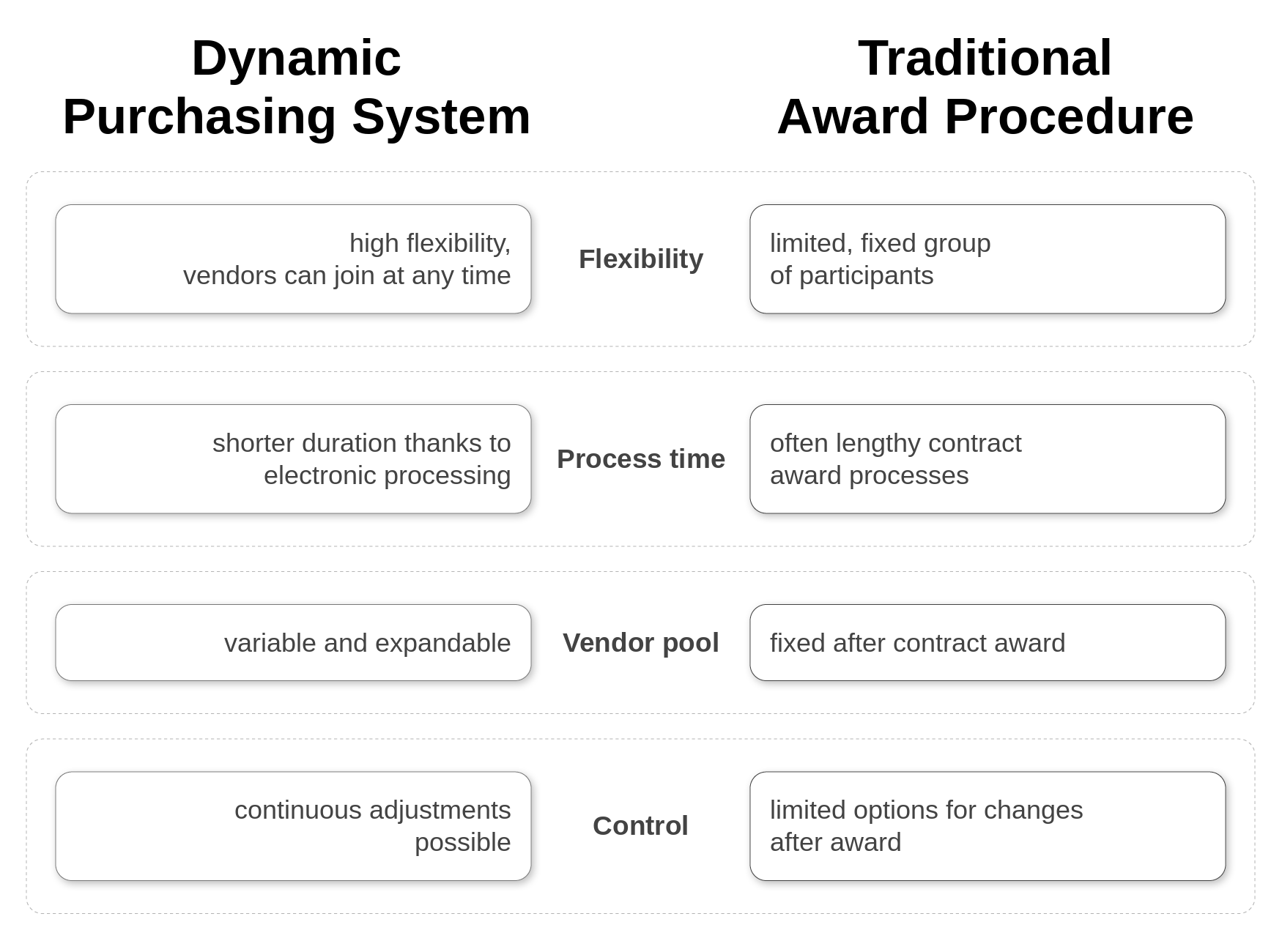
How do dynamic purchasing systems differ from traditional tenders?
Dynamic purchasing systems and traditional tenders differ in fundamental points:
What are the challenges of implementing dynamic purchasing systems?
The integration of advanced procurement systems presents companies and public clients with a wide range of technical and organizational challenges. Key hurdles include:
Technical integration: Introducing such a system into existing IT networks requires significant adjustments and investments in suitable software solutions that meet the requirements of a fully electronic process.
Training and acceptance: Employees must be adequately trained to use the system effectively. Resistance to new processes can hinder acceptance and, consequently, successful implementation.
Data quality and management: Erroneous or incomplete data can disrupt the process. High data quality is essential for effective data management.
Legal requirements: Legal provisions such as the Public Procurement Ordinance (VgV) and the General Data Protection Regulation (GDPR) must be complied with.
Data protection: Sensitive data must remain protected. Access controls, encryption, and regular security checks help ensure data security.
Vendor integration: Technically integrating vendors into the system can be a challenge, especially for smaller providers.
Costs and resources: Integration entails high initial investments and ongoing expenses. Personnel costs, in particular, can be substantial at the outset.
Procurement systems for companies
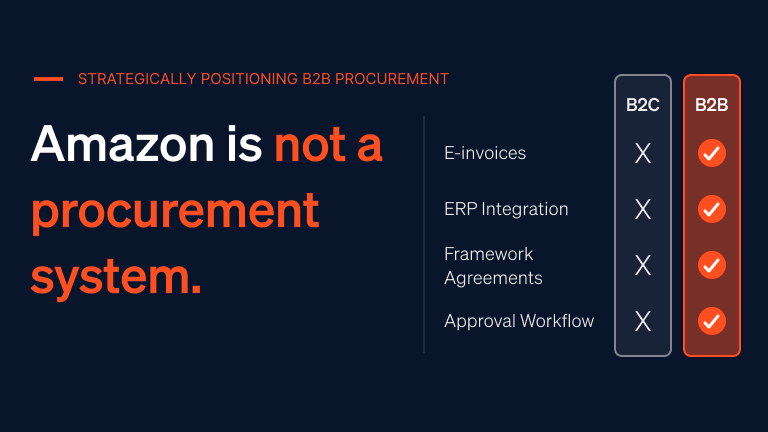
Dynamic purchasing systems are an instrument of public procurement law. Companies use e-procurement platforms for their purchasing instead. With simple system, more than 28,000 buyers order indirect materials and C-parts from over 1,000 vendors, with digital approvals and connections to existing ERP systems.
Summary
Dynamic purchasing systems are fundamentally transforming public sector procurement. They enable continuous adjustments to market changes, thereby fostering fair competition. Despite potential barriers to integration, they offer significant advantages over traditional tendering procedures.
Frequently asked questions about procurement systems
A dynamic purchasing system (DPS) is a time-limited, fully electronic procedure used by public contracting authorities to buy standard market services. Suitable companies can join at any time during its term.
The German Public Procurement Ordinance (VgV) governs the procedure: it sets requirements for transparency, documentation, deadlines and equal treatment and defines how contracting authorities obtain bids and award contracts.
Yes. The procedure is fully electronic, from admitting participants to submitting bids.
Companies usually use e-procurement platforms. With simple system, they order indirect materials and C-parts from more than 1,000 vendors on one platform.