![Fabian von Kleinsorgen [VP Growth & Sales Operations]](https://simplesystem.com/hs-fs/hubfs/Autoren_Blog/Fabian_vin_kleinsorgen_autor.png?width=200&name=Fabian_vin_kleinsorgen_autor.png)

09.09.2026

![Fabian von Kleinsorgen [VP Growth & Sales Operations]](https://simplesystem.com/hs-fs/hubfs/Autoren_Blog/Fabian_vin_kleinsorgen_autor.png?width=100&name=Fabian_vin_kleinsorgen_autor.png)

The efficient procurement of C-parts is a major challenge for many companies, because despite their low individual value, these small parts often cause a high administrative burden and rising costs. With well thought-out C-parts management and the right selection of manufacturers, processes can be automated, costs can be reduced and security of supply in production can be guaranteed.
ABC analysis: Production goods are classified into A, B and C parts. A and B parts account for a significant proportion of the purchase value, while the process steps for C items increase the overall value.
Use of e-procurement: With e-procurement systems, operating resources can be reordered automatically as soon as replenishment is required. They also ensure close cooperation with reliable suppliers, which increases efficiency.
E-Kanban systems: E-Kanban is used to determine requirements and provide C-parts. The technology enables lean and efficient procurement and warehousing of C-parts and reduces the amount of capital tied up in the company.
The term C-parts covers materials or products with a low value, but which are required in large quantities and cause high procurement costs. They typically have a value of less than EUR 20 per item and are only indirectly relevant to the end product. Examples of C-items include screws, nuts, seals, washers, tools, health and safety items and consumables such as lubricants. Office supplies and IT accessories are also C-parts.
Although C-parts are of low value, they require a high volume and administrative effort, which results in disproportionately high process costs compared to the value of the goods. This is due to the numerous work steps such as determining requirements, ordering, goods receipt, warehousing and invoice verification. In view of this, process optimisation in the form of optimised procurement is indispensable. The entire value chain in the company can be simplified through targeted digitalisation and automation, allowing companies to actively save time and money when reordering indirect materials.
Important: C-parts are also indispensable for the maintenance of machines and systems. MRO procurement should also be considered in the logistics processes, as this can also result in high costs.
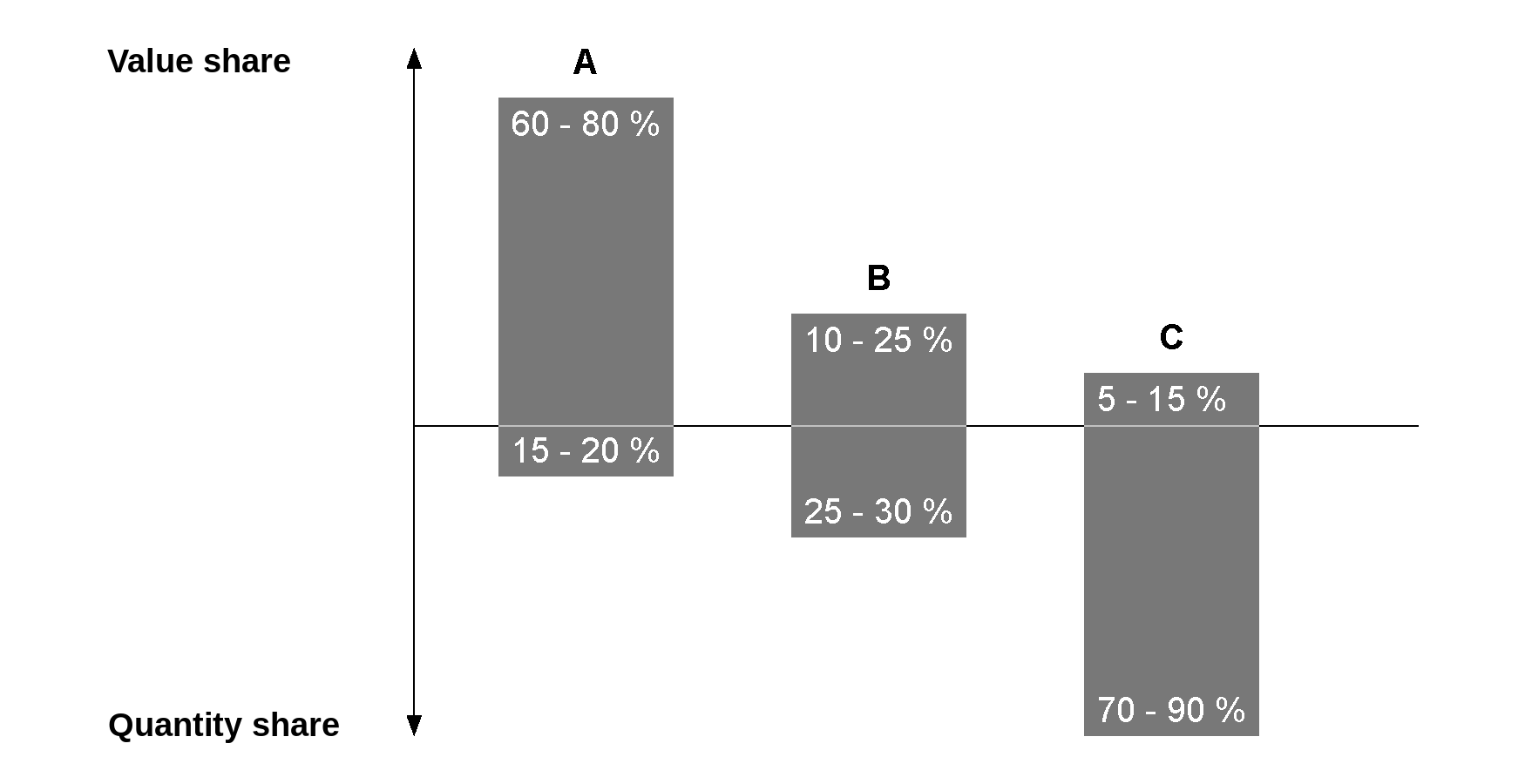
C-parts usually account for less than five percent of a company's total purchasing volume. Nevertheless, they have a considerable influence on the cost structure - primarily due to the high indirect process costs that arise during their procurement processes. The costs are disproportionately high compared to the value of the goods. In addition, C-parts not only have an impact on overall costs due to the large number of individual orders and complex warehouse management, but also on companies' time resources.
The successful procurement of C-parts is based on simple strategies and the automation of processes. E-procurement systems are also helpful in bringing order to chaos and optimising individual processes in the long term.

Find out how it works in our free e-procurement report. Download now free of charge and without obligation.
Read nowCompanies can integrate the following strategies for optimising procurement processes into their workflows in order to sustainably reduce the procurement costs of C-Parts and simplify C-Parts procurement.
Automated ordering processes can be used to monitor stock levels in real time and automatically trigger orders as soon as the pre-defined minimum quantity of an item is reached. Electronic Kanban systems ( e-Kanban for short) link the warehouse and suppliers on a digital level so that replenishment for the production process takes place just-in-time and in line with demand. Thanks to this innovative technology, manual ordering processes will no longer be necessary in future, errors will be minimised step by step, and bottlenecks will be avoided.
All in all, the automation technology leads to leaner inventories, an optimised material flow and a significant reduction in workload for the purchasing department.
In C-parts management, the use of e-procurement systems such as simple system represents a clear competitive advantage, as they digitise the entire procurement process for C-parts. Here are the advantages of e-procurement technology: