![Fabian von Kleinsorgen [VP Growth & Sales Operations]](https://simplesystem.com/hs-fs/hubfs/Autoren_Blog/Fabian_vin_kleinsorgen_autor.png?width=200&name=Fabian_vin_kleinsorgen_autor.png)
09.09.2026

![Fabian von Kleinsorgen [VP Growth & Sales Operations]](https://simplesystem.com/hs-fs/hubfs/Autoren_Blog/Fabian_vin_kleinsorgen_autor.png?width=100&name=Fabian_vin_kleinsorgen_autor.png)

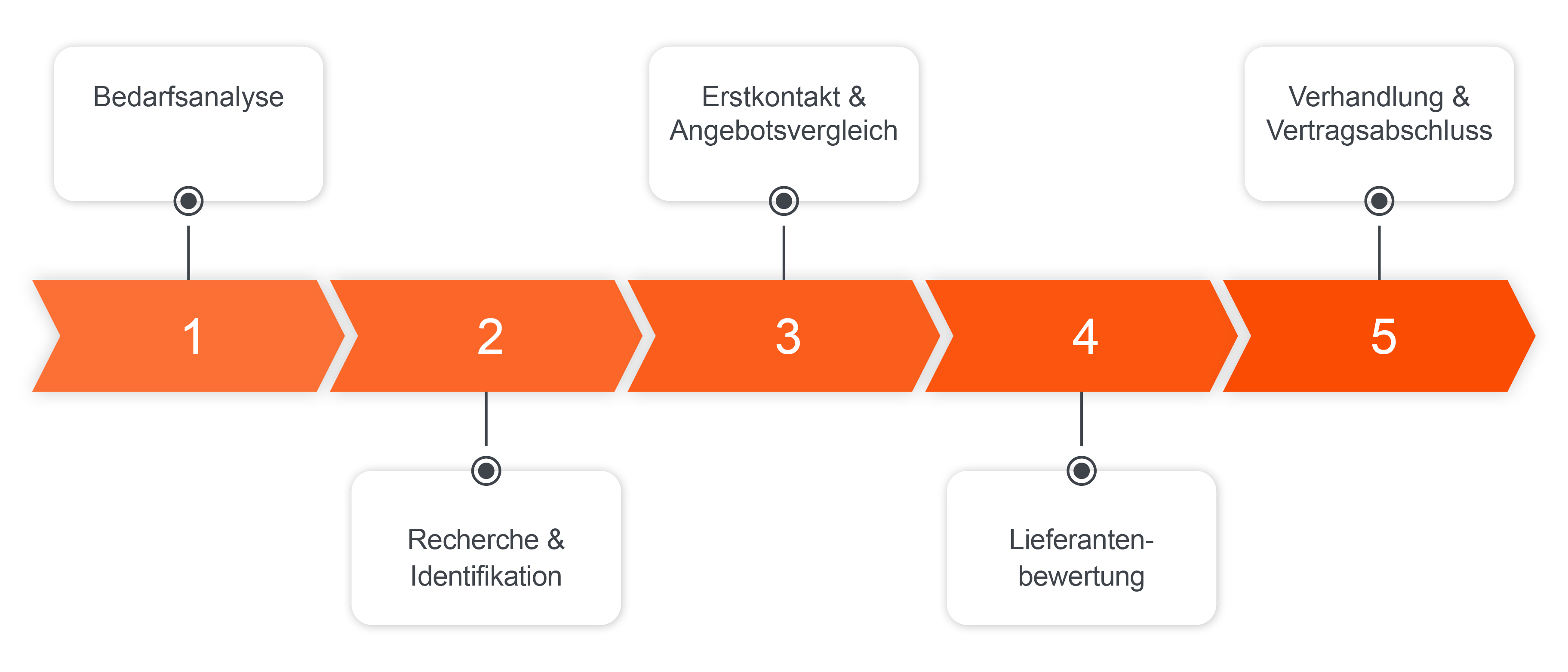
Finding the right supplier is one of the most crucial success factors for any company. Whether you are launching a new product or looking to improve your existing supply chain through purchasing optimization, the reliability and quality of your partners will determine your own chances of success. An unreliable partner can lead to production downtime, quality defects and dissatisfied customers.
But how do you find the perfect partner in a global market full of potential suppliers? The supplier search is much more than a quick search on the internet. It is a strategic process that requires diligence, a clear structure and the right tools.
This guide takes you step by step through the entire process. From the initial needs analysis through the various research channels to the final evaluation and selection, we will show you how to efficiently and accurately find the partner that really suits your company.
What is the supplier search?
The supplier search (also known as "sourcing") is the systematic process of identifying, evaluating and selecting companies that can provide the required goods or services. The aim is to find a reliable supplier that best meets the requirements in terms of quality, price, quantity and delivery reliability and enables professional procurement management.
Before the actual search begins, you need to precisely define your own requirements. The clearer your requirements profile is, the more targeted and efficient your search for potential partners will be. Without this preliminary work, the supplier search is often unstructured and does not lead to the best results.
Ask yourself the following questions at the beginning:
Only with this detailed specification are you ready for the next step: active research.
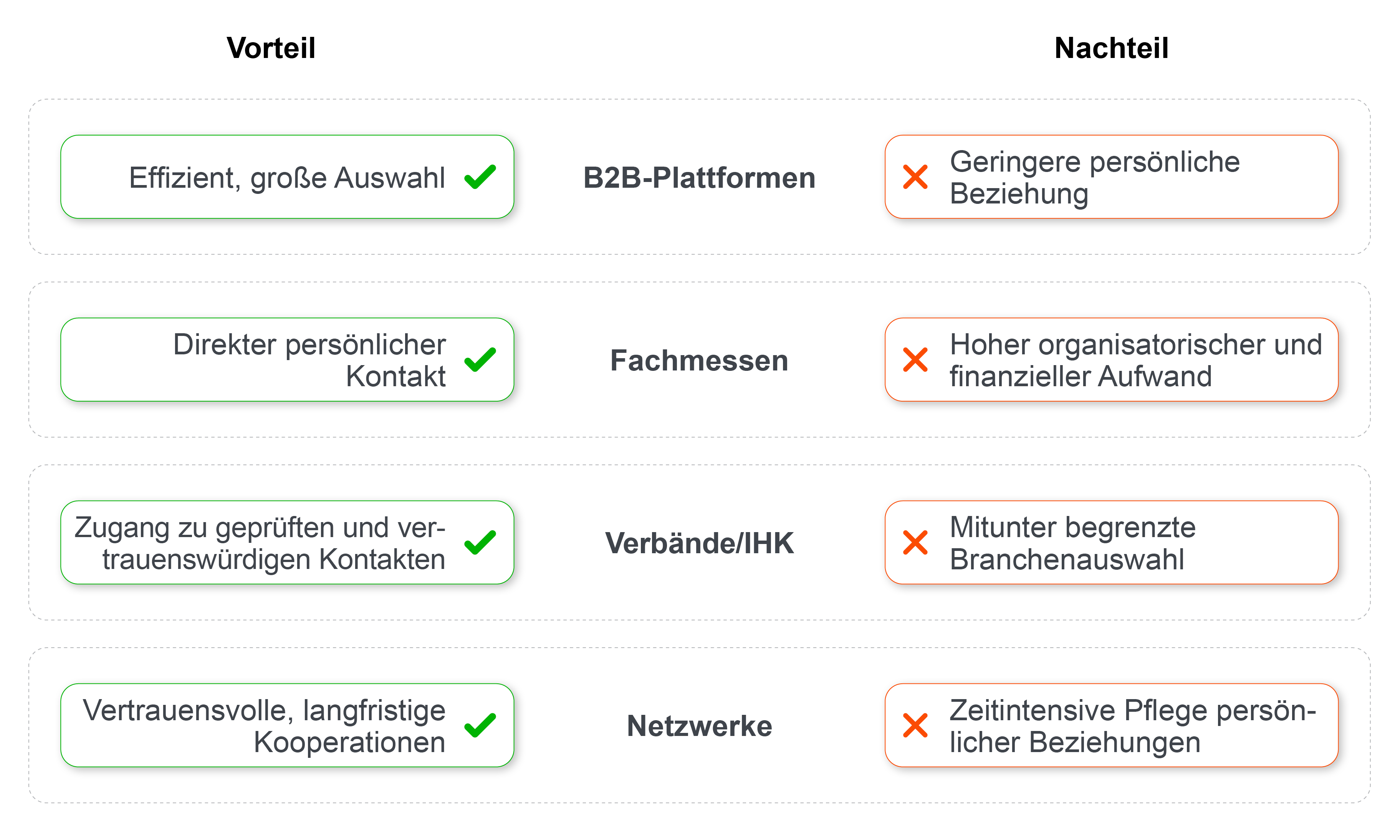
A successful supplier search usually combines several channels in order to generate a broad and high-quality selection of potential partners.
Today, digital searches are often the first step.
Despite digitalization, traditional channels remain indispensable for assessing the quality and reliability of a partner.
Do not underestimate the power of recommendations. Ask your professional network for experience and contacts. Sometimes a look at the competition is also informative: Which suppliers do successful competitors use? You can often find relevant information through product labels or public tenders.

Find out how in our free e-procurement report. Download now free of charge and without obligation.
Read it nowWith a list of potential suppliers (a "longlist") in hand, the phase of making contact and initial qualification now begins. The aim is to reduce this long list to a short, manageable "shortlist" of the most promising candidates.
First impressions count - also for you as an entrepreneur or buyer. A professional and precise inquiry increases the chance of a quick and useful response. Your initial contact, usually by email, should include the following points:
Collect offers from the most interesting providers and compare them systematically. Please note: Price is only one of many criteria. A comprehensive selection of suppliers also takes price into account:
Quality of communication: How fast, professional and helpful were the responses to your inquiry?
Once you have created your shortlist, the most important step follows: the in-depth evaluation of a supplier. This is where the wheat is separated from the chaff and you ensure that your future partner not only offers a good price, but also high quality and reliability. For a detailed insight into this process, we recommend our supplier evaluation guide.
You should check the following areas carefully:
References and reputation: Ask for customer references or research independent customer reviews. What do other entrepreneurs say about the collaboration?
You have found your ideal candidate. In the final step, you formalize the partnership and create the basis for a successful, long-term collaboration.
How many offers should I obtain for a comparison?As a rule of thumb, try to obtain quotes from three to five qualified suppliers. This number usually provides a sufficient basis for comparison without making the process unnecessarily complex.
What if the best supplier is based abroad?Working with international suppliers is standard nowadays, but it brings with it additional aspects. Be sure to clarify issues such as customs clearance, import regulations, international freight costs and possible language and cultural barriers before placing an order.
Should I have just one or several suppliers for a product?This is a strategic decision. A single-sourcing strategy (one supplier) can lead to better conditions and a closer partnership, while a multi-sourcing strategy (several suppliers) reduces the risk of failure. Many companies choose a middle ground with one main and one secondary supplier.