![Fabian von Kleinsorgen [VP Growth & Sales Operations]](https://simplesystem.com/hs-fs/hubfs/Autoren_Blog/Fabian_vin_kleinsorgen_autor.png?width=200&name=Fabian_vin_kleinsorgen_autor.png)
09.09.2026

![Fabian von Kleinsorgen [VP Growth & Sales Operations]](https://simplesystem.com/hs-fs/hubfs/Autoren_Blog/Fabian_vin_kleinsorgen_autor.png?width=100&name=Fabian_vin_kleinsorgen_autor.png)

Rising material prices, tight supply chains and intense competitive pressure, for many companies, cost control in procurement is becoming a key challenge. Procurement costs often account for the largest share of total expenditure and at the same time offer the most effective lever for directly increasing profitability. But where do you start? Many companies leave it at short-term price negotiations and overlook the enormous potential that lies in optimizing processes and strategic decisions. This guide will show you tried-and-tested methods that you can use to reduce your procurement costs not only in the short term, but also in the long term and sustainably.
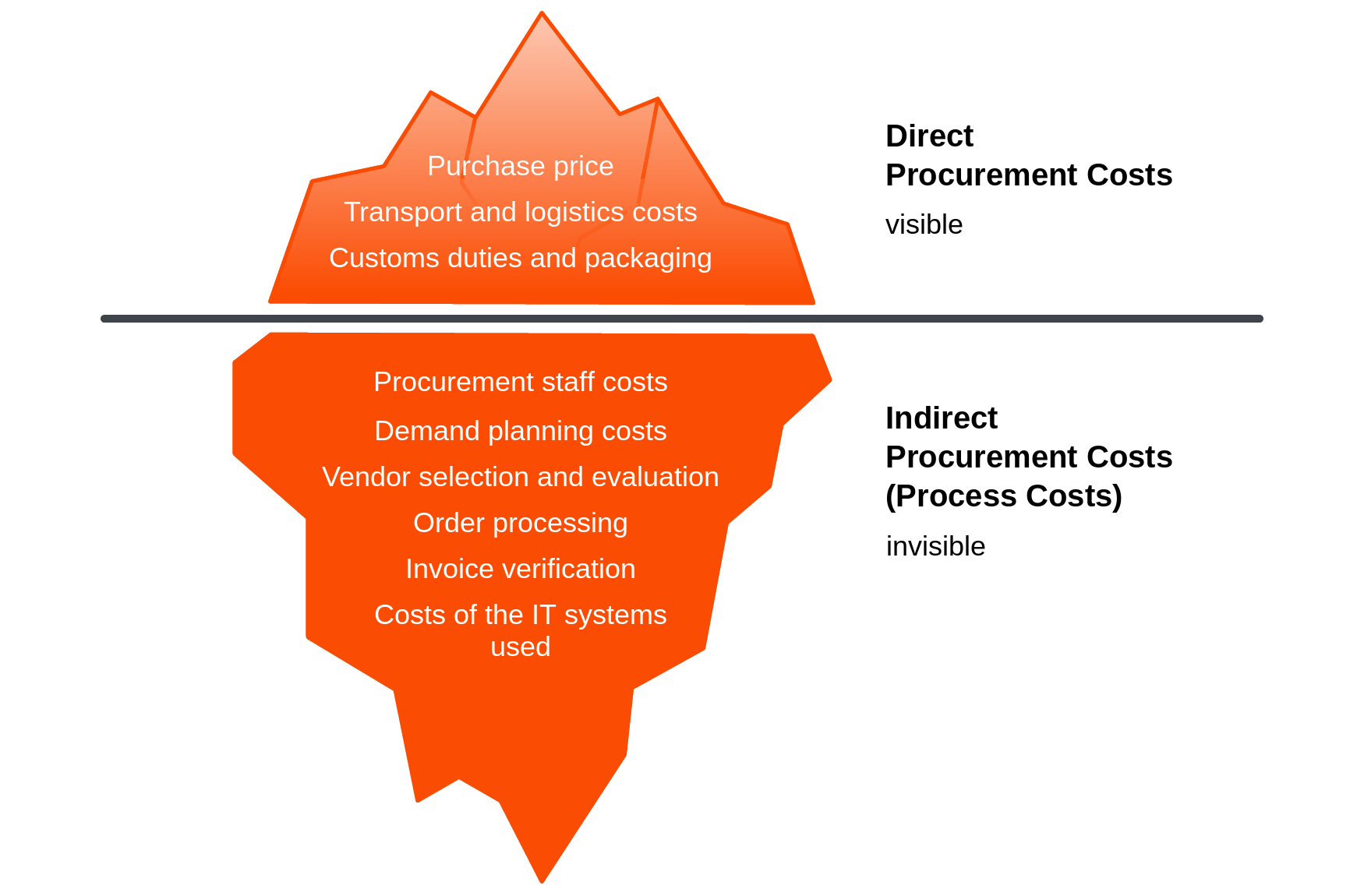
Procurement costs include all expenses incurred by a company in the procurement of goods, materials and services from external vendors. They go far beyond the pure purchase price and are typically divided into two categories:
Many companies focus exclusively on reducing direct costs, although the greatest leverage for savings often lies in indirect process costs.
The pressure on procurement is constantly growing. Cost pressure has been one of the biggest challenges in procurement for years. Every euro saved in procurement has a direct impact on the company's profit, and often more than a corresponding increase in revenue. Successfully reducing procurement costs not only improves margins, but also strengthens liquidity and overall competitiveness. So it's not just about simple savings, but about strategically safeguarding the profitability of the entire company.
Reducing procurement costs in the long term requires more than just tough price negotiations. A strategic approach that takes vendors, processes and internal structures into account leads to sustainable success. The following three areas offer the greatest potential.
A fragmented vendor base drives up process costs unnecessarily. Every vendor relationship requires administrative effort, from creation in the system to communication and invoice processing. By consolidating vendors, you can bundle your order volume with fewer partners. This not only strengthens your negotiating position for better prices and conditions, but also significantly reduces your internal administrative workload. Analyze your expenditure and identify vendors whose product ranges overlap. The aim is to build strategic partnerships with efficient vendors who can cover the majority of your requirements.
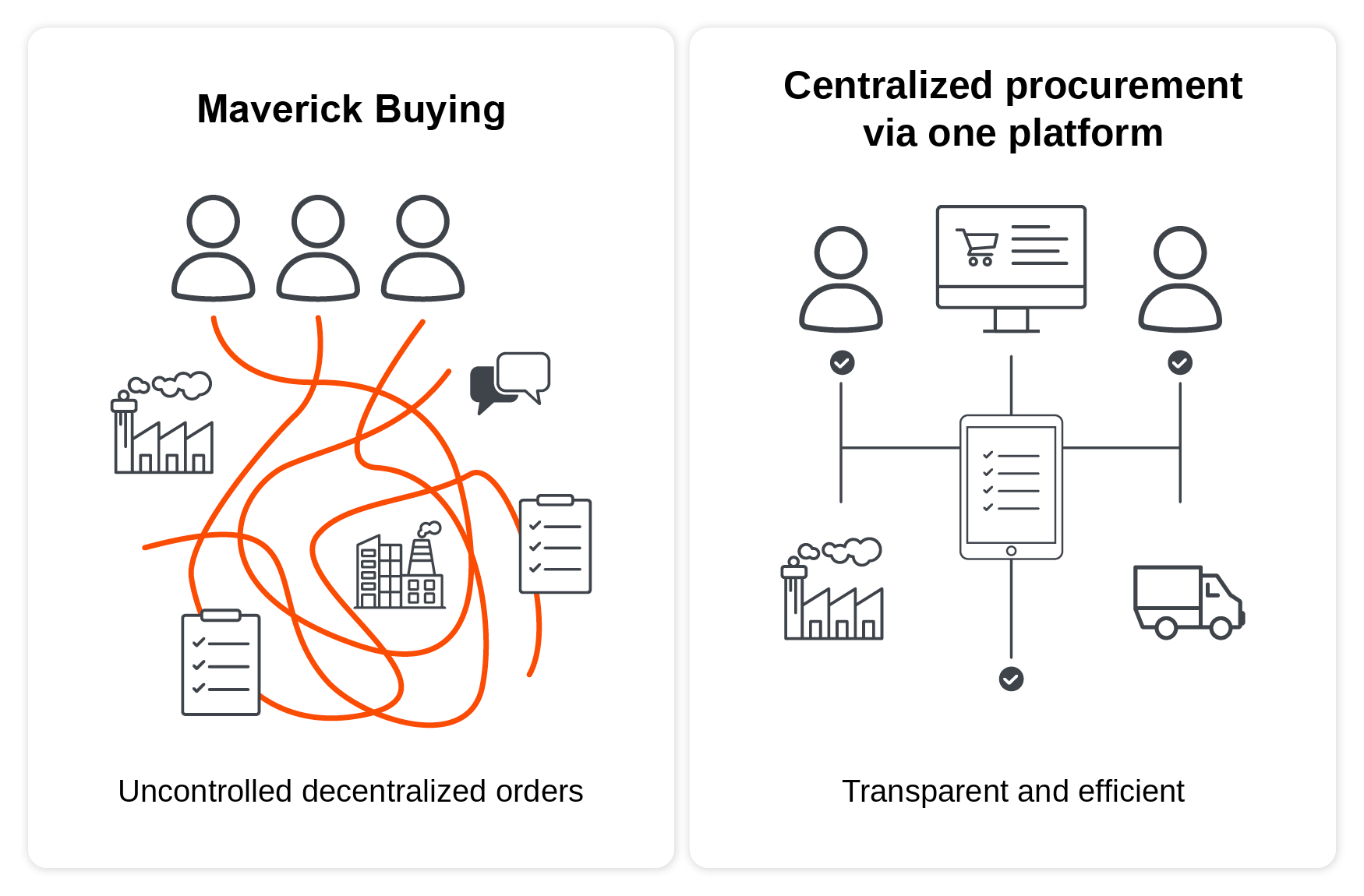
Maverick buying, i.e. procurement bypassing the procurement department, is an expensive problem in many companies. Employees order goods or services from unauthorized vendors, often at inferior conditions and without using the negotiated framework agreements. The result is not only higher direct costs, but also a lack of transparency and control over expenditure. A central procurement platform channels all requirements and ensures that orders are only placed with approved vendors at the agreed conditions. This gives you back control and ensures compliance with your procurement strategy.
There is enormous potential for savings, particularly in the area of C-parts (items with low value but high procurement costs). The value of a single screw may be low, but the process from requisition to ordering to invoice verification costs a lot of time and money. The process costs often exceed the actual value of the goods many times over. According to a study by HTWK Leipzig, digital procurement reduces process costs per order from €146 to €86, a saving of €60 per order. A digital solution like simple system bundles these small orders from more than 1,000 vendors, automates the process and reduces the administrative effort to a minimum.
Find out how in our free e-procurement report. Download it now, free and without obligation.
Read nowManual, paper-based processes are slow, error-prone and lack transparency. The digital transformation of procurement is the decisive factor in increasing efficiency and sustainably reducing costs. Modern e-procurement systems automate routine tasks such as order initiation and invoice verification, create full transparency of all expenditure and provide valuable data for strategic decisions. They allow your procurement department to focus on value-adding activities such as strategic negotiations instead of wasting time on operational tasks. This allows the entire procurement process to be optimized.
Theory is good, practice is better. With this step-by-step guide, you can get started right away:
Reducing procurement costs is not a one-off task, but a continuous process of optimization. It requires a combination of strategic foresight in vendor management, consistent process discipline to avoid maverick buying and the intelligent use of digital technologies. Companies that see procurement not just as a cost center, but as a strategic value driver, secure decisive competitive advantages. Start analyzing your processes today and leverage unused potential, your economic success will prove you right.